Greenland's Fishing Industry Confronts Unprecedented Climate Challenges
In the remote fjords of Greenland, fisherman Helgi Áargil navigates increasingly volatile waters with his dog Molly, his livelihood hanging in the balance. Last year, his vessel was trapped by ice from a calving glacier; this year, unusually heavy rainfall has disrupted his work. A single fishing trip might yield 100,000 Danish kroner (£11,500) or nothing at all, reflecting the profound uncertainty facing Greenland's fishing communities.
Accelerating Arctic Warming Reshapes Centuries-Old Practices
This unpredictability stems directly from the Arctic's rapidly accelerating climate change, which is warming faster than any other region on Earth. For Greenland, a semiautonomous Danish territory that once drew global attention due to Donald Trump's interest in acquisition, this crisis poses existential questions about its economic future.
Fishing constitutes up to 95 percent of Greenland's exports, primarily destined for China, the United States, Japan, and Europe. The industry's precarious balance now faces unprecedented threats from environmental transformation.

Wrapped in a wool sweater against freezing winds, Áargil describes fishing for halibut and cod, while other top catches include shrimp and snow crab that can reach over a meter in length. Yet traditional ice fishermen, who make up half the local industry, are witnessing the most dramatic changes to their way of life.
Disappearing Sea Ice Forces Adaptation
"My father was fishing from sea ice one and a half meters thick," recalled Karl Sandgreen, head of the Icefjord Center in Ilulissat, which documents climate change in the region. That sea ice began disappearing around 1997, forcing fishermen who once drilled through ice to increasingly adopt boat fishing instead.
While boats allow access to larger areas, they bring extra costs and pollution that further accelerate warming. This transition represents a fundamental shift for communities where fishing has shaped social and economic structures for generations.
In every town and village, the harbor where fishermen return to sell their catch remains the heart of community life. In Nuuk, Greenland's capital, fishermen pick up boxes from fishing companies before heading out, with catches winched directly from boats to fish factories.
Economic and Ecological Concerns Intensify
Toke Binzer, chief executive of Royal Greenland—the territory's single biggest employer—expresses growing concern about a future with greatly diminished sea ice. This could push traditional fishermen toward larger communities and into commercial fishing operations.
"The challenge now is how to support traditional fishermen when there is sometimes 'too much ice to sail, too little to go out on,'" Binzer explained, noting this unpredictability has already created "huge" problems.
Royal Greenland currently loans fishermen money to purchase boats, with repayment coming from their catches. However, if everyone turns to boat fishing, economic benefits might be offset by overfishing concerns.
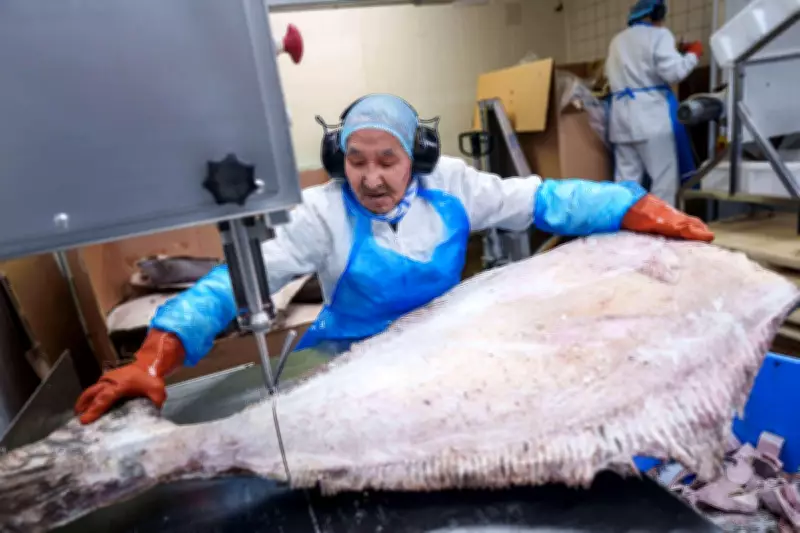
Boris Worm, a marine biodiversity expert at Canada's Dalhousie University, warns that widespread boat fishing could lead to overexploitation of resources. In Greenland, early signs already appear as halibut are getting smaller—a classic indicator of overfishing where larger fish are caught and younger ones remain.
Complex Ecological Shifts Unfold
This problem could worsen as retreating ice makes fish more accessible. Paradoxically, fish stocks might increase as warmer weather brings more rain and melting ice, delivering additional nutrients for plankton that fish feed on.
Yet Worm cautions that fish behavior may become less predictable, with species potentially seeking new food sources if they can no longer access algae that grows under sea ice.
On his boat near Nuuk, Áargil identifies another challenge: warming waters are driving some fish deeper in search of colder temperatures. "It's too warm," he observes, gazing at the surrounding hills. "I don't know where the fish is going, but there's not so much."

Limited Alternatives and Cultural Loss
Options beyond fishing remain scarce in Greenland. While tourism is increasing, it falls far short of constituting a significant portion of the economy. Cultural traditions face equal threats, with dog sledders already confined to land when sea ice disappears.
"It's really important for many Greenlanders to have the ability to go out and sail," emphasized Ken Jakobsen, manager at Royal Greenland's Nuuk factory. He identifies fishing as the "most important" aspect of Greenlandic life.
This importance manifests visibly: in Nuuk alone, more than 1,000 boats crowd the harbor during summer months—in a territory whose total population barely exceeds 50,000 people. Each vessel represents both economic necessity and cultural heritage, now navigating uncharted waters of climate disruption.