Gullah Geechee Fight to Keep Ancestral Land Amid Rising Taxes and Floods
Gullah Geechee Fight to Keep Ancestral Land Amid Rising Taxes

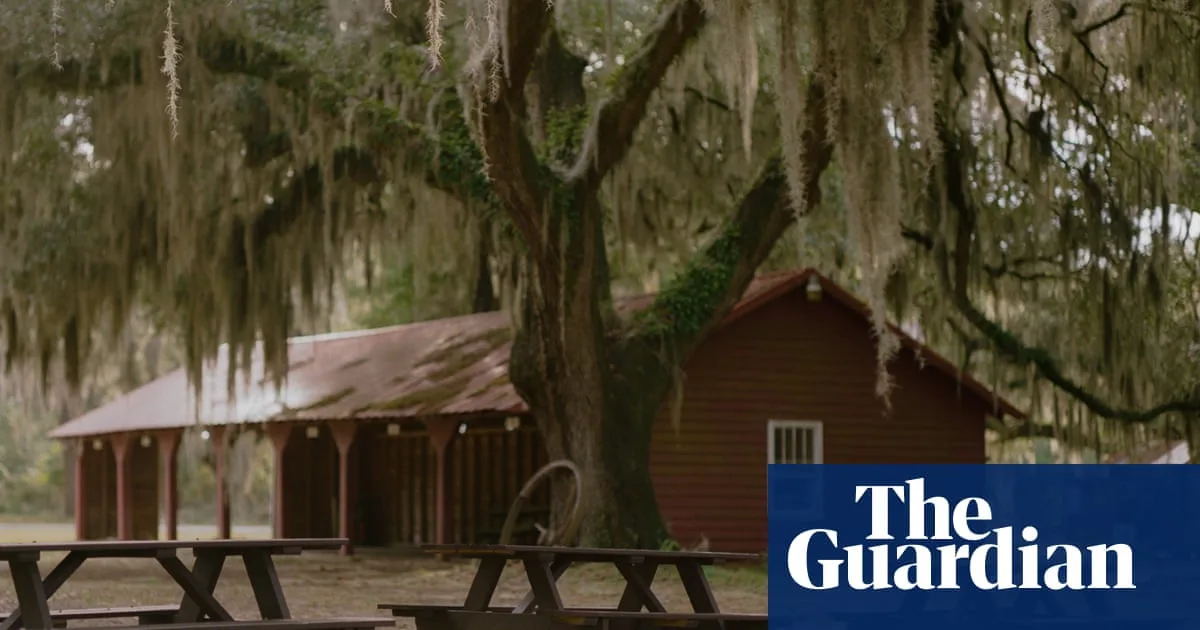
On Arthur Champen's half-acre property in Hilton Head Island, South Carolina, a thicket of southern live oaks, palmettos, and pine trees muffles the roar of cars on nearby Highway 278. His pale blue house, lightened by the sun, sits on stilts to protect it from flooding during high tide. In spring, the adjacent marshland often turns into a muddy soup. 'Other than the cars,' the 81-year-old Champen said, 'you hear how peaceful it is?'

About a decade ago, Champen's family nearly lost the grassy marshland next door, purchased by his great-great-grandparents, Civil War veteran Richard White and his wife Amelia, in 1892 for $600. The 24.2-hectare (60-acre) plot remained heirs' property—land passed through generations without a will—until Champen's grand uncle surveyed and divided a portion in 1983. Today, over ten family members live on about 4 hectares (10 acres), while others sold their shares. For the Gullah Geechee, descendants of enslaved West Africans who retained their culture in the southeastern US islands, multi-generational compounds are common.

Champen peered at marshland that remains heirs' property due to severe flooding making it unusable. For generations, the nearly 16 hectares (40 acres) were farmed for corn, cotton, and potatoes until a 1940 hurricane caused $9.9 million in damage across South Carolina. After some family members moved away or died, it was unclear who would pay property taxes. The land went up for delinquent tax sale, but the non-profit Pan-African Family Empowerment and Land Preservation Network (PAFEN) helped pay the bill. Although his family doesn't use the marshland, Champen refuses to sell. 'It's part of our heritage,' he said.

Wide Pickt banner — collaborative shopping lists app for Telegram, phone mockup with grocery list

While Champen's family kept their land, many Gullah people in the coastal counties of South Carolina and Georgia are not as fortunate. In Beaufort County, which includes Hilton Head Island, St. Helena Island, and the city of Beaufort, Gullah property ownership faces threats from delinquent taxes, clouded titles, family disputes, predatory development, gentrification, and the climate crisis. The loss of property is reflected in the dwindling Gullah population: in 1940, most of Hilton Head's 1,100 residents were descendants of freedmen, but by 2020, only 6% of the island's population was Black, down from 8% in 2000.

Josh Walden, chief of operations at the Center for Heirs' Property, said it is impossible to say how many Gullah people have lost homes in Beaufort County without significant research. A 2019 study from Auburn University found over 41,000 heirs' properties in South Carolina, totaling more than 167,500 hectares (414,000 acres) worth over $3.42 billion in market value. Beaufort County treasurer's office data shows that the number of properties sold at the annual delinquent tax auction on St. Helena Island has remained stable despite an increase in overdue payments. Between 2019 and 2023, 38 properties were sold on St. Helena Island, while 19 were sold on Hilton Head Island. The average tax owed was no more than $700, but can reach over $4,000, a burden for older Gullah people on fixed incomes.

Maria Walls, Beaufort County's treasurer, said the county has worked to minimize Gullah land loss by creating an online payment platform and partnering with local advocacy groups. Luana Graves Sellars, founder of the Lowcountry Gullah Foundation, and Theresa White, PAFEN's CEO, note that Hilton Head has experienced the greatest land loss due to its popularity. Between 2015 and 2021, PAFEN spent over $160,000 paying Gullah property taxes on Hilton Head and St. Helena islands. In 2024 alone, the Lowcountry Gullah Foundation spent over $38,000 saving 10.2 hectares (25.4 acres) of historic land in Beaufort County.

Dozens of interviews reveal that land loss poses an existential threat to the Gullah community. Champen wants the state to compensate families for unusable marshland they still pay taxes on. Others call for reduced property taxes for heirs' properties. Residents and advocates are banding together to pay taxes, educate on estate planning, and pressure officials to make it easier for Gullah people to stay in their homes. 'There's been a renewed emphasis now on Black people helping each other,' White said, 'because of all the stuff that Trump and them are doing and all the discrimination that's going on.'

Pickt after-article banner — collaborative shopping lists app with family illustration

A Big, Unwieldy Problem

Leaning on a tangled grape vine, Champen recalled climbing it as a child. Since growing up in the historic Gullah neighborhood of Stoney, the area has changed significantly: the highway expanded from two to six lanes, and many Gullah people have died or moved away. He hopes his children and grandchildren will keep the property, but added, 'You never know.' The Lowcountry Gullah Foundation's survey shows Gullah land ownership on Hilton Head decreased from 1,400 hectares (3,500 acres) before 1956 to 390 hectares (963 acres) in 2023.

During the Civil War, Union forces occupied Hilton Head and St. Helena, leading white residents to flee and enslaved Black people to become free early. Gullah people were given land on the sea islands because it was considered undesirable. 'No one wanted to live here because it was too hot, too humid, too bug-infested,' said Graves Sellars. 'The government was just like, "Well, the enslaved people are already there. So, let's just give them that land, because nobody really wants it anyway."'

Due to remoteness, Gullah people had difficulty accessing probate courts, so many died without wills. State estate laws divided property interests among surviving spouses and children, causing the number of heirs to multiply geometrically. 'What you have over time is a geometrically increasing problem,' said South Carolina Senator Tom Davis, 'with, in some cases, hundreds of heirs having an interest in real property.' Bridges built in the early to mid-20th century made the islands accessible to vehicles, and developers soon followed.

Walden said his Gullah clients reported families leaving land during the Great Migration starting in 1910, fleeing racial violence. 'The great migration led to, not only the sale or forced sale of land, people leaving and selling because they were in fear for their life,' Walden said, 'but it also made the property vulnerable because the majority of the family left, and maybe it just lay fallow, or maybe one person stayed there, and when they died, it was lost.' As development rose in the 1970s and 1980s, waterfront property values increased, raising taxes.

Heirs' properties are vulnerable to predatory developers. Tenants-in-common ownership allows one owner to sell their share to a developer, who can then sue for a forced sale to assume full ownership. For one Gullah family, an out-of-state relative with no interest in the property triggered the loss of over 8 hectares (20 acres) of ancestral land. Herbert Ford's great-great-grandparents bought the Hilton Head property in the early 1900s. A relative in New York sold his portion to the town and a developer in the late 2010s, forcing the remaining family members to sell. Ford, a fifth-generation resident, drove to the entrance of the 8-hectare property, now a subdivision called Old Stoney Village with townhomes worth half a million dollars. A gray fence separates the village from his family compound, where about ten mobile homes remain. 'I don't think the entire family should be penalized because one or two persons decide they want to sell their particular interest,' Ford said.

In 2016, South Carolina passed the Clementa C. Pinckney Uniform Partition of Heirs' Property Act, allowing co-owners to buy out others who want to sell. Walden said the mechanism is beneficial when families have resources, but co-owners often lack funds, enabling predatory development. 'If I'm a developer and I find one of those 30 heirs, I can purchase the interest of one of those heirs, and then I fall into that tenancy in common group, and I have the ability to force a sale of the property the same way any of the heirs would.' The act also allows courts to consider family legacy when deciding whether to divide property. In 2022, the general assembly produced recommendations to further protect heirs' properties, including a commission of attorneys, local government, and non-profits. A bill to create the Heirs' Property Commission stalled in a House committee in 2023. Another House bill proposed in 2024 would allow heirs to claim a deceased family member's property to prevent tax sales, but it has not moved. In a promising development, the House passed a bill in April 2025 that would prohibit counties from reassessing property values when heirs clear titles, potentially preventing tax increases.

The climate crisis also threatens Gullah land ownership. Jenny Brennan, a Southern Environmental Law Center climate analyst, said documented sea-level rise has made some land uninhabitable. Studies show future flood risks will disproportionately impact Black communities in the South. 'So many of these communities are in really low-lying coastal areas that flooding is either getting directly into people's homes, or causing problems where you can't get in and out of your home reliably, or you can't grow vegetables or have a garden in the same place because that's now salty,' Brennan said. Increased flooding also prevents septic tank use for parts of the year. 'These are real problems that people are having to deal with on top of these other big threats from increased development and more and more people moving to the area; it's really layering on to what was already going to be a big, unwieldy problem to deal with.'

Eminent domain is another cause of land loss, said Faith Rivers James, former executive director of Coastal Conservation League. When officials determine sites for highways, 'they often go to the areas which they say are of lower economic value. And more often than not, those roads run through Gullah Geechee communities, be they rural or in downtown.'

'They're Losing History'

In the city of Beaufort, 69-year-old Anita Singleton Prather recalled the communal nature of growing up in the Northwest Quadrant neighborhood among extended family and other Gullah people in the 1960s. On Saturday mornings, she and her best friend talked in adjoining yards. Across the street was a football field where children played, and she learned to braid hair by practicing with long grass. Everyone she knew was Gullah. Now founder and artistic director of the Gullah Kinfolk Traveling Theater, Singleton Prather preserves Gullah heritage through storytelling, musical theater, workshops, and tours. The Northwest Quadrant, where she still lives and works, was the freedman's village during Reconstruction. 'We were the first to be free beginning after the Civil War,' she said. 'Unlike a lot of other places in the South, we became landowners.' But in recent decades, gentrification has drastically changed the area; the city is now 67% white and 20% Black. She has watched Gullah neighbors sell properties in delinquent tax sales because they couldn't afford taxes.

Her family almost lost one of their heirs' property homes in the Northwest Quadrant. A cousin neglected to pay property taxes on a family home, and it was nearly sold multiple times. The first year, PAFEN paid over $14,000 to keep the house. When the cousin failed to pay again, a friend gifted the family $15,000 to pay off the debt. Now, Singleton Prather and a few family members pitch in to pay the taxes every year. 'A lot of times, as Black people, we don't like to do wills, and that's one of the first steps to decide who you're going to will this property to, or specified in such a way to try to save it,' she said. Her mother learned from watching others lose homes and wrote a will dividing all assets among her children.

The Lowcountry Gullah Foundation hosts workshops with the Center for Heirs' Property and the Beaufort County treasurer's department to educate about estate planning. They also offer free sessions with attorneys who help people write wills in 45 minutes. Most of those whose taxes the foundation covers are senior citizens on Hilton Head who often don't learn about tangled titles until a crisis, said Graves Sellars. One person helped was a 96-year-old woman whose deceased husband was the only name on the deed. After his death, her property taxes jumped from $440 to $2,200 a year due to reassessment and development. The foundation paid off the taxes through donations.

Graves Sellars said heirs' property issues are like the egg 'which leads to the omelette of land loss.' Disagreements among family members about selling or keeping land are common, and it's expensive to hire a lawyer to solve tangled titles. 'The greatest hindrance to heirs' property issues are fear of the unknown, fear of dealing with the legal system, fear of dealing with the government,' she said. 'You have people who may not have ever dealt with an attorney. What I found is that there's just a lack of information and resources that people get frustrated over. And essentially they just wash their hands and say, "I'm done. I can't take it any more," and then they just kind of walk away from the situation.'

Along with paying property taxes and hosting workshops, the foundation helps track down heirs' properties on the delinquent tax sale list, going door-to-door to inform people. It is difficult to count heirs' properties since the county does not categorize them as such. Walls, the Beaufort County treasurer, suggested that heirs' property could be addressed through state law changes, such as a version of the Bailey bill that provided property tax relief for historic properties, pausing heirs' property taxes for five years to allow owners to clear titles. 'Even at the macro level, as a county, as a community, we're stronger when people own their property,' Walls said. 'How can we be a thriving community when the people who've been here the longest are losing their legacy, are losing their part of the community they've been in for so long? They're losing history; this is not a situation that anyone alive asked to be in, but I think there's room for those of us who are here to come up with a solution.'

For Singleton Prather, the key to generational wealth and preserving Gullah history is investing in youth. Last year, she created a six-week training program for 17- to 30-year-old Gullah people to launch careers in culinary arts or theater. She envisions paying off her mother's passed-down house and renovating it before she dies so it remains in the family. 'I want to set up some kind of an endowment,' she said, 'so that the taxes will be taken care of, and it can produce generational wealth for my children and my children's children.'