Iran War's Dual Impact on Clean Energy Transition: Shield and Setback
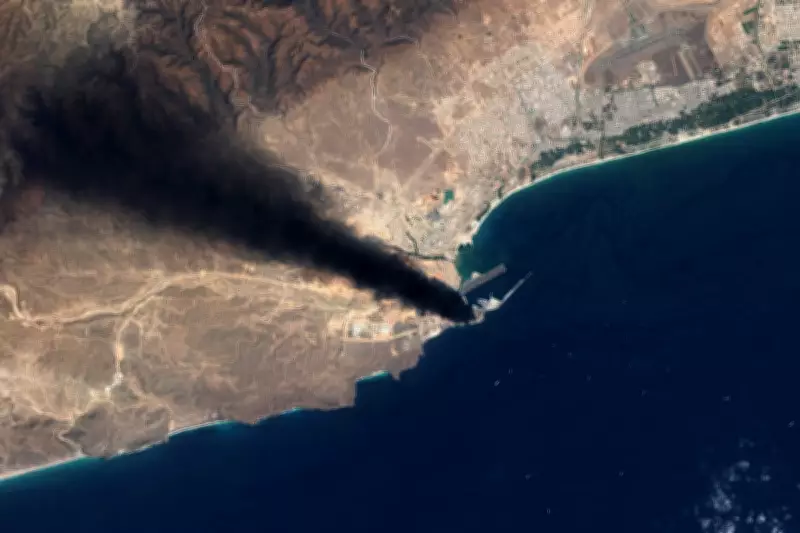
Satellite imagery reveals a major fire at the Port of Salalah oil storage tanks in Oman, following an Iranian drone strike on 11 March. This visual starkly underscores the escalating conflict's direct impact on global energy infrastructure. As the deadly war in Iran triggers what the International Energy Agency describes as the worst oil crisis in history, climate advocates are urgently calling for a faster shift away from fossil fuels. However, the conflict presents a complex dual effect, simultaneously accelerating and hampering the clean energy transition.
Clean Energy as a Protective Shield
Climate advocates argue that expanding renewable energy capacity is crucial for enhancing energy independence amid the crisis. Former US Secretary of State John Kerry recently labeled oil and gas as a security challenge, while United Nations Secretary-General António Guterres warned that addiction to fossil fuels is destabilizing both climate and global security. Some regions are already benefiting from reduced reliance on oil and gas, insulating them from fuel price volatility.
For instance, Spain and Portugal have experienced declining electricity prices in recent weeks, thanks to their renewable investments. In Pakistan, a surge in rooftop solar panel deployment over the past five years has helped households and businesses weather disruptions in the oil and gas market. According to Jan Rosenow, a professor of energy at Oxford University, electricity generated from wind and solar is largely insulated from fossil fuel price volatility – once built, the fuel is free.

Electric vehicles have also provided resilience in economies like China, where over 50% of new cars sold are electric, and Nepal, with a 70% share. These examples highlight how clean technologies can shield countries from energy shocks, urging a global acceleration away from fossil fuels.
Challenges Hindering Renewable Growth
Despite re-energizing calls for clean technology, the war and resulting supply chain disruptions pose significant near-term challenges. Chokepoints in the Strait of Hormuz, through which 20% of global oil flows, are disrupting the transport of essential metals like aluminum needed for solar panel construction. The Middle East accounts for around 9% of global aluminum production, with producers scaling back operations amid the conflict.
This could impede the construction of new clean power capacity, as could potential inflation spurred by the war. Renewable energy projects require substantial upfront investment for construction, equipment, and installation, making them vulnerable to economic instability. Additionally, US-Israeli strikes on Iran have disrupted supply routes, creating additional market shocks that complicate the transition.
Fossil Fuels Incentivized Amid Crisis
The war has provided a short-term boon for fossil fuels, including coal, the dirtiest energy source. Ira Joseph, a global fellow at Columbia University’s Center on Global Energy Policy, notes that renewables are winners here, but so is coal. Many Asian countries, heavily reliant on imported liquefied natural gas (LNG) passing through the Strait of Hormuz, are burning more coal to meet energy demand due to current shortfalls.
Nations like India, Thailand, and Vietnam are increasing coal usage, and disruptions to LNG—exacerbated by strikes on facilities like the world’s largest LNG terminal in Qatar—may reverse China's recent reduction in coal generation. Higher fossil fuel prices are generating windfall profits, incentivizing more oil and gas drilling and exploration. For example, US company Venture Global announced a new LNG supply contract, while Canadian energy company TC Energy cited war disruptions as increasing expansion likelihood.
Political actions, such as the White House paying a French company to abandon offshore wind farms for fossil fuel projects, further entrench this trend. Lauren Pagel, policy director at Earthworks, warns that war is being used as a false justification for rushed and irresponsible extraction, risking a carbon lock-in effect where new infrastructure remains operational for decades.

Policy Shaping the Green Transition
Experts propose various policy measures to encourage the green transition despite these challenges. Jan Rosenow advocates for reforming tax structures to reduce the artificial expense of electricity relative to gas. Gregor Semieniuk, a public policy and economics professor, suggests imposing a windfall tax on oil and gas companies to signal reduced profitability and curb production expansion.
Governments could also subsidize materials like aluminum for renewables buildout and implement strategic short-term price controls to manage interest rates. However, Semieniuk emphasizes that the most important policy is to end the conflict to resolve disruptions. Pagel adds that ending fossil fuel subsidies and enforcing polluter-pay principles are essential, stressing the need for human rights and environmental responsibility.
Kingsmill Bond, a strategist at Ember, argues that doubling down on fossil fuels is short-sighted, as solar, wind, and EVs offer cheaper, local, and faster alternatives. They were winning even before the crisis, and this just galvanizes change, he states, highlighting the transformative potential of clean energy despite the war's complexities.