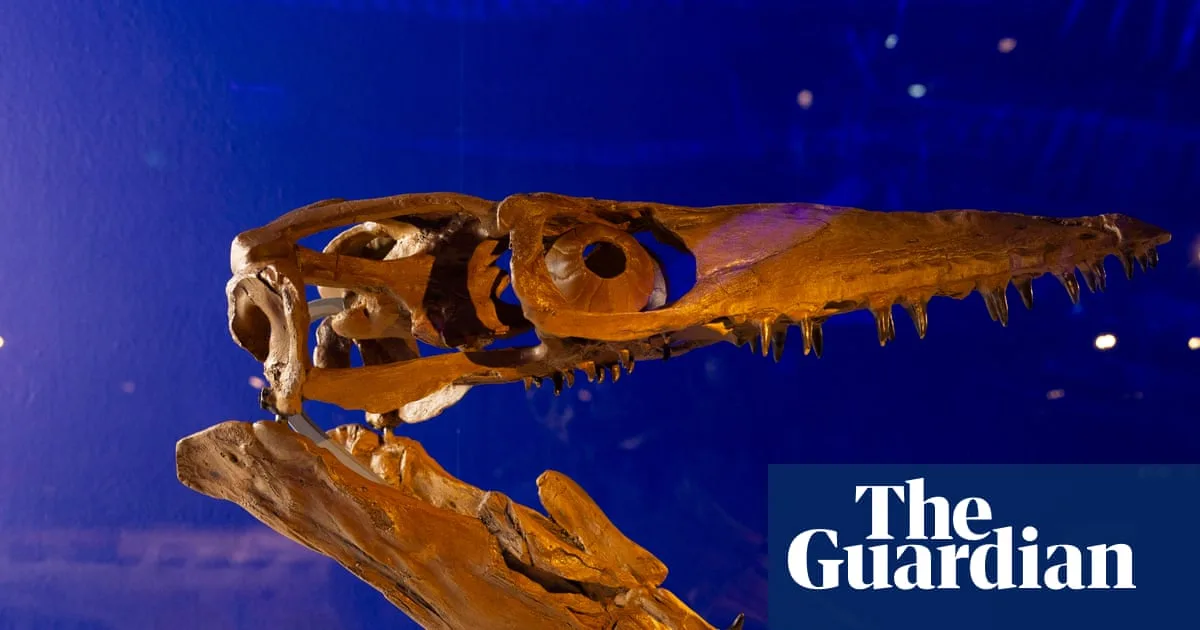
A new exhibition at the Natural History Museum, Jurassic Oceans: Monsters of the Deep, showcases the fearsome creatures that ruled the seas while dinosaurs roamed the land. Among the highlights is a 23ft plesiosaur skeleton, which exhibition manager Kate Whittington notes could easily prey on humans today with its long neck allowing stealthy attacks.
The exhibition explores parallels between ancient and modern oceans. Marc Jones, the science lead, explains that during the Jurassic era, higher CO2 levels made the planet warmer and more humid, with no permanent ice caps and higher sea levels. Ammonites, related to modern cephalopods, thrived in these conditions, and Jones notes that squids are similarly benefiting from today's warming oceans.
Marine ecosystems have changed dramatically over time. Sharks, now dominant predators, were once middle predators preyed upon by marine reptiles. Ichthyosaurs, with the largest eyes of any vertebrate, were speedy hunters that relied on vision. A bottlenose dolphin skeleton illustrates convergent evolution, as dolphins and ichthyosaurs independently evolved similar body shapes for similar hunting tactics.

Unlike other marine reptiles, ichthyosaurs went extinct earlier due to climate-related food scarcity, particularly the decline of belemnites. This mirrors today's threats: ocean warming, acidification, and deoxygenation endanger phytoplankton, the base of the marine food chain. Jones warns that adding over 2,000 gigatons of CO2 in less than 200 years will have serious consequences for ecosystems.