Kraków's Dramatic Turnaround from Smog Capital to Clean Air Pioneer
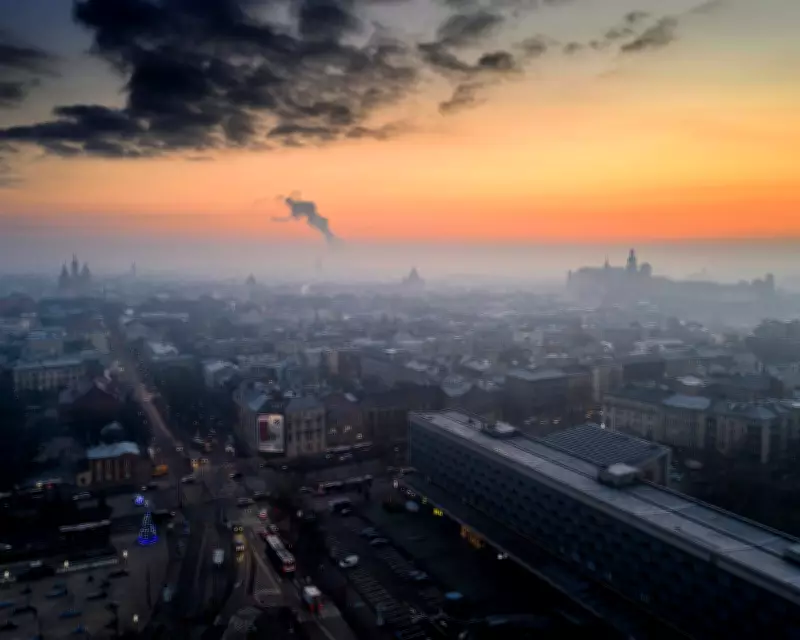
Kraków, once infamously dubbed the smog capital of Poland, has achieved a remarkable public health victory by slashing soot levels, saving an estimated 5,897 lives over the past decade. According to an exclusive expert assessment shared with the Guardian, this dramatic reduction in black carbon—a potent superpollutant—has averted nearly 6,000 premature deaths since 2013, when the city first announced plans to ban coal and wood in home heating.
From Childhood Memories to Medical Evidence
Marcel Mazur, an allergy specialist at Jagiellonian University Medical College, recalls holding his breath as a child in parts of Kraków thick with visible and odorous smoke. Now, treating patients with respiratory issues, he witnesses firsthand the damage caused by toxic gases. "It's not that we have this feeling that nothing can be done. But it's difficult," Mazur said, highlighting the challenges of combating air pollution.
His research separately shows a 17% decrease in asthma cases and a 28% reduction in allergic rhinitis among children between 2008 and 2018, underscoring the tangible health benefits of cleaner air.

Policy Measures Driving Change
The city's ban on burning solid fuels, which came into full effect in 2019, was preceded by years of preparatory measures. Local governments subsidised the switch to cleaner heating systems, sometimes covering the full cost, and restricted permissible fuels in the lead-up to the ban. Anna Dworakowska, co-founder and director of Polish Smog Alert, noted the significant improvement: "Little more than 10 years ago, we had about 150 days a year with too-high concentrations of particulates in Kraków. Now it's down to 30."
Polish Smog Alert, a network of campaign groups that originated in Kraków, has been instrumental in driving nationwide efforts to improve air quality. The reduction in black carbon, measured using established methods and data from a special station in Wrocław, highlights the effectiveness of these policies.
Rare Political Consensus and Broader Impacts
Łukasz Adamkiewicz, president of the European Clean Air Centre, attributed the progress to an unusual consensus across political divides. "Green, red, black, right, left, up, down – everyone said 'OK, this is a problem we need to tackle'," he said, emphasising the collaborative effort.
Black carbon, released from incomplete burning of fossil fuels and biomass, is a superpollutant more powerful than carbon dioxide. At a recent UN climate summit, nine countries announced plans to cut black carbon emissions, recognising its dual impact on global warming and public health. Rachel Huxley, head of mitigation at the health charity Wellcome, stated, "It's a big deal. If we take action to tackle superpollutants, we can have this huge impact on global warming and also on all of these premature health impacts."
Ongoing Challenges and Future Prospects
Despite these successes, challenges remain. In late January, Kraków briefly topped a global ranking as the most-polluted major city, ahead of Lahore and Kolkata, according to IQAir. Smog from surrounding towns and villages, where coal and wood heating persists, continues to affect the city, as Mazur noted: "What happens in the towns and villages surrounding Kraków has a direct impact on the air quality in our city."
However, Kraków's ban has inspired similar policies across Poland, with citizen pressure and campaign groups driving political action. Experts believe this model could guide polluted cities in Eastern Europe and beyond, where air pollution death tolls are high but public mobilisation is often limited. Huxley added, "My experience of working with cities is you can't do it without public support. That will either drive it, or without it you'll be hamstrung."
Looking ahead, pollution is expected to decrease further with the introduction of a low-emissions zone in 2024, restricting vehicle types in about 60% of the city. For the first time since measurements began, Kraków recorded no breaches of daily limits for benzo(a)pyrene, a cancer-causing pollutant, in 2024. This ongoing progress demonstrates that political will and public engagement can transform environmental health outcomes, saving thousands of lives in the process.