Brazil's Environment Minister Marina Silva Resigns to Pursue Congressional Seat
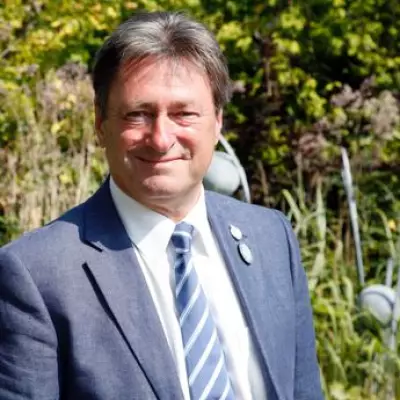
Marina Silva, Brazil's globally recognized environment minister and a prominent climate leader, announced her resignation on Wednesday, April 1, 2026. She is stepping down from her role in President Luiz Inácio Lula da Silva's administration to run for Congress in the upcoming national elections scheduled for October 4, 2026.
Legal Requirements and Successor Appointment
Under Brazilian election law, ministers must vacate their positions six months prior to national elections. Silva will be succeeded by João Paulo Ribeiro Capobianco, an environmentalist who has been serving as the executive secretary at the Ministry of the Environment and Climate Change. In an Instagram post, Silva stated, "I fulfilled the tasks assigned to me, which involved rebuilding and moving forward Brazil's environmental policy following years of decline." She added that she is resuming her mandate as a lawmaker, having been first elected to Congress in 1994 and again in 2022, and will work towards Lula's reelection.
Silva's Environmental Legacy and Achievements
This marks the second time Silva has served as the head of environmental policy under Lula, and for the second time, she has delivered a significant reduction in deforestation. When she took office in 2023, deforestation had nearly doubled under former President Jair Bolsonaro, who governed from 2019 to 2022. Silva pledged to eliminate deforestation by 2030, and since 2022, policies implemented under her leadership have reduced forest loss by more than 50%.

Marcio Astrini, executive director of Climate Observatory, a network of environmental nonprofit groups, commented, "If nothing exceptionally negative happens, we should have, if not the lowest, one of the lowest deforestation rates in the Amazon's recorded history." He added, "There was also strong control of deforestation in the Cerrado, and a serious and ongoing policy to combat forest fires, which became very severe in 2023 and 2024 due to extreme drought."
Contrast with Bolsonaro's Administration
Under Bolsonaro, who is currently serving a 27-year sentence for attempting a coup, agribusiness interests were championed, opposing the creation of protected areas such as Indigenous territories and pushing to legalize land grabbing. His administration froze the creation of new protected areas, weakened environmental agencies, and shifted forest management to the agriculture ministry. Deforestation in Brazil's Amazon reached a 15-year high in the year ending in July 2021, though it slowed slightly in the following 12 months.
Silva's Reforms and International Impact
Astrini noted that Silva reorganized the operations of the Environment Ministry and federal environmental protection agencies. She also restructured the Amazon Fund, which received new contributions, including record levels of funding to support field inspections, allowing enforcement operations to resume. "The environmental sector started working again in Brazil," Astrini said. "That was the first major achievement: She put the house in order."
Marina Silva was crucial in bringing the U.N. climate conference to Brazil in 2025 and holds significant authority on Brazil's climate agenda. However, her presence was not enough to prevent legislation and policies viewed as setbacks by environmentalists. Last year, Brazilian lawmakers passed legislation to fast-track approval of strategic infrastructure projects, reducing licensing processes from six or seven years to within 12 months. President Lula also pressed for exploratory offshore oil drilling at the mouth of the Amazon River, a highly sensitive region.
Personal Background and Historical Context
Silva was born in the Amazon and worked as a rubber tapper as a teenager. During Lula's first two terms, from 2003 to 2008, she oversaw the creation of dozens of conservation areas and helped implement a sophisticated anti-deforestation strategy, including major operations against environmental crimes and expanded satellite monitoring. She also helped design the Amazon Fund, the world's largest international initiative to preserve the rainforest.
She resigned in 2008 after clashing with Lula as he moved to court farmers during his second term. The two later reconciled, and Silva backed Lula's successful 2022 bid against Bolsonaro.

The Associated Press' climate and environmental coverage receives financial support from multiple private foundations. AP is solely responsible for all content. Find AP's standards for working with philanthropies, a list of supporters and funded coverage areas at AP.org.