Mezcal's Global Popularity Fuels Environmental Degradation in Mexico
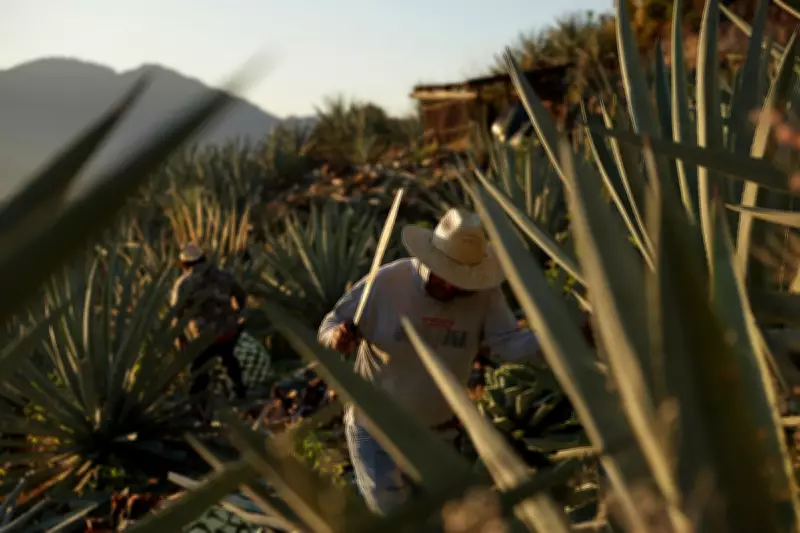
The meteoric rise of mezcal's popularity in the United States has come with a severe environmental price tag in Mexico, where traditional production methods are being overwhelmed by industrial-scale operations. What was once a small-scale, family-run craft has transformed into a major global industry, leaving deforestation, water scarcity, and soil erosion in its wake across the mezcal heartland of Oaxaca.
From Humble Beginnings to Industrial Boom
Thirty years ago, Gladys Sánchez Garnica's family distillery in rural Oaxaca operated with a single light bulb, producing mezcal through the night while neighbors arrived by horse to sample the smoky spirit. "We were taught when to harvest agave, how to care for the soil, and how much we could ask of the forest," said Garnica, 33, from her women-owned distillery in San Pedro Totolapam.
Today, that intimate tradition coexists with a booming international market. Production has skyrocketed from approximately 1 million liters in 2010 to over 11 million liters in 2024, according to Mexico's mezcal regulatory body COMERCAM. Nearly 75% of exports now flow to the United States, fueling a transformation that has replaced forests with vast agave plantations.

Deforestation on an Alarming Scale
A comprehensive study led by Professor Rufino Sandoval-García reveals the staggering environmental cost. In just 27 years, more than 34,953 hectares of tropical dry and pine oak forests have been cleared in two major mezcal-producing areas of Oaxaca—an area roughly equivalent to the size of Detroit.
The research found that agave plantations have expanded by over 400% in the past three decades, primarily replacing forests and farmland with espadin agave, the species used in most commercial mezcal. This monoculture approach is creating multiple environmental crises:
- Accelerated soil erosion across affected regions
- Reduction of carbon dioxide capture by 4 million tons annually
- Limited groundwater recharge capacity
- Creation of heat islands in heavily planted areas
"It will take a long time for the ecosystem to recover the resilience it once had," warned Sandoval-García.
Resource-Intensive Production Methods
Traditional mezcal production has always been resource-intensive, but industrial scaling has magnified these impacts exponentially. Each liter of mezcal requires at least 10 liters of water for fermentation and distillation, generating substantial waste including:
- Bagazo: The pulpy residue left after juice extraction
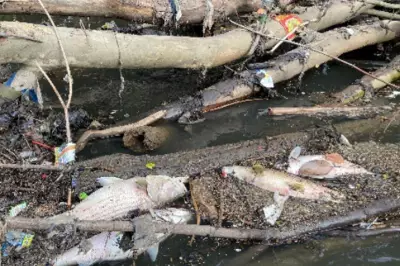
- Vinazas: Untreated wastewater often dumped directly into rivers
Large quantities of firewood—much sourced through illegal logging—are burned to roast agave pineapples and fuel distillation. For generations, surrounding ecosystems could absorb these impacts due to limited production scale, but that balance has become increasingly fragile.
Community Impacts and Water Crisis
Félix Monterrosa, a third-generation producer from Santiago Matatlan, witnessed firsthand how industrial mezcal displaced the traditional milpa system where corn, beans, and pumpkin grew alongside agave. "Now everything is monoculture, and that is the real problem," Monterrosa stated.
In his town, decades of dumping mezcal waste into the river has created such severe pollution that residents nicknamed it the "Nilo"—short for "ni lo huelas" or "don't even smell it." Water scarcity has become a critical concern across Oaxaca, which experienced its worst drought in over a decade in 2024 according to Mexico's National Water Commission.
Economic Benefits Versus Environmental Costs
The mezcal boom has brought undeniable economic benefits to a region with some of Mexico's highest poverty rates. Luis Cruz Velasco, a producer from San Luis del Rio, noted that mezcal income has created jobs for nearly every family in his town of 300 residents and enabled his siblings to attend university.

"There are many people who criticize us and ask what we do to reforest," Velasco acknowledged. "But we have to look for a livelihood and food." He argues that large brands have done more than the government to support marginalized areas, though he criticizes the lack of public incentives for sustainable practices.
Sustainability Initiatives and Regulatory Challenges
While major companies like Del Maguey highlight sustainability commitments—including reusing thousands of tons of waste—their third-party contracts typically focus on bulk purchasing rather than supporting sustainable production costs. The regulatory landscape presents additional challenges, as converting forest to agave plantations requires federal approval through a notoriously slow bureaucratic process.
Helena Iturribarria from conservation project Tierra de Agaves noted that some communities bypass the permitting system entirely due to its complexity. Mexico's Secretary of Environment stated it had received no forest clearing requests for agave cultivation in Oaxaca over the past three years but is investigating nine complaints about illegal land clearing since 2021.
Grassroots Conservation Efforts
Amid these challenges, grassroots initiatives are emerging. In 2018, Gladys Sánchez Garnica founded the "Guardians of Mezcal" collective, promoting sustainable practices including using only fallen trees for firewood and planting agave alongside other crops. With support from Tierra de Agaves, the group helped secure protected status for 26,000 hectares of forest surrounding Santa Maria Zoquitlan.
"Mezcal is a way of life, like a form of work that our parents taught us, so it really means a lot," Garnica reflected. "If there is a funeral, a wedding, a party, mezcal is a drink you are going to share with others, and above all many families depend on it."
The tension between preserving traditional mezcal culture, supporting economic development, and protecting fragile ecosystems continues to define Oaxaca's landscape as global demand shows no signs of slowing.