Nebraska Wildfire Battle Enters Seventh Day as Winds Subside but Threat Persists
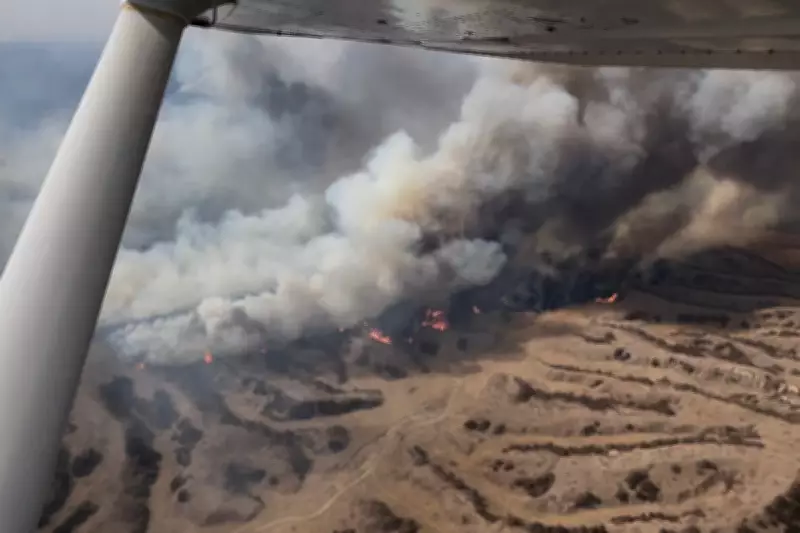
Firefighters and volunteers across western and central Nebraska have entered a grueling seventh day of battling colossal wildfires, including one that now stands as the largest in the state's recorded history. These blazes have consumed a staggering expanse of range and grassland, resulting in at least one confirmed fatality and the destruction of numerous structures.
Containment Efforts Amid Shifting Conditions
David Boyd, a spokesperson for the coalition of state, federal, and local officials coordinating the response, provided a cautious update on Wednesday. "What's different today is the wind will be less — still, with gusts to 30 miles an hour — but we're starting to dry out and heat up again," Boyd stated. He emphasized the ongoing risk, noting, "If we get fire, you know, across the containment line, it's got the potential for rapid spread."
Nebraska Governor Jim Pillen echoed this sentiment during a tour of the affected areas, posting on Facebook, "We are making progress, but the fight isn't over." The firefighting strategy has involved cutting trenches around the perimeters of the fires and extinguishing burning areas within these lines. Officials are hopeful that lighter winds forecast for Thursday and Friday will allow for significant containment advances.

Scale and Scope of the Historic Blazes
The wildfires consist of four separate incidents that have collectively burned approximately 1,300 square miles (about 3,367 square kilometers) — an area larger than the state of Rhode Island. The most formidable of these, designated the Morrill County fire, spans parts of five counties and extends over 80 miles (129 kilometers) from Bridgeport in the Nebraska Panhandle east to Lake Ogallala. Having scorched roughly 1,005 square miles (about 2,603 square kilometers), it is now officially the largest wildfire in Nebraska's history.
As of midday Wednesday, containment of the Morrill County fire was estimated at only 16%. The second-largest blaze, known as the Cottonwood fire, has burned more than 205 square miles (about 531 square kilometers) southeast of North Platte and was approximately 40% contained. Two smaller fires, located well north of the primary incidents, have burned about 56 square miles (145 square kilometers) and 27 square miles (70 square kilometers), respectively, and were mostly contained by Wednesday.
Human and Environmental Toll
The wildfires have exacted a tragic human cost. Governor Pillen confirmed during a weekend news conference that an 86-year-old woman from rural Arthur lost her life last Thursday while attempting to escape the flames. Dozens of structures have been destroyed, and at least one residential area near Jeffrey Reservoir, adjacent to the Cottonwood fire, has been under evacuation since last weekend.
Boyd highlighted the particular challenges in forested areas with red cedar, which retains fire intensely. "That's a little more complex to fight fire in. We actually have hand crews in there that are cutting fire line in with chainsaws, you know, pretty close to the edge of what was burning," he explained.
Long-Term Agricultural and Weather Concerns
The aftermath of these fires poses severe long-term challenges for Nebraska's agricultural sector. Sherry Vinton, Director of the Nebraska Agriculture Department, noted during a Saturday news conference that the Morrill County fire area alone provides grazing for more than 35,000 head of cattle. Agriculture experts warn that it may take several growing seasons for the land to recover sufficiently to support grazing again.
Weather conditions remain a critical factor. The fires were initially propelled by strong winds gusting over 60 mph (97 kph) last week, which roared across the region's rolling hills, fueled by tinder-dry prairie grass and red cedar stands. While winds slowed on Tuesday, allowing some rain and snow to aid firefighters, the forecast for Saturday predicts a return to conditions ripe for wildfires, with stronger winds and potentially record heat around 90 degrees Fahrenheit (32 degrees Celsius).

These Nebraska wildfires are part of a broader pattern of chaotic weather across the United States this week, which has included scorching heat in California and severe storms along the East Coast that forced airlines to cancel roughly 4,000 flights nationwide on Monday.