Net Zero Under Fire: Brexit Tactics Target Climate Goals
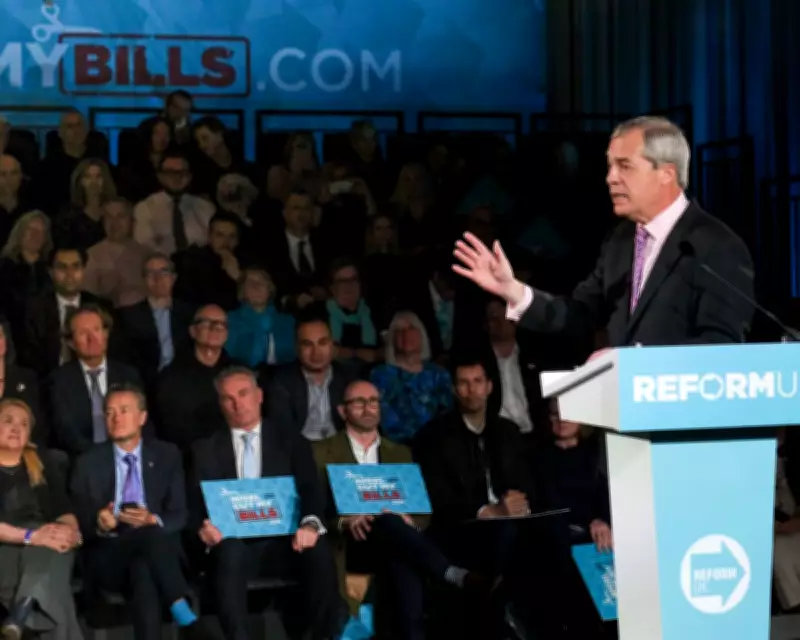
Nigel Farage has positioned net zero as an obsession of 'the elites,' a narrative that starkly contrasts with robust public backing for environmental initiatives. This framing emerges amid a deepening political rift over climate action, fueled by escalating energy costs and geopolitical tensions.
The Political Onslaught Against Net Zero
A formidable alliance, comprising the well-funded Reform party under Nigel Farage, segments of the Conservative party, certain business factions, and right-wing media outlets, is mounting a vigorous assault on the UK's commitment to achieving net zero greenhouse gas emissions by 2050. Their core argument asserts that net zero policies exacerbate the current oil crisis, advocating for increased North Sea drilling as a solution.
However, evidence clearly indicates that additional North Sea oil extraction will not alleviate UK energy bills, whereas climate action promises to reduce costs and shield the nation from future energy shocks. Despite this, the political discourse often overlooks these facts, mirroring strategies employed during the Brexit referendum.

Echoes of Brexit: Similar Arguments, Familiar Players
Shaun Spiers, former executive director of the Green Alliance thinktank, highlights the parallels: "These are largely the same people as those who campaigned for Leave, and they are using similar arguments. They blame climate action for issues like the cost of living and the economy, even though it's clearly not to blame. They view it as an easy political target and present scrapping policies as a panacea."
James Meadway, director of the Verdant thinktank, adds that net zero can seem abstract to the public. "Like the EU, net zero is an idea that can appear big, vague, distant, and technocratic. People support it in principle but perceive a disconnect from their daily lives, not seeing its immediate impact."
Weak Advocacy and Shifting Public Priorities
Luke Tryl, executive director of More in Common, notes a concerning trend: "Similar to the Remain camp during Brexit, advocates for net zero often appear sheepish in promoting it positively. Some Labour politicians treat it as a burdensome obligation rather than an opportunity."
Farage has openly sought to establish climate as a new political dividing line, telling the Sun on Sunday last year: "This could be the next Brexit – where parliament is hopelessly out of touch with the country." By portraying net zero as an elite preoccupation, he aims to contrast it with ordinary voters' interests.
Yet, public sentiment does not fully align with this narrative. Sam Alvis, associate director at the Institute for Public Policy Research, observes: "People see many aspects of climate action, such as renewable energy, as common sense. There is strong support for homegrown clean energy, and the UK public generally holds positive views on environmental measures."
The Salience Gap and Political Strategy
Currently, climate ranks about eighth among voter concerns, overshadowed by immediate issues like the cost of living and healthcare. This marks a significant decline from recent years when events like the Cop26 summit in Glasgow and record-breaking heatwaves in 2022 elevated it to a top-three priority.
Alvis warns of strategic shifts: "Reform attempts to attract voters on salient issues like migration and welfare, then gradually influence their stance on climate. Evidence suggests this approach is gaining traction."
Government Inaction and the Need for Strong Leadership
While Energy Secretary Ed Miliband forcefully argues that climate action will lower bills, Chancellor Rachel Reeves and Prime Minister Keir Starmer have been less vocal. Whispers of potential cuts to the North Sea windfall tax and support for more drilling undermine a unified governmental front.
Spiers criticizes this silence: "I can't recall when Reeves or Starmer last spoke up for net zero. They must persuade the public emotionally and rationally, addressing climate threats and extreme weather impacts."

Alvis emphasizes the importance of consistent messaging: "Public messages only resonate when repeated consistently across government. Strong leadership from senior politicians could make a substantial difference."
Robbie MacPherson, a Kennedy scholar at Harvard University and former head of parliament's all-party climate group, urges Labour to adopt a firm stance: "Labour has much to gain by going all out for net zero. Half-hearted positions drive unpopularity; authenticity wins public trust. When governments stand strong on their beliefs, they succeed."