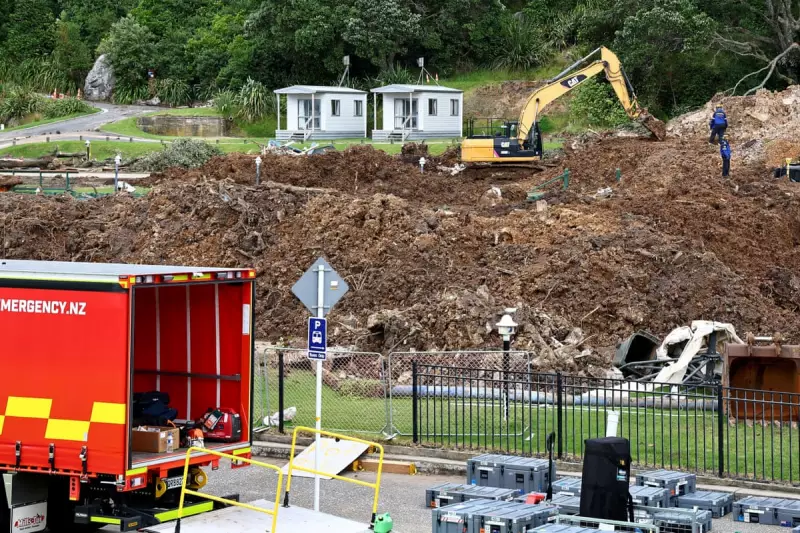
Rescue operations in New Zealand have been officially suspended for at least six individuals who remain buried following a devastating landslide. The decision to call off the search was made by emergency services due to perilous and unstable conditions at the disaster site, which pose significant risks to rescue teams.
Dangerous Conditions Halt Search Efforts
Authorities have confirmed that the rescue mission has been halted for the time being, with no immediate plans to resume. The landslide, which occurred in a remote area, has left the terrain highly unstable, making it unsafe for personnel to continue their efforts. Emergency responders are now focusing on assessing the situation and determining the safest course of action moving forward.
Impact on Local Community and Response
The disaster has deeply affected the local community, with families and residents anxiously awaiting updates. Officials have expressed their condolences and are providing support to those impacted by the tragedy. The suspension of rescue operations underscores the challenges faced in natural disaster response, particularly in hazardous environments.

New Zealand, known for its rugged landscapes, occasionally experiences such geological events, but this incident highlights the severe risks involved. Authorities are urging the public to avoid the area and are coordinating with geological experts to monitor the site for any further instability.
Next Steps and Ongoing Assessments
While rescue efforts are on hold, teams are conducting thorough evaluations to plan for potential recovery operations. This includes using technology and expert analysis to understand the landslide's causes and prevent future incidents. The focus remains on ensuring the safety of all involved while addressing the needs of the affected individuals and their families.
The situation serves as a stark reminder of the power of natural forces and the importance of preparedness in disaster-prone regions. Updates are expected as authorities develop new strategies to manage the aftermath of this tragic event.