Scientists have unveiled alarming new findings about the potential consequences if a crucial ocean current system collapses. The Atlantic Meridional Overturning Circulation (AMOC), a massive network of currents that includes the Gulf Stream, plays a vital role in regulating global climate patterns. Previous research suggested its abrupt failure could plunge northern Europe into a new Ice Age, but fresh analysis reveals a more complex and concerning scenario.
Unexpected Warming from Ocean Current Collapse
Researchers from the Potsdam Institute for Climate Impact Research have discovered through sophisticated computer simulations that halting the AMOC would unleash enormous quantities of carbon currently trapped deep beneath the ocean surface. This release would increase atmospheric carbon dioxide concentrations by 47 to 83 parts per million, potentially triggering up to 0.27°C (0.5°F) of additional warming across the planet.
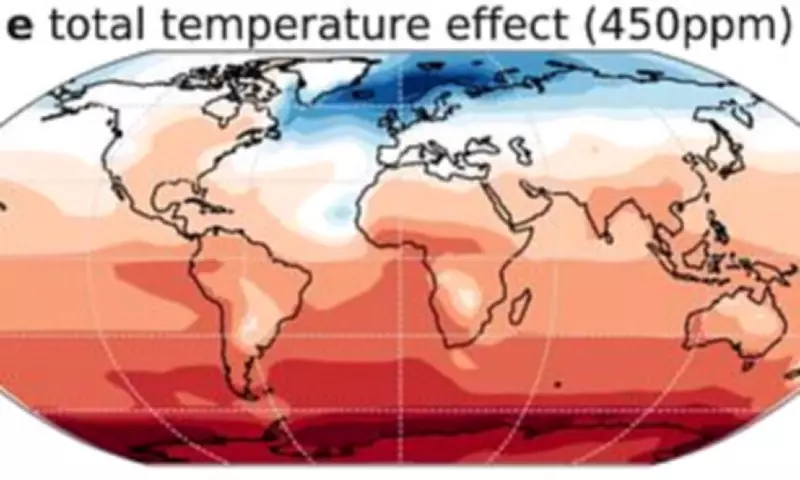
Although this carbon release would partially offset the cooling expected in northern Europe, temperatures across the Northern Hemisphere would still decrease significantly. Meanwhile, the Antarctic could become 7°C (12.6°F) colder, while the Arctic experiences extreme warming of approximately 6°C (10.8°F).

The Ocean's Conveyor Belt System
The AMOC functions as a planetary-scale conveyor belt, transporting water and heat around the globe. Its driving mechanism involves the sinking of cold, salty water in the frigid oceans near Greenland. As warmer water freezes, it becomes saltier and denser, sinking to ocean depths and pulling additional warm water northward to replace it.
However, this delicate balance is being disrupted by climate change. Freshwater from melting glaciers is pouring into polar regions, reducing water density and gradually slowing the AMOC's circulation. Multiple studies have warned that the system is approaching a tipping point beyond which it could collapse entirely.
Transforming Oceans from Carbon Sinks to Sources
Johan Rockström, director of the Potsdam Institute, explains the significance of these findings: 'The ocean has been our greatest ally, absorbing a quarter of human-made CO2 emissions. Our study shows how an AMOC collapse could flip the Southern Ocean from a carbon sink into a carbon source, releasing vast amounts of CO2 and fuelling further global warming.'
The research team conducted multiple simulations modeling the AMOC at various atmospheric CO2 concentrations before introducing freshwater until the system collapsed. In every scenario, the collapse produced a spike in CO2 levels and increased global warming.
Enhanced Mixing Releases Deep Carbon
Co-author Dr. Matteo Willeit clarifies the mechanism behind this phenomenon: 'This is due to enhanced mixing that brings carbon-rich deep waters to the surface.' While this additional CO2 might provide some mitigation against cooling in northern regions, it would exacerbate the intense heating expected in the Southern Hemisphere following an AMOC collapse.
The simulations revealed another concerning pattern: the higher the atmospheric CO2 concentration when the AMOC fails, the more severe the impacts become. When CO2 levels exceeded pre-industrial concentrations in the models, the current's collapse released even greater quantities of carbon.
Irreversible Changes and Extreme Consequences
At concentrations above 350 parts per million—significantly below today's level of approximately 420 parts per million—the AMOC would likely never recover from collapse. Dr. Willeit notes: 'Higher CO2 concentrations fundamentally alter the AMOC's stability, pushing the system into a bistable regime where the AMOC could weaken over hundreds of years before shifting to, and remaining in, a collapsed state. Once shutdown, we see it does not recover in the long run.'
The research indicates that at 450 parts per million CO2, combined effects could increase Antarctic temperatures by more than 10°C (18°F). Such extreme warming would threaten the continent's already fragile ice sheets and glaciers, potentially accelerating sea-level rise globally.

Global Climate Implications
Without the AMOC to redistribute heat around the planet, scientists predict dramatic hemispheric temperature disparities. The Northern Hemisphere would experience cooling while the Southern Hemisphere warms, but the newly discovered carbon release adds another layer of complexity to these projections.
This research highlights how interconnected Earth's climate systems are, with changes in ocean circulation potentially triggering feedback loops that amplify global warming. The findings underscore the urgency of addressing climate change to prevent reaching these dangerous tipping points in ocean systems that have historically helped regulate our planet's climate.