Documenting the Pantanal's Fiery Crisis: An Award-Winning Photographer's Perspective
Ahead of a significant exhibition opening at London's Science Museum, acclaimed documentary photographer Lalo de Almeida has revealed the harrowing stories behind his powerful images of South America's Pantanal wetlands. The Brazilian photographer, based in São Paulo, has spent over three decades documenting socio-environmental issues, with his work earning prestigious awards including first place in the World Press Photo environment stories category for Pantanal Ablaze in 2021.
The Unforgettable Scenes of Destruction
De Almeida first turned his attention to the Pantanal in 2020 when reports of uncontrolled fires began emerging. "It was a shock when we arrived," he recalls. "The fire was completely out of control with almost no firefighting response. I had witnessed many Amazon fires, but nothing compared to this devastation." The photographer describes encountering countless dead animals alongside injured, burned, and orphaned creatures as particularly heartbreaking.
During that catastrophic year, de Almeida returned three more times to monitor the unfolding disaster. His commitment to documenting the region has continued since, creating a comprehensive visual record of environmental collapse.

Close Encounters with Apocalyptic Flames
One particularly memorable incident occurred while travelling to a farm in Aquidauana's rural area where firefighters were battling a major blaze. "We began seeing multiple smoke columns on the horizon," de Almeida explains. "I stopped to photograph what seemed like a small fire near Paraíso farm. Within minutes, wind transformed it into a massive column of smoke stretching for miles. We had to evacuate rapidly to avoid being consumed."
The photographer vividly recalls the sensory overload: "The unbearable heat, burning vegetation noise, suffocating smoke, and orange light created a scene I'll never forget. It felt like pure apocalypse."
Animal Survivors in a Burning Landscape
Along the BR-262 roadway cutting through southern Pantanal, de Almeida witnessed remarkable animal behaviour during the 2020 fires. "Surrounded by flames, many creatures sought refuge in small roadside ponds," he notes. "We observed dozens of usually shy marsh deer in these lagoons, appearing stunned and unresponsive to human presence. They had no other survival options."
The Transpantaneira highway presented equally distressing scenes. "We regularly found carbonised animals beside the road, particularly slower-moving alligators, snakes, and tortoises," de Almeida remembers. "But the survivors were perhaps more haunting - injured animals resembling zombies, completely lost amid the smoke, wandering aimlessly along the roadway."
Firefighting Efforts and Environmental Neglect
Initial responses to the 2020 fires proved shockingly inadequate. "When we first arrived, the hotel serving as a firefighting base was being evacuated while surrounded by flames," de Almeida reveals. "Despite warnings, there was no organised response. The Pantanal was essentially abandoned to its fate with thousands of scattered fires."
A conversation with a lone firefighter watching a burning bridge proved particularly prophetic. "He told me resignedly that the fires would only end when it rained or everything burned," de Almeida recounts. "He was absolutely correct. The fires only ceased when rains finally arrived."
The Return of Fire in 2024
By August 2024, the Pantanal was burning fiercely again. De Almeida returned to document the Nhecolândia region fires, encountering rapidly escalating danger at Paraíso Ranch. "What began as a small spot fire transformed within minutes into a thick wall of flames and smoke," he describes. "The indraft created by the blaze's heat fed it further, destroying everything in its path. That hellish atmosphere of heat, smoke, orange air, and crackling trees creates a terrifying experience when witnessed up close."

Returning to Santa Tereza Ranch provided particularly sobering perspective. "I had thought the 2020 fires were a freak occurrence," de Almeida admits. "But seeing enormous numbers of dead animals again - tapirs, monkeys, birds - made me wonder if this has become the new normal. With frequent, intense wildfires fuelled by water loss and drought, there's simply no recovery time for this resilient biome."
Unsung Heroes and Global Connections
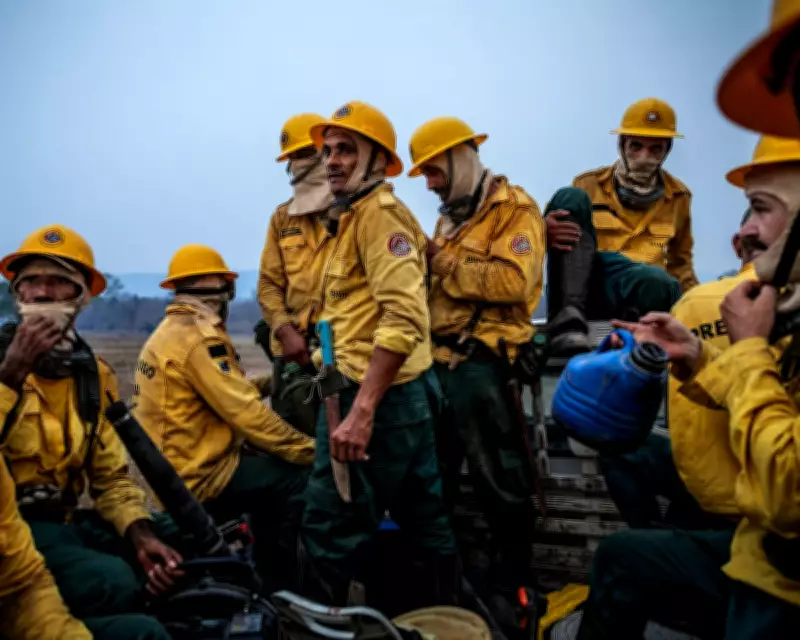
Amid the devastation, de Almeida found inspiration in the Prevfogo fire brigade from Brazil's federal environmental agency. "These farmers from Piauí state travelled thousands of kilometres to help," he notes with admiration. "Their resilience working twelve-hour days under forty-degree heat amid fire and smoke was extraordinary. Being alongside these anonymous heroes provided the only optimism during the 2020 fires."
The photographer hopes his London exhibition will foster greater global awareness. "The Pantanal serves as an instructive example of human impacts on Earth," de Almeida emphasises. "I want viewers to understand this isn't something distant happening elsewhere. We're all connected on this planet."
The exhibition Water Pantanal Fire, featuring work by Lalo de Almeida and Luciano Candisani, runs at London's Science Museum from 6th February to 31st May, offering British audiences a powerful visual testament to environmental crisis.