Seasons in Confusion: UK's Relentless Rain Takes Toll on Businesses and Daily Life
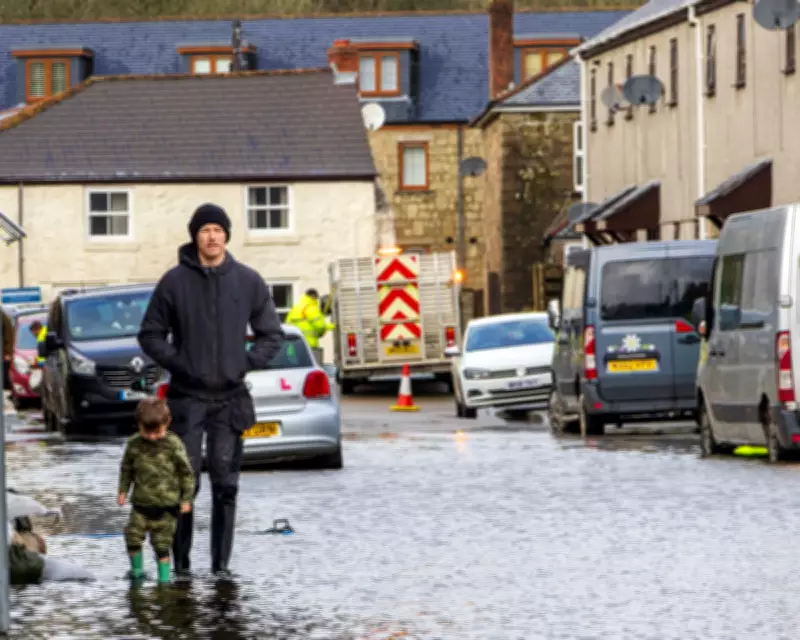
With 76 flood warnings still active across the UK and further downpours forecast for the coming weeks, parts of the country have endured near-continuous rain since the start of the year. This prolonged wet weather is not just a nuisance; it is severely disrupting livelihoods, particularly in rural areas where flooded roads, waterlogged ground, and repeated storms are making it increasingly difficult to sustain businesses, protect crops, and maintain steady work.
Here, individuals from various sectors share how the relentless rain and adverse weather conditions are impacting them and their enterprises, highlighting broader concerns about climate change and economic stability.
Thatcher in Devon: 'Haemorrhaging Money' Due to Weather Delays
In north Devon, Mark Harrington, a 61-year-old master thatcher with three decades of experience, describes the current situation as "silly season." He has been inundated with calls from customers dealing with leaking roofs in recent months. "I do understand that you're going to get some rain in winter, but it has definitely got worse," Harrington says. "Even if you do manage to work for a day, it's punctuated by periods of an hour and a half of rain where you're sitting in your truck doing nothing."

The financial strain is palpable. "I am haemorrhaging money at the moment just trying to cope with the delays," he admits. Jobs are taking longer, customers are reluctant to pay for extra scaffolding, and his trained employees are seeking indoor work due to the frequent rain-offs. Harrington used to compensate his team for half a day's wages during such interruptions but can no longer afford to do so. "I'd run out of money," he explains.
Additionally, the weather is affecting his materials. Wet conditions hinder wheat germination, leading to shortages and higher costs. "If a skilled tradesman such as myself is unable to maintain a team or even work as much as is required, then I fear for the future," Harrington warns.
Cornwall Nursery Owners: 'Beginning of a Long Drawn Out Disaster'
On a hill near Helston in Cornwall, John, 83, and his wife Vicki, 73, have lost 15 trees this year alone, many of which were pines planted nearly 40 years ago for shelter and beauty. "What I see is a combination of results from the increased numbers of storms and continuous rainfall," John says. "The ground gets very soggy, and the trees hold less well in it. It's such a shame to see a tree you planted lying on its side."
While their hilltop location offers some flood protection, surrounding lanes have been submerged, with water reaching three-quarters of the way up car wheels. Potholes have worsened, doubling travel times to Helston. Vicki, who runs a plant nursery specializing in roses and herbs, notes that the ground is "totally soggy and waterlogged," with standing water persisting after heavy rain. She has scaled back operations after Storm Goretti blew off her last polytunnel cover. "Thirty or 40 years ago, it was fine. There's no way I would contemplate polytunnels on top of a hill now. The climate has changed so much," she says.
John predicts more severe impacts ahead. "As global heating progresses there is a likelihood that we will have structural damage to buildings as well as trees. I'm concerned that what we've seen so far is only the beginning of a long drawn out disaster," he adds, describing some mornings as feeling "like the start of a third-rate historian novel" due to the misty and dank conditions.
London Gardener: 'Seasons Have Become Confused'
In London, gardener Connor Law, 33, faces similar challenges. "It's been hard to work with this much rain," he says. "I don't mind working through a shower or two but when it's so consistently wet, you can end up accidentally disturbing plants. So jobs get pushed further and further back. I'm self-employed, so it's going to start making money a bit tight if it carries on for too long."

Law has observed increasingly extreme weather patterns over his 10-year career. "I worked in gardens where half the plants were dying last summer, and now they're all soaked. Especially here in London, seasons have become confused. I saw spring bulbs flowering in December," he notes. He points out that droughts followed by flooding are becoming more common, necessitating changes in gardening practices. "We can't do what we've traditionally done for the last couple of hundred years. They're going to have to look a bit different," he advises, suggesting the use of wetland plants to adapt to flooding.
While London's conditions may be milder than in regions like Wales or the south-west, Law emphasizes the broader environmental implications. "People's gardens are really important for biodiversity, insects and carbon capture. And if things in your garden are constantly dying because the conditions have changed, we're going to lose that resource," he concludes.