From Cranberry Farm to Conservation Sanctuary: A Wetland Transformation
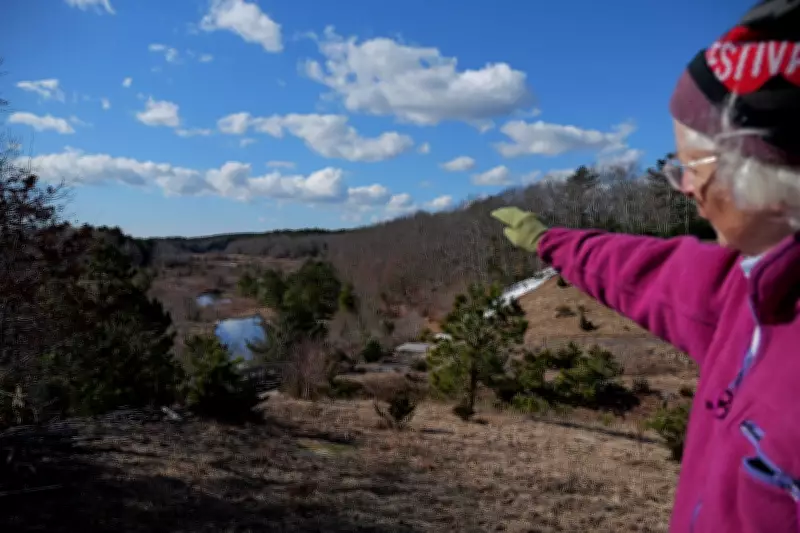
Glorianna Davenport stands amidst hundreds of acres of protected wetlands that were once her family's cranberry farms. In her hands, she holds laminated photographs depicting striking red cranberry bogs fed by razor-straight water channels. It's difficult to comprehend that the land surrounding her—now teeming with sinuous streams, diverse wildlife, lush moss, and towering trees—once appeared so dramatically different.
The Economic and Environmental Pressures on Cranberry Farming
The remarkable transformation of this land, meticulously documented through an extensive network of cameras and sensors, provides a comprehensive playbook for wetland restoration. This comes at a critical time as cranberry farms from New England to Wisconsin face diminishing profits due to climate change and other economic factors. The cranberry crop specifically requires cold winters and abundant water, but increasingly warmer temperatures and prolonged drought periods are severely challenging traditional harvest seasons.
"For many of these farmers, it's their life savings and what they hope to pass on to their children," Davenport explains. "The decision to transition away from farming is incredibly complicated."

Tidmarsh Wildlife Sanctuary: A Living Laboratory
The land Davenport sold for restoration, now designated as the Tidmarsh Wildlife Sanctuary, has established itself as the single largest freshwater restoration project in Massachusetts. In collaboration with researchers, technologists, and artists, she has cultivated a living laboratory dedicated to advancing wetland conservation science. The installed cameras and sensors generate live, publicly accessible data streams that vividly illustrate how the land is progressively recovering its natural biodiversity.
Scientists who have studied the sanctuary and an adjacent town preserve—also located on her former farmland—have published peer-reviewed studies cataloging these environmental changes. The valuable lessons learned at Tidmarsh directly contributed to the state launching a dedicated cranberry bog restoration program. This initiative connects farmers with nonprofit organizations that either purchase the land for restoration or assist the farmers in undertaking restoration projects themselves.
The Restoration Process and Ecological Rebirth
To enable restoration at Tidmarsh, over 20,000 native plant species were carefully planted, several obsolete dams were removed, and new, natural waterways were excavated. Heavy machinery sifted through sandy soil that had been degraded by more than a century of intensive cranberry cultivation. This farming had created a thick, hardpan layer that smothered the original freshwater wetlands upon which the farms were originally constructed.
Ecologists who previously considered such cranberry farmland to be "ecologically dead" witnessed a remarkable wetland ecosystem emerge. Astonishingly, within just one year of restoration work commencing in 2010, the barren sandy soil began to sprout new life.
A 2025 study of sites including the Foothills Preserve in Plymouth—land that was also once part of Davenport's farm—conducted by researchers from the Woodwell Climate Research Center and the University of Connecticut, suggested the sand at Tidmarsh contained long-dormant native seeds. These seeds simply required mixing with peat to successfully germinate. Similarly, a 2021 study of Tidmarsh and other restored sites found that critical metrics like water retention, soil health, and microbial communities improved rapidly within just a few years.
"We discovered that former cranberry farms were actually highly restorable," states Beth Lambert, director of the Massachusetts Division of Ecological Restoration.
Public Engagement and Educational Impact
The tangible results of this transformation are showcased during regular tours conducted by Mass Audubon, the conservation organization that purchased and now manages most of the land at Tidmarsh. Kim Snyder, the group's education coordinator, leads diverse groups ranging from avid birdwatchers to schoolchildren on educational field trips.
"A lot of Plymouth residents who have been here for a long time remember this area strictly as a cranberry farm," Snyder notes, highlighting the profound change.

Inspiring a Statewide Program and Broader Conservation
Lambert confirms that the success at Tidmarsh was instrumental in launching the state's Cranberry Bog Restoration Program. This program provides technical assistance and connects farmers to federal funding and conservation-minded buyers. To date, the state has helped complete construction on nine restoration projects totaling approximately 500 acres (202 hectares) and 10 miles (16 kilometers) of stream habitat. An additional 11 projects spanning another 500 acres are currently in the planning stages. Lambert expresses her goal to restore another thousand acres within the next 10 to 15 years.
According to the United States Department of Agriculture, the number of retired cranberry farms in Massachusetts increased by about 40% between 2017 and 2022. It is not inevitable that farmers will choose to sell their lands for conservation; they could sell to developers or simply allow the land to lie fallow, which might take decades to return to a wild, productive state.
"If we don't conserve, if we don't protect these lands that owners are walking away from, we lose them forever," Davenport warns emphatically.
The Living Observatory: Sharing Knowledge Globally
A retired filmmaker, Davenport believes that supporting more research on wetland restoration allows greater knowledge to be communicated to the public, potentially inspiring other projects. This conviction led her to establish the Living Observatory, a nonprofit described as a "learning collaborative" where researchers, artists, and others document how former cranberry farms recuperate.
Through its network of sensors—monitoring conditions from soil moisture to temperature—and live cameras, the Living Observatory has amassed a significant trove of data on restoration techniques. The project's website now hosts data from multiple restoration sites across Massachusetts beyond Tidmarsh.
Gershon Dublon, a data and systems researcher and director of the board of the Living Observatory, noted that researchers greatly appreciate having a centralized, simple tool to access and contribute data. Following Tidmarsh's success, ecologists from as far away as the Amazon rainforest have contacted the Living Observatory seeking advice on deploying similar bespoke sensor networks for their own conservation work.
Building Climate-Resilient Landscapes
Wetland restoration projects and the knowledge derived from them are increasingly recognized as vital tools in combating climate change, asserts climate scientist Christopher Neill of the Woodwell Climate Center. Wetlands act as natural barriers, absorbing flood and storm waters. Scientists note that extreme precipitation events are becoming more frequent in the Northeastern United States.
At Tidmarsh, a prime example of this resilience is the sphagnum moss flourishing beside a mile-long boardwalk. Snyder enjoys informing visitors about its antimicrobial properties. Importantly, this moss also absorbs and stores planet-warming carbon dioxide.
"It's a great feature to demonstrate the scope and impact of restoration work," she says with a smile.
The profound changes at Tidmarsh fill Davenport with hope. Native pitcher plants now grow in clusters within the wetlands. Insects hum over running brooks. Her boots sink into the soft, wet ground—sounds and sensations she never experienced on the farm where she was raised.
"The quiet goal is, can we make a dent in the amount of land that's placed into conservation?" Davenport reflects, looking out over the thriving sanctuary that was once her family's bog.