How do you personally feel about rainfall? When heavy showers pour down relentlessly, do you appreciate the replenishment of rivers and reservoirs, or do you sigh wistfully for brighter, sun-drenched skies? Naturalist and author Stephen Rutt firmly belongs to the first group. Despite regrettably never learning to swim, he has held a lifelong fascination with water since childhood.
A Deep Connection to Water
Rutt laments humanity's wasteful attitude toward water resources. He argues that modern society has become profoundly disconnected from the intensive labor involved in harvesting, storing, and purifying water, leading us to overlook its immense value. In his insightful new book, The Waterlands, Rutt examines how water has fundamentally shaped the British Isles, from winding rivers and serene lakes to expansive bogs and fens.
The Eternal Cycle of Water
Water undergoes a continuous, transformative recycling process—changeable yet indestructible. As it evaporates, it ascends as vapor, traveling globally on atmospheric currents before condensing and descending back to Earth's surface. Rutt poetically describes it as 'flowing as liquid or frozen for a time in an alpine glacier or Arctic ice cap.'

Remarkably, approximately 96.5 percent of Earth's water resides in seas and oceans, covering three-quarters of the planet's surface. In stark contrast, rivers account for a mere 0.0002 percent. During his walks along Britain's iconic riverbanks, Rutt's foremost concern is the deteriorating quality of our waterways.
Pollution and Degradation Challenges
Industrial waste discharges, sewage contamination, and recurring droughts have all contributed to the degradation of British rivers. Currently, only about one in seven rivers maintains a good ecological condition. However, Rutt provides historical perspective, noting that compared to the 19th century—when vast quantities of chemicals were dumped unchecked into water systems—'they are in an unimaginably good state – the salmon back in the Clyde, trout still abundant on the Test.'
The Hidden Wonders of Bogs
While bogs may not initially seem captivating, Rutt masterfully portrays Scotland's vast Flow Country peatland as fascinating as an archaeological excavation. He illustrates that inserting an index finger into the peat bank connects you to organic matter from the 1980s; delving deeper to the elbow reaches pollen deposited during Shakespeare's era.
Conservation Success Stories
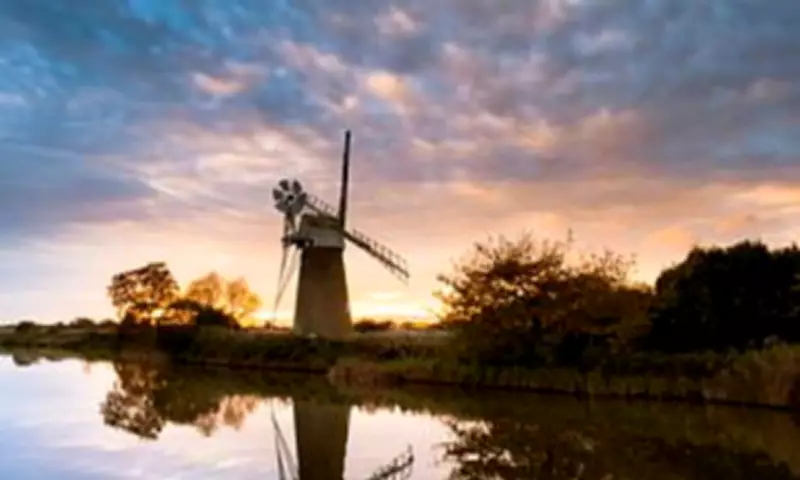
The state of Britain's waterways isn't entirely bleak. The East Anglian Fens once hosted wolves, bears, boars, beavers, and white-tailed eagles before extensive drainage in the 17th and 19th centuries. Since 1997, the RSPB has been restoring 300 hectares of this landscape, excavating new channels and water areas while planting reed beds. The area is gradually returning to 'a better, wetter, wilder state,' with the air now vibrant with birdlife.
A Compelling Central Message
The Waterlands meanders thoughtfully, much like the rivers Rutt cherishes, but its core theme remains powerfully compelling: without sufficient water, humanity faces dire consequences. Rutt passionately argues that we must rekindle our love for water, emphasizing that 'water is the heartbeat of the planet.' The book is currently available for purchase, inviting readers to deepen their appreciation for this essential resource.