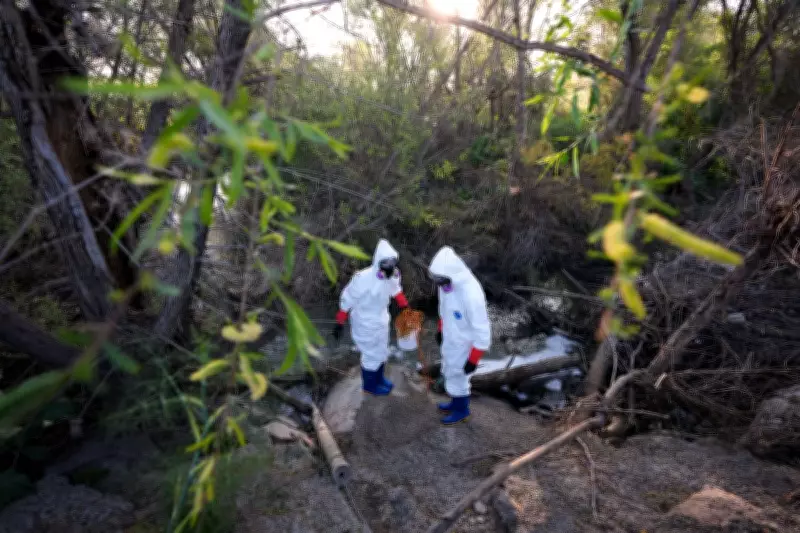
Tijuana River Toxins Trigger Severe Health Crisis in Southern California
For decades, billions of gallons of raw sewage and industrial waste have been dumped into the Tijuana River, creating a dire environmental and public health emergency in Southern California. Thousands of residents are suffering from nausea, delirium, headaches, and respiratory problems due to exposure to toxic gases like hydrogen sulfide emitted from the polluted waters.
Decades of Pollution and Cross-Border Challenges
The Tijuana River, which starts in Mexico and flows into California before emptying into the Pacific Ocean, has been contaminated with over 100 billion gallons of sewage since 2018 alone, according to the International Boundary and Water Commission. This pollution stems from Tijuana's rapid population growth and industrial waste, often from factories owned by U.S. companies. In response, the United States and Mexico signed an agreement last year to upgrade wastewater plants, but cleanup efforts are expected to take at least two years, leaving tens of thousands exposed in the interim.
Health Impacts and Inadequate Safety Standards
Raw sewage emits hydrogen sulfide, a toxic gas that can erode neurons, trigger asthma attacks, and cause symptoms ranging from skin irritation to death. The Centers for Disease Control and Prevention warn that long-term health effects are only beginning to be understood. Currently, there is no federal safety standard for hydrogen sulfide, except for workers in high-risk settings like wastewater plants. California and Texas are considering updates to outdated state standards, but new regulations may not be implemented until 2030.

Democratic Sen. Steve Padilla, who represents the Tijuana River Valley, emphasized that past standards focused on odor as a nuisance rather than health risks. "I don't think we had the understanding scientifically of what the health impacts were here, and now we do," he said.
Community Suffering and Scientific Findings
Residents like Steve Egger, 72, describe constant exposure to a rotten egg smell, leading to headaches and congestion despite using hospital-grade air filters. A 2024 survey found that 71% of households near the river smell sewage indoors, and 69% have family members sick from exposure. Researchers from the University of California, San Diego, discovered hydrogen sulfide levels 4,500 times higher than typical urban levels at night, with thousands of other toxic gases present.
Kimberly Prather, a chemistry professor, noted that residents have been "more or less gaslit" about the dangers. The pollution has forced beach closures and sickened Navy SEALs training in the area.
Medical Consequences and Calls for Action
Doctors Matthew and Kimberly Dickson report increased cases of migraines, wheezing, and brain fog among patients near the river, with respiratory issues spiking by 130% during high flow periods. After a tropical storm in August 2023, their caseloads tripled. Many residents, including Egger, have been advised to move, but deep family ties keep them in their homes.
Environmental Protection Agency Administrator Lee Zeldin acknowledged the crisis during a February visit to San Diego, highlighting its impact on a largely poor, Latino population. San Diego County has distributed over 10,000 air filters, but the threat persists, with river foam now visible from space.
As cleanup delays continue, the community's health deteriorates, underscoring the urgent need for effective solutions to one of the nation's longest-running environmental disasters.