Storm Barrage Accelerates UK Flood Crisis: Homes Face Abandonment as Rainfall Outpaces Predictions
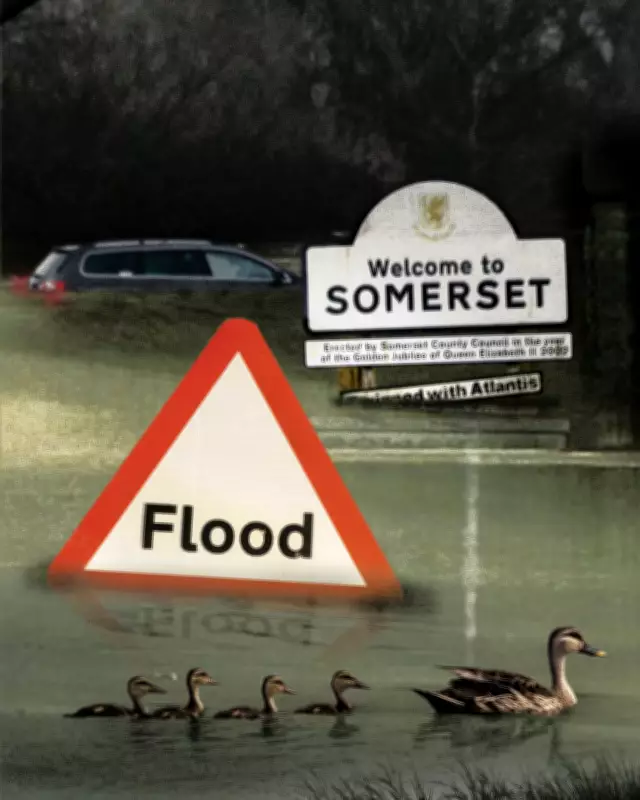
A relentless barrage of Atlantic storms has drenched southwest England this January, with Storm Chandra following closely behind Storms Goretti and Ingrid. This fierce sequence has saturated soils, supercharged rivers, and triggered nearly 150 flood alerts across England, leaving communities reeling and scientists warning of accelerating climate impacts.
‘Déjà Vu’ on the Somerset Levels: Communities Under Siege
For residents of the low-lying Somerset Levels, the flooding this week felt painfully familiar. Rebecca Horsington, chair of the Flooding on the Levels Action Group, described a scene of palpable stress and anxiety. "It's déjà vu," she said. "We've all been here before. But since the major floods of 2014, the weather events are becoming more frequent and the rain just dumps now." Where waters took two months to rise a decade ago, this week's deluge achieved the same in just two days.
The human cost is immediate and severe. Bryony Sadler, a hairdresser from the village of Moorland, was planning the evacuation of her family and animals as waters rose. "The rain is heavier and more intense, the winds stronger," she reported, echoing the experiences of many whose homes and businesses have been inundated, schools closed, and travel networks crippled.

Science Confirms a Wetter, Wilder Future Arriving Early
Behind the devastation lies a stark scientific reality. Experts confirm that the climate crisis is reshaping Britain's flood risk in real-time. Professor Hayley Fowler, a climate change impacts expert at Newcastle University, delivered a sobering assessment: "We're already experiencing changes in UK winter rainfall that the global and regional climate models predict for the 2040s – we're 20 years ahead."
The physics is simple yet alarming. Warmer air, heated by fossil fuel emissions, holds more water vapour, leading to heavier downpours. Professor Fowler notes that the extra water falling annually in the UK is equivalent to three million Olympic-sized swimming pools, saturating the ground and priming it for floods. The Met Office adds that storms are now 20% more intense.
A Widening Gap: Protection Lags Behind Peril
Despite the escalating threat, efforts to protect communities are falling dangerously behind. Professor Fowler, who also serves on the Climate Change Committee's adaptation subcommittee, expressed deep concern: "We are very concerned about the widening gap between the action we're taking in the UK and the impacts we're feeling." She highlighted a critical lack of investment and delivery on resilience plans.
This funding crisis is felt acutely on the ground. Dr Martina Egedušević, a flooding scientist at the University of Exeter, criticised the reactive approach: "We are still funding flood protection like climate change is a future problem, but for communities in the south-west it is already here." Maintenance of existing defences is chronically underfunded, and nature-based solutions are not being deployed at scale.
Infrastructure Overwhelmed and Communities at a Crossroads
The new intensity of rainfall is exposing systemic vulnerabilities. Outdated drainage systems, designed for a different climate, are being overwhelmed, flooding areas previously considered safe. James Wade from Taunton, now in emergency accommodation, experienced flooding for the first time in 13 years due to blocked drains. "Even during the huge floods of 2014 we were dry," he said.
Local authorities are stretched to breaking point. Bill Revans, leader of Somerset Council, lamented the financial constraints: "We've only got so much money... I'd love to live in a world where we could maintain drains to a high standard. But that's not a situation that local councils are in." An Environment Agency funding shortfall has led to a 40% cut in properties to be protected by 2027 and the abandonment of 500 new defence projects.

The Unthinkable Question: Will Some Homes Have to Be Abandoned?
As the waters recede, a darker, more permanent question looms over the hardest-hit communities. With an estimated 6.3 million properties in England already at flood risk – a figure predicted to rise to 8 million by 2050 – the possibility of managed retreat is entering the conversation.
Mike Stanton, chair of the Somerset Rivers Authority, voiced what many fear: "It may be that in the next 50 years, perhaps in the next 20, some homes around here will have to be abandoned." Councillor Revans reflected on the human dimension, praising the tight-knit, supportive communities, but conceding: "Ultimately, it's a question of whether we're prepared to spend the resource on keeping them dry every winter."
For residents like Mark Pugh in Cornwall, the anxiety is coupled with long-term uncertainty. "Some of us are now discussing how, if this is going to continue happening, are we going to cope as we get older," he said. The message from scientists and affected communities is unified: the climate crisis is not a distant threat but a present emergency, demanding urgent, scaled-up action to protect the nation's homes and way of life.