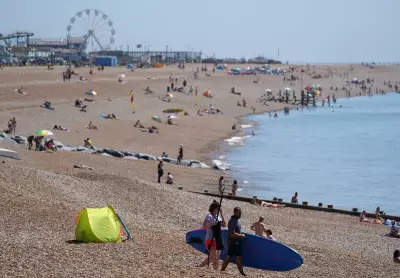
The United Kingdom is currently experiencing an unprecedented heatwave, with the first-ever 'tropical night' recorded as temperatures did not drop below 21.3°C at Kenley Airfield in south London. This follows the hottest May Day on record, where temperatures reached 34.8°C in Kew Gardens. The heatwave, officially declared in eight locations across southeast England, has prompted amber heat-health alerts from the UK Health Security Agency for five regions, warning of increased pressure on health services and potential mortality among vulnerable groups.
When Will the Heatwave End?
According to the Met Office, the heatwave is expected to persist until Sunday, May 31. However, temperatures will begin to gradually decline from the middle of the week. While many areas will still experience highs in the upper 20s Celsius, conditions will become less extreme. For instance, London is forecast to see 24°C by next Sunday afternoon, while Glasgow and Plymouth may drop to 18°C.
Current Conditions and Forecast
Tuesday is expected to be another very hot day, with temperatures peaking at 35°C in London, the Home Counties, and Cambridgeshire. Widespread temperatures exceeding 30°C are anticipated across eastern Wales, and eastern, southern, and central England, away from immediate coastal areas. A small chance of heavy, thundery showers exists in the afternoon. From Wednesday to Friday, an onshore breeze will bring fresher conditions to the east, but it will remain very warm elsewhere, with largely dry weather and occasional showers.

Climate Change Implications
Experts warn that non-summer heatwaves may become more common due to climate change. Professor Chris Brierley, Professor of Climate Science at University College London, stated that the impacts of climate change are most evident through more instances of extreme heat. He noted that such uplifts could occur at any time of year, with substantial consequences for biology and health, especially when they coincide with already hot periods.