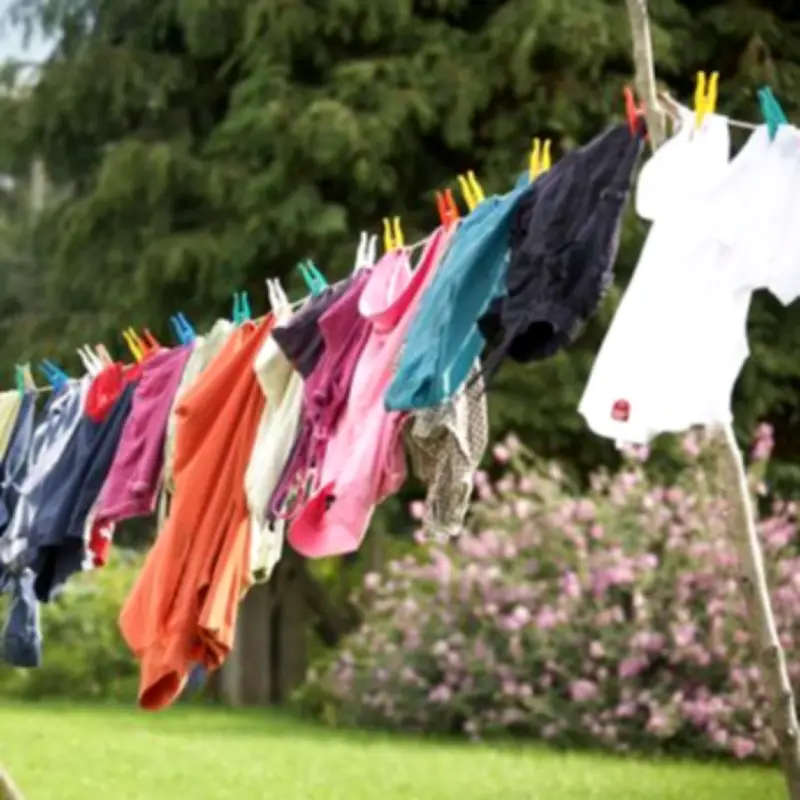
The Met Office has issued a warning advising UK households to avoid drying their clothes outdoors over the coming days, following a significant spike in pollen levels.
Despite a recent period of wet and cold weather across the UK, rising temperatures have prompted many residents to resume using outdoor washing lines as a cost-effective alternative to tumble dryers. However, meteorologists warn that doing so could inadvertently introduce severe allergens into the home.
According to the latest five-day forecast, the country is currently experiencing its first major peak of the grass pollen season, which typically runs from late May to late June.

Pollen season phases
The UK's pollen season traditionally has three distinct, yet overlapping, periods. The initial phase spans March to May with tree pollen release, the second involves grass pollen discharge from mid-May to July, and the final stage sees weed pollen released from approximately July to September.
The UK Health Security Agency (UKHSA) recently warned that pollen and other allergens may be released earlier than normal and persist for extended periods due to a warming climate, meaning hay fever symptoms could emerge much earlier than expected.
Why drying outside is risky
Experts warn that pollen grains easily adhere to wet fabric, meaning clothes left outside to dry can trap the particles and carry them indoors.
The Met Office has explicitly advised households to "avoid drying washing outdoors when the pollen count is high or when cutting the grass". The national weather service outlined some regions that are more at risk than others:
- Very High Risk: London and the South East of England.
- High Risk: The Midlands, East of England, the remainder of Southern England, and Wales.
- Lower Risk: Northern regions of the UK, though residents are still urged to remain cautious as levels are expected to rise nationwide.
By Tuesday, high or very high pollen levels are projected to blanket the entirety of England and Wales.
Health impact
Medical data indicates that over 10 million people in the UK suffer from hay fever. Health officials note that exposure can trigger respiratory and systemic symptoms, including coughing, sneezing, blocked or runny noses, and localized irritation of the eyes, mouth, and throat.
Because recent research shows a year-on-year increase in hay fever diagnoses, meteorologists and health experts emphasise that all households should take proactive precautions to limit indoor pollen contamination, even if residents do not currently exhibit allergy symptoms.
Prevention tips
Whilst there is no cure for hay fever, it is most effectively managed through preventative strategies including abandoning outdoor washing lines for drying laundry. Instead, it's recommended that clothing should be dried inside when pollen levels are elevated, as this helps to reduce symptoms.