British Wildlife Faces Mass Extinction Crisis Within 20 Years, Study Warns
Hundreds of native British species could face permanent extinction within the next two decades unless immediate and decisive action is taken, according to alarming new research from leading ecological experts. The comprehensive study paints a stark picture of potential biodiversity collapse across the United Kingdom's natural landscapes.
Projected Losses Under Worst-Case Scenarios
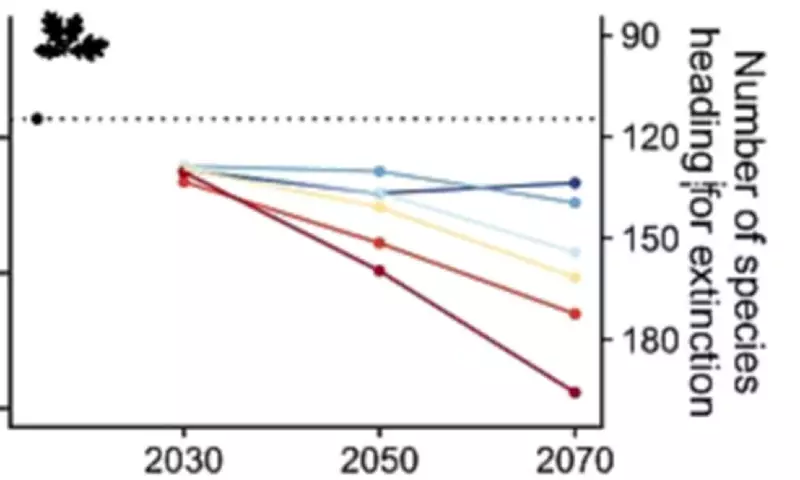
Researchers from the UK Centre for Ecology and Hydrology have modelled future scenarios revealing that under the most pessimistic projections, Britain could lose 196 plant species, 31 bird species and seven butterfly species permanently by 2070. These devastating figures represent more than three times the historical extinction rate for plants and birds within Great Britain, marking a dramatic acceleration of biodiversity loss.
Among the most vulnerable species identified are the merlin, Britain's smallest bird of prey, alongside the mountain ringlet and large heath butterflies. Iconic plant species including the burnt orchid, grass-of-parnassus and alpine gentian also face imminent threat of disappearance from British landscapes forever.

The Critical Two-Decade Window
Lead author Dr Rob Cooke emphasized the urgency of the situation in his analysis. 'Our results show that the next 20 years are absolutely critical,' Dr Cooke told the Daily Mail. 'By approximately 2050, we reach a decisive point where our choices regarding emissions and land use will largely determine whether Britain moves toward a severely degraded environment or a nature-positive future. We should be deeply concerned because these projections indicate substantial and permanent changes to Britain's wildlife heritage.'
The research team utilized extensive biological and environmental data to model how over 1,000 native species might respond to changing climate patterns and land-use practices. Their findings, published in the prestigious journal Nature Communications, indicate that extinction risks increase across all modelled scenarios, with the most severe outcomes occurring when high fossil fuel consumption combines with aggressive housing expansion, weakened environmental regulations and intensified agricultural practices.
Red List Species at Immediate Risk
While the modelling study didn't analyse individual species directly, Britain maintains several 'Red Lists' documenting the nation's most threatened flora and fauna. These lists include vulnerable bird species such as the greenfinch, swift, house martin, Bewick's swan, Arctic tern and Leach's storm petrel.
Remarkably, half of Britain's 58 butterfly species are currently classified as at risk of extinction, including the black hairstreak and grayling varieties. Among plants, the ghost orchid, fen violet and crested cow-wheat rank among the most endangered, while even formerly common field species like the corn buttercup are now critically endangered.
Pathways to Preservation
The scientists modelled six plausible future scenarios involving varying greenhouse gas emissions and land management approaches. Their analysis reveals that even under moderate warming projections, significant biodiversity upheaval remains inevitable for Britain, with some species likely already beyond saving due to environmental changes that have already occurred.
However, the research offers a crucial glimmer of hope. The study estimates that implementing sustainable climate policies and responsible land-use practices could prevent up to 69 species across plants, birds and butterflies from eventual extinction compared to worst-case scenarios.
'Some species that have been integral parts of our landscapes for centuries are now at genuine risk of being lost forever,' Dr Cooke explained. 'This includes the merlin, mountain ringlet and large heath butterflies, alongside plants like burnt orchid, grass-of-parnassus and alpine gentian. Their disappearance would negatively impact local habitats and essential ecological functions including soil health, nutrient cycling, pollination and food production, creating cascading effects for both wildlife and human communities.'

Global Context of Biodiversity Crisis
This British research emerges against a troubling global backdrop. Last year, the International Union for Conservation of Nature warned that more than 48,000 animal species worldwide face extinction threats. The IUCN's updated Red List revealed that three Arctic seal species have moved closer to extinction, while 61 percent of global bird species are now in decline - a significant increase from 44 percent in 2016.
Tragically, six species were moved to the Extinct category in the latest update, including the Christmas Island shrew, slender-billed curlew and south-eastern striped bandicoot. Scientists increasingly warn that Earth is experiencing a human-caused sixth mass extinction event, with a 2017 research paper describing a 'biological annihilation' of wildlife in recent decades that is pushing the planet toward global ecological crisis.
Current estimates suggest approximately 41 percent of amphibian species and over 25 percent of mammal species face extinction threats globally. Of the estimated 8.7 million plant and animal species on Earth, about 86 percent of land species and 91 percent of marine species remain undiscovered by science.
Dr Cooke concluded with both warning and opportunity: 'Our results demonstrate that the next 20 years will be decisive. The choices we make today will set Britain on a trajectory either toward accelerating biodiversity loss or toward meaningful nature recovery. The window for action is narrow but remains open for those species we can still protect through concerted environmental stewardship.'