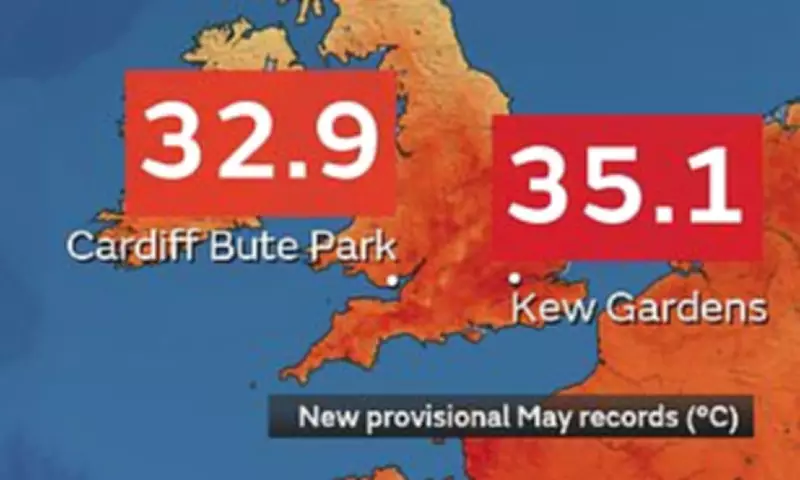
The United Kingdom is currently experiencing an unprecedented spring heatwave, with temperatures soaring to 35.1°C in some areas. As citizens search for ways to stay cool, scientists are pointing to climate change as the primary driver behind this extreme weather event.
Climate Scientists Sound Alarm
Professor Friederike Otto, a climate science expert at Imperial College London, stated: "This record-breaking heat bears the unmistakable fingerprints of climate change. Temperatures of this magnitude were once exceptional even at the height of summer. Witnessing 35°C in the UK during spring is truly astonishing, but the scientific evidence is unequivocal – climate change is making heatwaves hotter, longer, and far more frequent."
Dr Otto further warned that without urgent action to curb climate change, such spring heatwaves could become the new normal. "The climate we are experiencing today is fundamentally different from the one we grew up in, and our buildings and infrastructure are woefully unprepared for what lies ahead," she added. "While we have made some progress in reducing emissions, it is not happening fast enough. Temperature records will continue to be shattered until we completely halt global emissions and achieve net zero."

Met Office Data Confirms Record-Breaking Temperatures
Data released by the Met Office confirms that the UK's May and spring temperature records were broken not once, but twice this week. A temperature of 34.8°C was recorded on Monday at Kew Gardens, followed by a reading of 35.1°C at the same location the next day. The previous record stood at 32.8°C, set in 1922 and 1944.
Gareth Redmond-King, Head of International at the Energy & Climate Intelligence Unit, described these new records as "deeply worrying." He commented: "Breaking one extreme weather record in a couple of days is concerning, but breaking them day after day, and by such a margin, is deeply alarming. The hottest May day in the UK is now more than two degrees higher than it was last week – and had been for over 80 years – and our sleep is being disrupted by tropical spring nights."
He emphasized the dangers: "As recent heatwaves in the UK and across Europe have demonstrated, extreme weather causes harm and costs lives, posing particular risks to the elderly and very young children. To avoid worse extremes becoming the norm, science provides the answer – cutting our planet-heating emissions to net zero is the only way we know to halt climate change."
Why Does Heat 'Hit Different' in the UK?
A common question on social media during the UK heatwave is why heat in the UK feels more intense. Dr Laurence Wainwright, a senior researcher at the University of Oxford, explained to the Daily Mail: "Overwhelming scientific evidence indicates that human-induced climate change is already making the UK hotter, and this trend will continue. Average temperatures will rise, summers will be warmer and longer, hot weather will sometimes start earlier – for example, in May rather than July – and heatwaves will become more frequent."
Dr Wainwright highlighted scientific modelling: "By 2070, summer temperatures in the UK are projected to be on average 5°C hotter than today. While 2070 may seem distant and 5°C may appear insignificant, the changes are already underway and will profoundly impact our way of life in the coming years."
Factors Contributing to Heat Intensity in the UK
- Humidity: High humidity impairs the body's cooling system because sweat cannot evaporate efficiently. Consequently, temperatures in the high twenties can place significant stress on the body, especially overnight when cooler air is needed for recovery.
- Lack of Infrastructure: Buildings trap heat overnight, and since air conditioning is still relatively uncommon in the UK, there is often little relief indoors.
- Climate Change: Climate change is making UK heatwaves more frequent, intense, and longer-lasting, exacerbating the overall impact.
The current heatwave serves as a stark reminder of the urgent need to address climate change, as scientists warn that without decisive action, such extreme weather events will become increasingly common.