US-Israel War on Iran: A Climate Catastrophe Unfolding in Real-Time
An exclusive analysis has exposed the staggering environmental toll of the US-Israel war on Iran, revealing it as a disaster for the global climate. In just the first 14 days of conflict, the war has generated approximately 5 million tonnes of greenhouse gas emissions, a figure that drains the world's carbon budget at a rate surpassing the combined annual emissions of 84 countries. This devastating impact adds a critical layer to the ongoing reporting of catastrophic environmental harm, from attacks on fossil fuel infrastructure to the destruction of civilian areas and military engagements.
The Carbon Cost of Conflict: A Breakdown of Emissions
The analysis, shared exclusively with the Guardian, meticulously calculates the emissions from various aspects of the war. Destroyed buildings constitute the largest element, with an estimated 2.4 million tonnes of CO2 equivalent (tCO2e) emitted from the damage to about 20,000 civilian structures, as reported by the Iranian Red Crescent. Fuel consumption follows as the second biggest contributor, with US heavy bombers flying from as far as western England to conduct raids over Iran, consuming between 150 million and 270 million litres of fuel and producing 529,000 tCO2e.
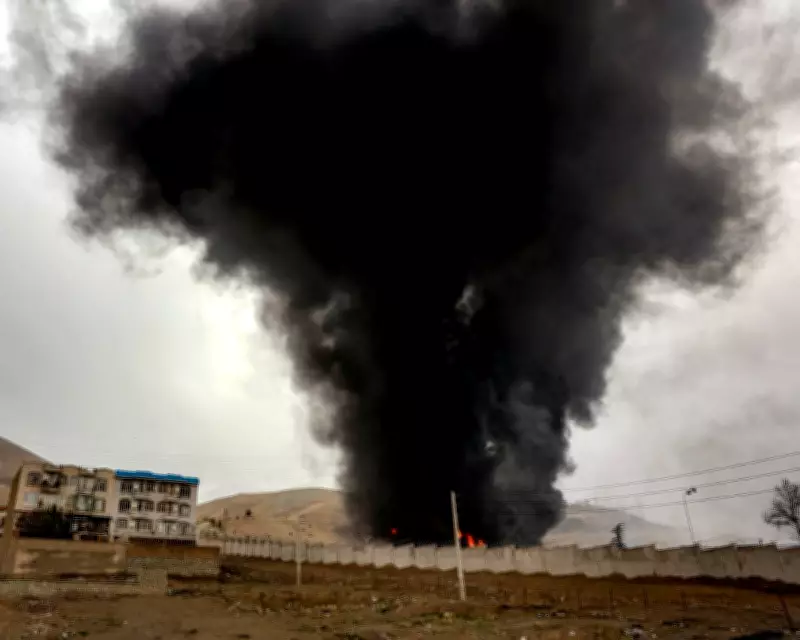
One of the most shocking environmental images has been the dark clouds and black rain over Tehran after Israel bombed four major fuel storage depots. This attack, along with similar strikes including Iranian retaliations on Gulf neighbours, burned an estimated 2.5 million to 5.9 million barrels of oil, emitting 1.88 million tCO2e. Additionally, the destruction of military hardware, such as aircraft and naval vessels, accounts for 172,000 tCO2e, while the extensive use of munitions—including bombs, missiles, and drones—contributes about 55,000 tCO2e.

Global Implications and Expert Warnings
In total, the first two weeks of the conflict led to emissions of 5,055,016 tCO2e, equivalent to 131,430,416 tCO2e annually—comparable to a medium-size, fossil fuel-intensive economy like Kuwait. This rapid emission rate is equivalent to burning up the annual emissions of Iceland in just 14 days, a pace the planet cannot afford. Fred Otu-Larbi, the study's lead author from the University of Energy and Natural Resources in Ghana, warns that emissions are expected to increase rapidly as oil facilities continue to be targeted at an alarming rate.
Patrick Bigger, a research director at the Climate and Community Institute and co-author of the analysis, emphasises the broader consequences. "Every missile strike is another downpayment on a hotter, more unstable planet, and none of it makes anyone safer," he said. He further warns that the war risks hard-wiring another generation of carbon dependence, as historical patterns show that US-driven energy shocks often lead to surges in new drilling and fossil fuel infrastructure. "This is not a war for security. It's a war for the political economy of fossil fuels—and the people paying the price are Iranian civilians and working-class communities around the world," Bigger added.
The Urgent Climate Context
As of June last year, climate scientists estimated that humans could emit only 130 billion tonnes of CO2 equivalent to have a 50% chance of limiting global heating to 1.5°C. With current global emissions at 40 billion tCO2e annually, this budget is projected to be exhausted by 2028. The war's emissions exacerbate this crisis, highlighting the urgent need for climate-conscious policymaking. The analysis underscores that fossil-fuelled geopolitics is incompatible with a livable planet, calling for a reevaluation of foreign policy driven by fossil fuel interests.