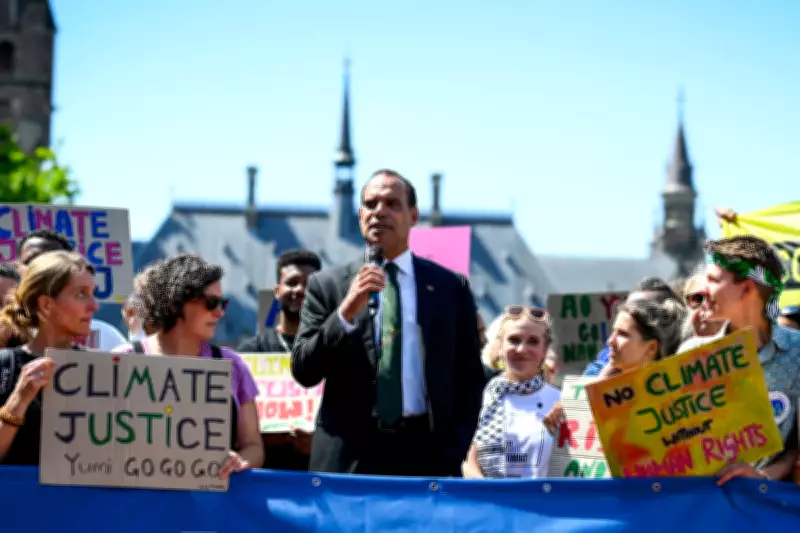
Vanuatu's UN Climate Resolution Moves Forward Amid US Opposition
Vanuatu, a small Pacific island nation, is advancing a United Nations resolution on climate action, despite significant opposition from the Trump administration. The resolution, which calls for countries to implement a landmark ruling from the International Court of Justice (ICJ), has been watered down but remains alive for a vote later this month.
US Demands and Compromises
The Trump administration has pressured Vanuatu to withdraw its draft resolution, which seeks to enforce an ICJ opinion that countries could face reparations for failing to address the climate crisis. In response, Vanuatu removed sections, including a registry for "loss and damage" from climate impacts, to gain broader support. Ralph Regenvanu, Vanuatu's minister for climate change adaptation, expressed frustration, stating, "Having the Trump administration actively intervening to stop the phase-out of fossil fuels is very frustrating, it's beyond what you'd expect a government to do."
The US argued that the resolution, though non-binding, "could pose a major threat to US industry" and has long feared legal liability for its carbon emissions. Alongside other fossil fuel producers like Saudi Arabia and Russia, this opposition led to a diluted version of the proposal.

Key Elements of the Revised Resolution
The new draft still requires UN member countries to:
- Comply with international law related to climate change, as per the ICJ ruling.
- Limit global temperature rise to 1.5°C above pre-industrial levels.
- Pursue a rapid, just, and quantified phase-out of fossil fuel production and use.
Regenvanu noted, "We are hoping the compromise on the loss and damage registry will mean some of that other language will stay in. It's concerning but we don't think it will derail the resolution completely."
Global Support and Challenges
Vanuatu has garnered support from countries such as the Netherlands, Colombia, Barbados, Kenya, Jamaica, and the Philippines. However, Regenvanu highlighted that opposition has been more effective, with the European Union "not been as helpful as we expected." The Trump administration's broader climate stance, including dismissing clean energy as a "scam" and withdrawing from UN climate treaties, poses a significant threat to global cooperation.
Broader Implications and Future Outlook
Noah Gordon, an expert at the Carnegie Endowment for International Peace, emphasized that this resolution could lay the foundation for future international climate law. "Judges and lawyers will look back at this as the foundation of international climate law that has teeth," he said. Despite political divides, the resolution represents a step toward accountability for climate-vulnerable nations.
Regenvanu warned that the climate crisis remains the "single greatest threat to our continued existence, security and livelihoods," citing a 2015 cyclone that wiped out 64% of Vanuatu's GDP. He called for bravery in moving away from fossil fuel interests, noting the current low ebb in multilateralism.
A US State Department spokesperson reiterated concerns, stating the resolution is "performative" and lacks a basis in the ICJ opinion, potentially having broader legal and economic impacts.