Ancient rainforests in Queensland's Bunya Mountains are facing an unprecedented threat as feral pigs spread a deadly plant pathogen that's decimating the region's iconic bunya pines.
Sacred Forests Under Threat
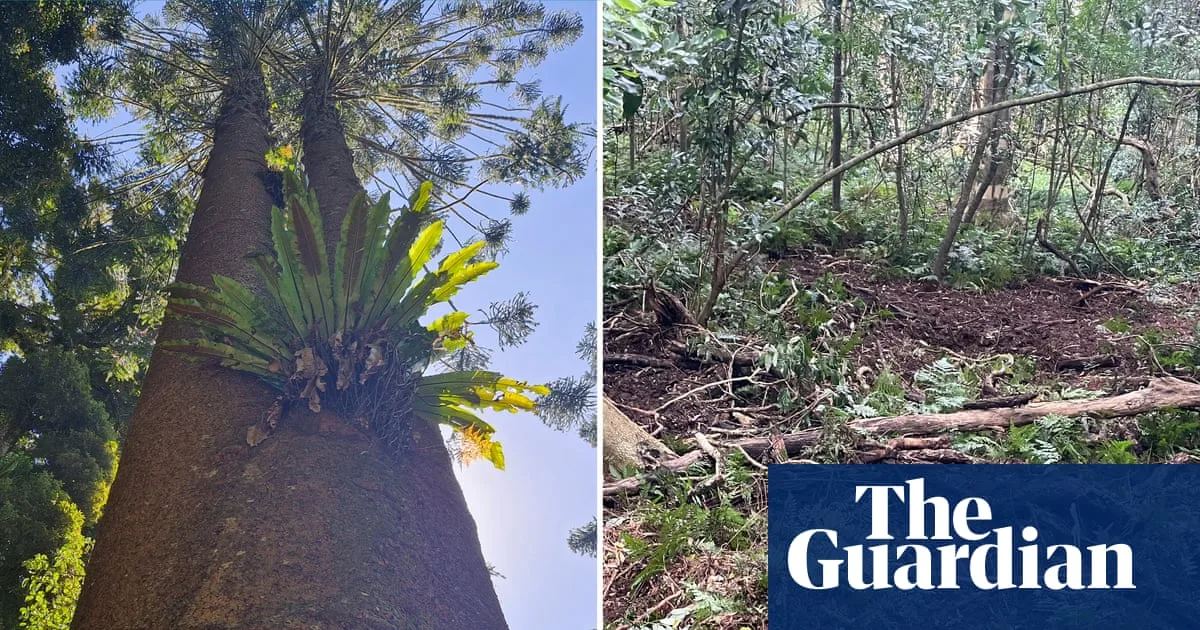
High in the ancient conifer rainforests of south-east Queensland, sunlight now penetrates areas that were once densely shaded by the majestic bunya pine canopy. Adrian Bauwens, a Wakka Wakka man and forest health officer, observes that the usually thick canopy has become patchy and thin in many areas.
The towering bunya pines, described as "living fossils" dating back 145 million years to the Jurassic period, are suffering from a plant pathogen called dieback. This disease causes the trees to become skeletal, shedding their leaves and limbs as they slowly perish.
Porcine Culprits Worsening the Crisis
The destructive force behind the spread of dieback is Phytophthora, a water mould that travels through soil and attacks tree roots, cutting off their nutrient and water supply. While bunya dieback has been a concern for the past decade, feral pigs are dramatically accelerating its spread throughout the mountains.
"Feral pigs are running quite wild," Bauwens explains. "They're trotting around in dieback areas and spreading it through the mountain by digging it up." The invasive species use walking tracks and bike trails as highways, particularly drawn to the bunya's large nut-filled pine cones when they fruit.
Cultural and Ecological Catastrophe
The bunya pine holds profound cultural significance for Indigenous Australians. The Bunya Mountains once served as the largest Indigenous gathering place in eastern Australia, where thousands from different tribes would converge to settle disputes, arrange marriages, and conduct ceremonies.
Feral pigs, originating from the First Fleet's arrival, now occupy approximately 45% of Australia. A 2020 estimate placed their national population between 2.4 and 4 million, though experts believe current numbers are significantly higher after three years of favourable breeding conditions.
Reece Pianta, advocacy director at the Invasive Species Council, warns that the scale of the feral pig problem is "much higher than what has been experienced at any point before." He emphasises that "Australian landscapes didn't evolve for hard-hoofed animals and aggressive foragers with the mass of a feral pig."
Nationwide Impacts Beyond the Bunya Forests
The damage extends far beyond Queensland's bunya forests. Pianta reports increasing incidents of pigs foraging at sea turtle nesting grounds in western Cape York and Bribie Island, where they consume eggs and hatchlings.
In the Northern Territory, feral pigs have become a dietary staple for saltwater crocodiles, contributing to the reptile's population rebound. Research estimates that Top End crocodiles consume approximately six feral pigs per square kilometre of wetland floodplain annually.
However, Professor Euan Ritchie of Deakin University questions whether crocodile predation can meaningfully control pig populations. "The problem with pigs is they're really widespread, quite adaptable animals and they can breed really rapidly," he notes.
The threats posed by feral pigs are extensive. Their digging behaviour releases carbon dioxide emissions, spreads diseases and weeds, and damages ephemeral wetlands and waterways, causing erosion and water quality issues.
Indigenous Custodians Sound the Alarm
Alfred Hunter, a Djabugay Bulmba ranger in far north Queensland, has witnessed feral pig damage to platypus habitat firsthand. During a project with WWF Australia earlier this year, rangers discovered platypuses in waterways near Kuranda for the first time in decades, but were concerned about feral pigs "digging along the sides of the riverbanks and creekbanks."
"It's not just the river systems," Hunter says. "Parks, campgrounds and sacred sites are getting ripped to shreds."
Further north, Trevor Meldrum, a Kuuku Yalangi man and environmental operations manager at Cape York Weeds and Feral Animals, describes devastating impacts on cultural sites. "You've got our rock art painting sites that are being rubbed right through – the paint's gone. Their excrement and the salts in their skin erode a lot of those sacred places," he explains.
Meldrum recalls wetlands that "used to be waste deep when we were kids" now only reaching ankle depth, blaming pigs as "the main destroyers."
Seeking Solutions to a Worsening Crisis
Professor Ritchie believes complete eradication of pigs from large areas is "probably unrealistic, unfortunately," suggesting instead strategic focus on areas of particular concern. Control methods include shooting, trapping, and targeted poisoning.
Pianta emphasises that "effective feral pig control needs to be professional and humane and done at a landscape scale. We know that to achieve pig population reduction, you need to remove greater than 70% of their number each year." He points to a $2 million Queensland government investment in addressing the state's feral pig problem as a positive step.
However, Meldrum advocates for urgent investment in Cape York peninsula to equip Indigenous owners with resources to tackle the invasive pig issue before it worsens further. "We care about our country," Meldrum states. "Prevention is better than cure any day."