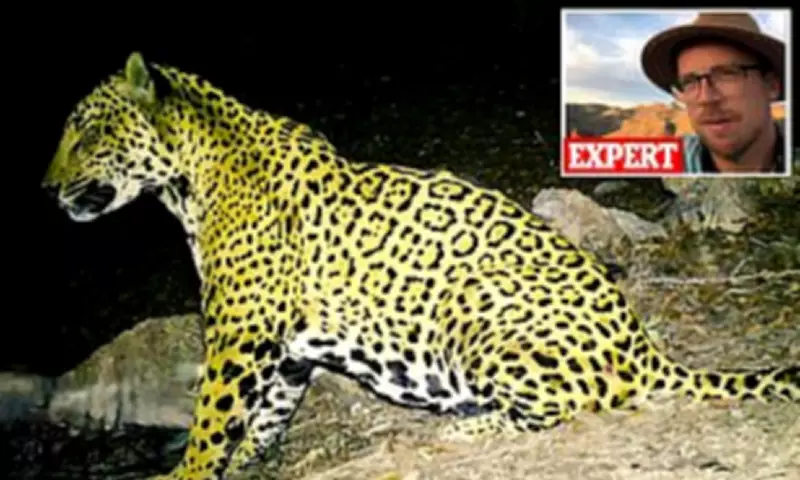
An exceptionally rare adult jaguar, nicknamed Cinco, has been filmed prowling the mountainous terrain of Arizona in striking trail camera footage. The big cat was recorded on May 4 roaming the remote Sky Islands near Tucson by the University of Arizona's Wild Cat Research Center.
Rare Sighting in the Sky Islands
Cinco is the fifth jaguar of this endangered species to be observed in the region since research began 15 years ago, according to AZ Central. The feline was first detected crossing the Mexican border in November and has since been recorded more than 15 times in the area, the Wild Cat Research Center reported.
Russ McSpadden, Southwest Conservation Advocate at the Center for Biological Diversity, stated in a press release that this sighting underscores the constrained state of the jaguar population. 'Seeing this incredible jaguar roaming in Arizona's wild Sky Islands is a powerful reminder that these cats belong in the American Southwest and northern Mexico,' he said.

Conservation Efforts and Challenges
Jaguars were listed as endangered in 1997, prompting conservation initiatives across the American Southwest and Mexico. While these formidable cats once roamed as far north as the Grand Canyon, they are now typically sighted in southern Arizona near the Mexican border. McSpadden emphasized that conservation requires cooperation among governments, conservation groups, and Indigenous peoples in both the US and Mexico.
The sighting of Cinco in Tucson is a positive sign that the American jaguar population is expanding its range. However, McSpadden warned that the border wall constructed under the Trump administration impedes the reunification of North American jaguar populations. 'Tragically, jaguars' northern range is being ripped apart by Trump's border wall construction, along with mining, groundwater depletion, and climate-driven drought,' he said. 'We need to take urgent action to protect our vital cross-border ecosystems so jaguars can continue prowling the southern Arizona landscape alongside bears, pumas, and ringtails. A landscape this wild is too precious to sacrifice.'
Increasing Frequency of Sightings
In recent years, data collection by the center has shown jaguars appearing more frequently further north. While Cinco was previously spotted only every few months, he was captured on trail camera three times in 2026 alone. His movements also reveal 'consistent corridor use,' a positive indicator for the ecosystem's health. The research center wrote on social media, 'The jaguar is an umbrella species. An umbrella species is a species that is an overall indicator of ecosystem health. Our environmental DNA research is currently revealing remarkable biodiversity within these same Sky Islands, never before documented in these corridors.'
Cultural Significance
Austin Nunez, Chairman of the San Xavier Tohono O'odham Nation, noted that his tribe has prayed for the return of jaguars like Cinco. 'Jaguars are protectors of the people and are a part of our spiritual life and our connection to this land,' he said. 'Seeing a jaguar still moving through these mountains gives me hope for future generations and reminds us of our responsibility to protect these majestic animals and the places they depend on.'
Jaguars are the third-largest cats in the world, after tigers and lions. They have disappeared from the US over the past 150 years due to hunting and predator eradication programs. The Daily Mail contacted the Center for Biological Diversity and the Wild Cat Research Center for further information.