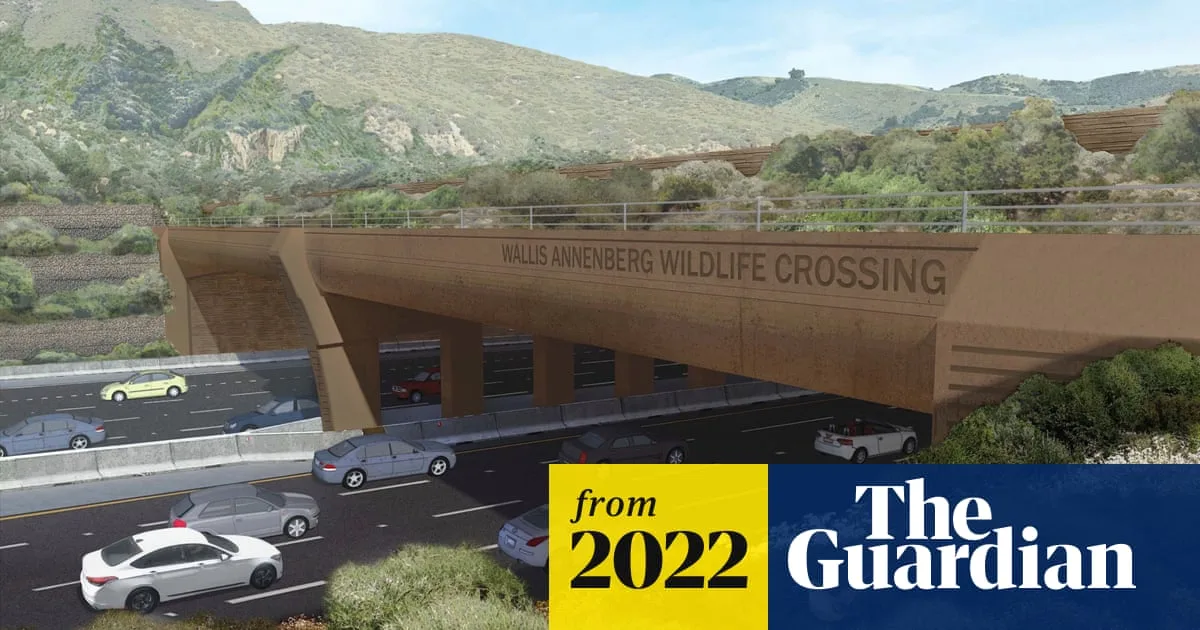
Construction has begun on the world's largest wildlife overpass, spanning a 10-lane highway near Los Angeles, California. The $90m (£845m) bridge will allow mountain lions, lizards, snakes and other animals to safely cross the busy 101 freeway, connecting two parts of the Santa Monica mountains.
The 210ft-long and 165ft-wide crossing will be covered with local plants and vegetated sound walls to reduce light and noise for nocturnal animals. It is designed to blend seamlessly into the natural environment, unlike typical concrete and steel wildlife crossings.
At least 25 mountain lions have been killed on Los Angeles freeways since 2002, with the most recent death occurring on 23 March. Conservationists hope the overpass will help protect the region's threatened mountain lion population.

Beth Pratt of the National Wildlife Federation, who has spent nearly a decade planning the project, said: 'We have the chance to give these mountain lions a shot at a future.' The crossing is named the Wallis Annenberg wildlife crossing and is funded by 60% private donations and 40% public funds.
Construction will mostly take place at night, with completion expected in early 2025. Around 300,000 cars pass through the area daily, and Pratt hopes the bridge will inspire people to live more harmoniously with nature.