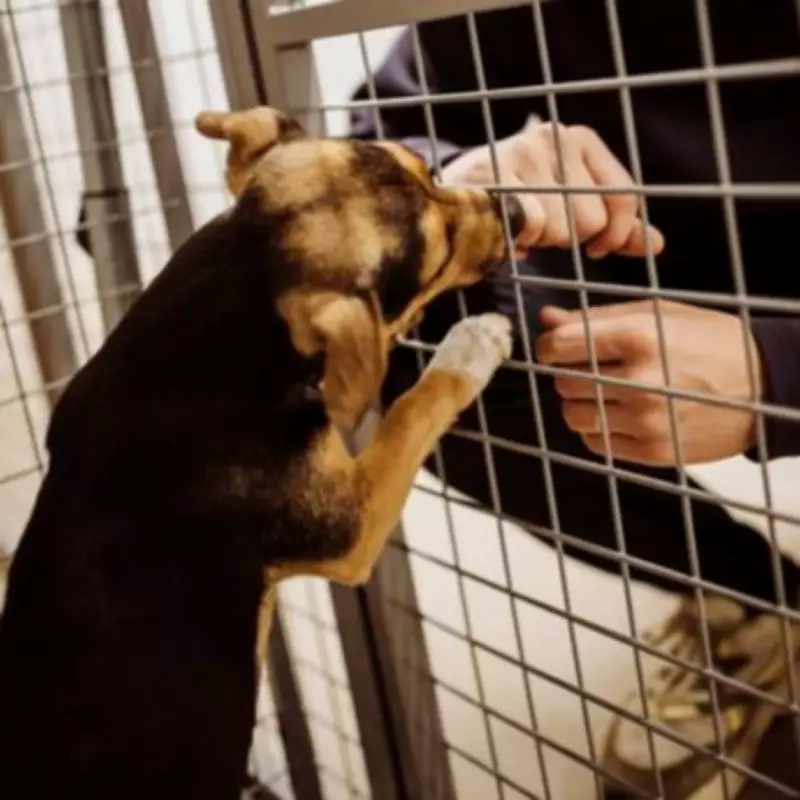
Shelter Reverses Adoption Process: Dogs Now Choose Their Owners
In a heartwarming twist on the conventional pet adoption journey, a rescue centre has fundamentally altered its procedures by permitting dogs to select their human companions. This innovative approach emerged directly in response to the widespread circulation of artificial intelligence-generated videos that depicted canines actively picking their owners from groups of people.
From Digital Fiction to Tangible Reality
The concept originated when fabricated AI clips, portraying dogs energetically exploring rooms before decisively settling beside specific individuals, gained massive traction across social media platforms. Although these particular videos were entirely synthetic and not based on actual events, the Animal Protectors Shelter decided to experiment with the premise in a genuine, physical setting.
"We wanted to do a non-AI version of shelter dogs picking their owner," the shelter explicitly stated in an Instagram post accompanying footage of the event. The shelter organized a session where prospective adopters were invited into a room and instructed to remain seated in a circle, allowing the dogs to initiate contact and demonstrate clear preferences.

The Emotional Moment of Selection
The shared video captures a particularly poignant instance where one dog dashes excitedly around the perimeter before unmistakably targeting one person, leaping up enthusiastically as if to confirm its choice. This authentic, unfiltered interaction resonated deeply with online audiences, sparking a mixture of emotional reactions.
Many viewers confessed they found the idea profoundly touching yet simultaneously nerve-wracking. One social media user humorously remarked, "The most realistic thing about this is the dog wanting to choose everyone. When was the last time they had a room full of people focused on them?" Another individual expressed empathetic anxiety, stating, "My brain: …and what if none of the dogs choose me (and then realise that’s what shelter dogs go through)."
Further comments highlighted the potential emotional intensity of the experience, with one person admitting, "I don’t think I could do this because if none of them chose me, I’d take that rejection so frigging hard." Conversely, another observer praised the canine's discernment, noting, "The one that jumped on the other lady to get to the girl in the back - he knew it was her."
The Broader Context of AI Deception
This real-life adoption experiment unfolds against a backdrop of escalating concerns regarding ultra-realistic AI-generated content. Technology experts are increasingly warning the public about sophisticated deepfake videos that can deceive millions, potentially facilitating misinformation campaigns or even enabling criminal activities such as blackmail.
Recent research indicates that only approximately one in four individuals can accurately identify AI-manipulated videos, leaving a substantial majority vulnerable to deception. These fabricated clips can now be produced in real time, exacerbating risks as scammers exploit widespread gaps in public awareness.
Specialists point to specific technical flaws that often betray AI-generated videos, including irregularities in blinking patterns, unnatural hand and finger movements, inconsistent lighting, and subtle speech impediments like difficulty pronouncing certain consonants. While video evidence traditionally commands high trust, enhancing public knowledge about these digital manipulation techniques is crucial for combating fraudulent schemes.
Ultimately, the shelter's initiative not only offers a novel, animal-centric adoption method but also serves as a poignant reminder of the importance of critical media literacy in an era dominated by rapidly advancing synthetic media technologies.