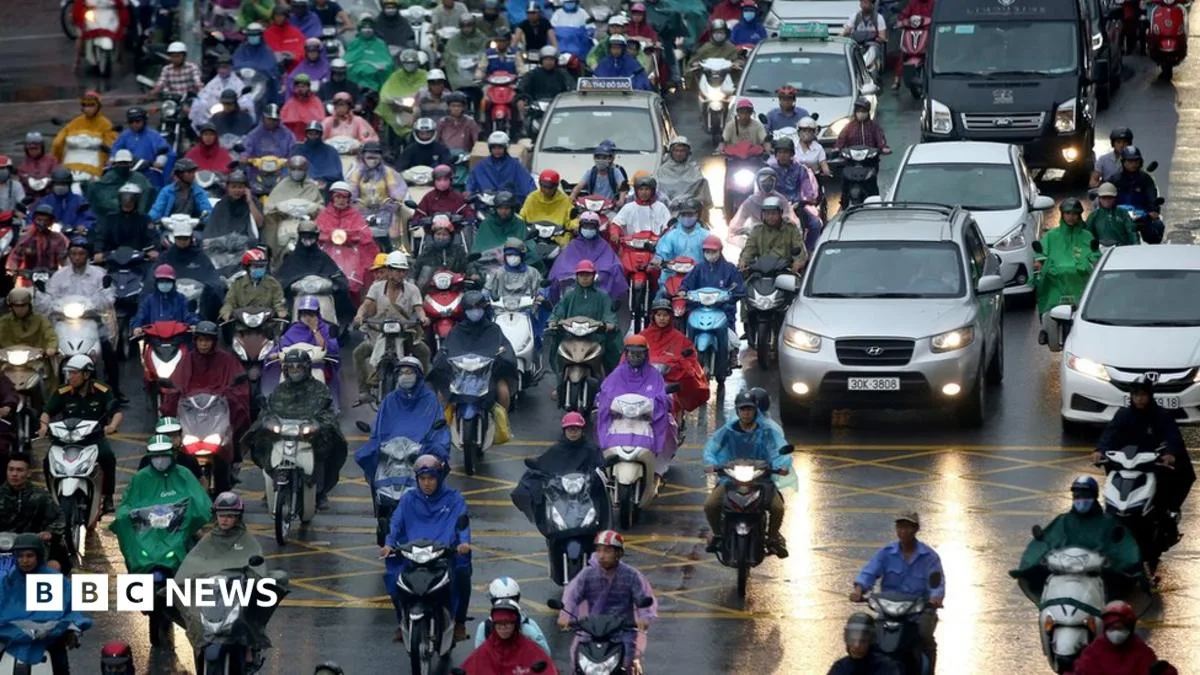
Hanoi, a city of five million motorbikes, has voted almost unanimously to ban the popular two-wheeled transport by 2030. The city council hopes the move will unclog roads and reduce soaring pollution levels.
The council has promised to increase public transport usage from the current 12% to 50% by 2030. This comes after a report found the number of motorbikes in Hanoi was growing at an 'alarming' rate, with some studies suggesting up to 2,500 motorbikes per kilometre.
According to the non-governmental group GreenID, the city recorded 282 days of 'excessive' levels of harmful PM2.5 particles last year. Despite this, some residents are sceptical. Ngo Ngoc Trai told the BBC: 'The city is too crowded while public transport hardly exists. There is no underground system in Vietnam. Only in June did Hanoi pilot the first two-storey bus on some routes.'

BBC Vietnamese journalist Ha Mi, who relies on a motorbike in Hanoi, doubts the ban will work. She noted that past measures, such as compulsory helmet use, were initially resisted and are still flouted. The ban does not include cars, which are increasingly popular as wages rise, but motorbike sales still far outpace car sales, with 8,000 new bikes sold daily compared to 750 cars.