Cactus Flower Research Overturns Long-Held Darwinian Evolutionary Principle
A groundbreaking study of cactus flowers is reshaping fundamental ideas in evolutionary biology, directly challenging a concept proposed by Charles Darwin over a century ago. The research suggests that the speed of evolutionary change, rather than specialisation to specific pollinators or environments, is the primary driver of biodiversity in plants.
Revisiting Darwin's Legacy on Evolutionary Diversification
Since Darwin's time, scientists have widely accepted that flowers specialised to particular pollinators or environmental conditions serve as key engines for generating new plant species. This principle has guided evolutionary biology for generations, but new findings from cactus research indicate this may not be the complete picture.
My colleague and I have published comprehensive research examining the cactus family, which presents a striking case study of why some evolutionary lineages flourish while others remain limited. Our investigation involved analyzing flower length data for more than 750 cactus species, revealing an extraordinary range from two-millimeter blooms to flowers the size of large dinner plates.

The Cactus Paradox: Slow Growth Meets Rapid Evolution
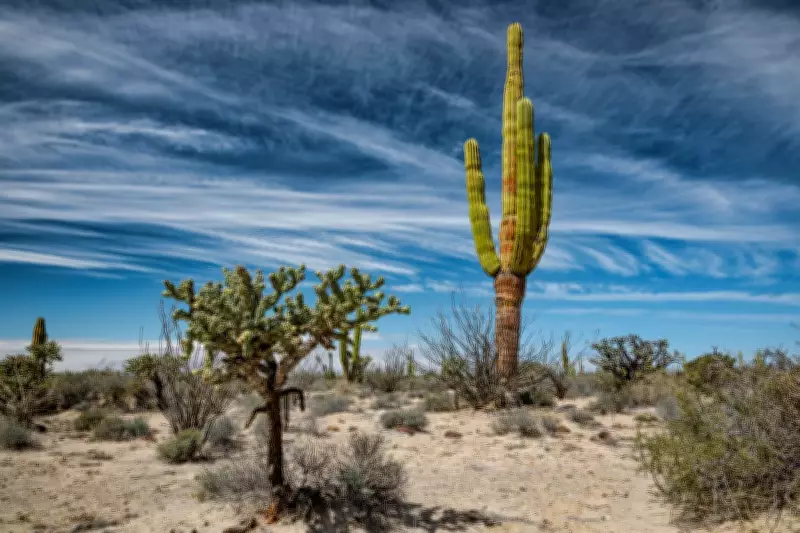
Cacti represent a fascinating evolutionary paradox. While individual plants are icons of slow growth—with saguaros taking a decade to reach an inch tall and peyote requiring decades to mature—the cactus family as a whole is one of the fastest-evolving plant groups on Earth.
Over the past 20 to 35 million years, approximately 1,850 cactus species have emerged. This represents explosive diversification compared to about a quarter of the 415 other flowering plant families that have five or fewer species. These contrasting evolutionary trajectories have puzzled scientists for generations.
Testing Traditional Hypotheses About Cactus Success
Two main theories have attempted to explain cactus diversity. The first attributes their evolutionary success to pollinator specialisation, where cactus flowers adapt to specific pollinators like bees, moths, or hummingbirds. The second theory links cactus proliferation to desert expansion over the last 30 million years as the Americas became drier.
Cacti seemed to perfectly support both ideas. Their flowers display remarkable variation from small, understated blooms to large, night-opening blossoms adapted to different pollinators. However, our 2024 study, which sampled many more species than previous research, found neither aridity nor pollination provided strong explanations for cactus diversity.
The Cactus Ecological Database Reveals Unexpected Patterns
My colleagues and I recently published the Cactus Ecological Database (CactEcoDB), providing comprehensive trait data and family trees for cacti. When we analyzed this data in Biology Letters journal, we discovered an unexpected pattern that fundamentally challenges traditional thinking.
Our analysis of the cactus family tree revealed that the speed at which flower size evolves drives the formation of new species across both recent and deep evolutionary timescales. Natural selection doesn't appear to favor any particular flower size, but rather causes repeated bursts of rapid change toward different sizes throughout the evolutionary tree.
Evolutionary Speed, Not Specialisation, Drives Diversity
The implications are both simple and profound. It's not the presence of specific flower types or pollinators that drives cactus evolution, but rather the velocity at which flower evolution occurs, regardless of the ultimate outcome. Species with both smaller and larger flowers can rapidly split into new species as long as they changed quickly throughout their evolutionary history.
This insight fundamentally shifts our understanding of evolutionary processes. Deserts, often imagined as unchanging landscapes, actually serve as arenas of rapid evolutionary innovation where the capacity for change matters more than any particular adaptation.

Conservation Implications for Threatened Species
This research carries significant implications for conservation efforts worldwide. Our study suggests that a plant's capacity for evolutionary change—crucial for surviving environmental shifts and extinction events like those currently occurring on Earth—matters more than any specific adaptation.
Protecting biodiversity extends beyond preserving the species we see today. It involves safeguarding the evolutionary potential that allows new species to emerge. Some species may appear stable or unremarkable currently yet hold tremendous future evolutionary potential.
Nearly one-third of cactus species face extinction threats, representing one of the highest proportions for any plant group. We risk losing entire evolutionary lineages of cacti, not merely individual species. Protecting cacti, and nature more broadly, means preserving an ongoing evolutionary process that enables life to thrive in Earth's harshest environments.
This cactus research demonstrates how modern scientific investigation continues to refine and sometimes overturn long-standing biological principles, reminding us that evolutionary processes are more complex and dynamic than previously imagined.