Cape Town's Baboon Population Surge Ignites Urban Wildlife Conflict
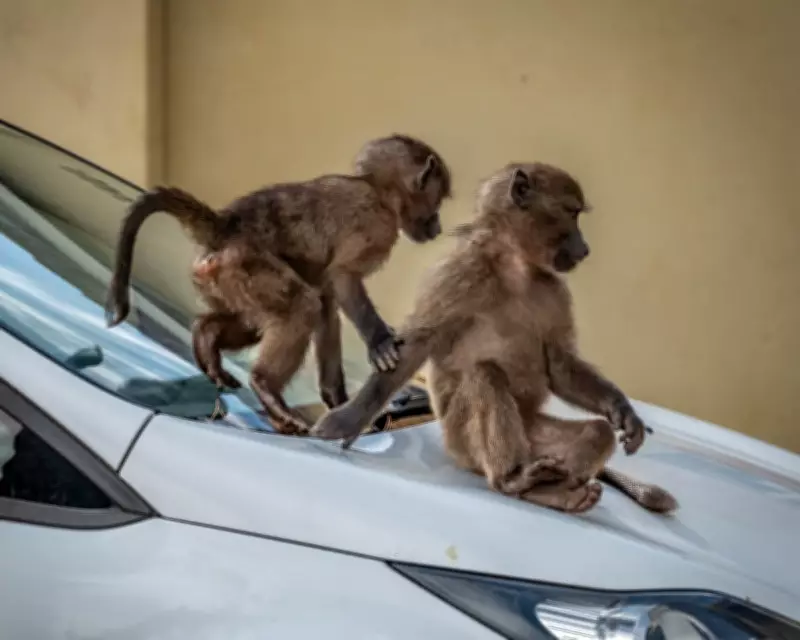
In Da Gama Park, a suburb nestled against Table Mountain in Cape Town, juvenile baboons have been spotted playfully leaping onto parked cars, highlighting a burgeoning primate presence that has divided the community. As the baboon population expands, opinions clash sharply on the best approach to manage these animals, with animal rights activists and local authorities locked in a heated debate over coexistence versus containment.
Residents Grapple with Daily Intrusions and Safety Concerns
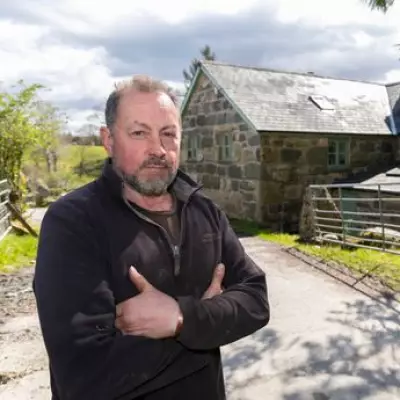
Nicola de Chaud, a 61-year-old documentary maker residing in Simon's Town, shared harrowing experiences of baboons invading her home, scattering food across her kitchen and even throwing one of her dogs across the veranda. In a particularly alarming incident in January, a male baboon lunged at her and remained inside her house for ten minutes, leaving her traumatised. "It has become really, really difficult and very traumatic actually," De Chaud remarked, reflecting the growing distress among many Cape Town residents.
This conflict extends beyond human-baboon interactions, sparking tensions within the community itself. During a 2024 protest in Kommetjie, opposing groups clashed over baboon incursions, resulting in a person and a baboon being pepper-sprayed. The situation has been described as a "wicked problem" in the 2025 Cape baboon management action plan, which notes that no single solution can satisfy all parties or definitively resolve the conflict.

Population Growth and Human-Related Mortality on the Rise
Cape Town's mountainous terrain, largely covered by the 25,000-hectare Table Mountain National Park, is fragmented, pushing chacma baboons to forage in low-lying urban areas. With the city's population soaring by 65% to 4.8 million between 2001 and 2022, baboon numbers have similarly increased from about 360 in ten troops at the turn of the century to over 600 in seventeen troops by 2024, according to official data.
As troops become habituated to human food sources, fatalities have risen sharply. In 2013, only four baboons died from human-related causes, but by 2024, this number had jumped to thirty-three, with deaths attributed to shootings, vehicle collisions, dog attacks, and electrocutions.
Divergent Views on Coexistence and Management Strategies
Animal rights advocates, such as Lynda Silk, a healer and activist, argue for greater human accountability. She emphasises that residents should secure bins, doors, and windows, and train dogs not to attack baboons, while lamenting the lack of prosecutions for shootings. "There's been no successful prosecution for a person shooting a baboon," Silk stated, advocating for peaceful coexistence.
In contrast, Tom Cohen, an American journalist who retired to Cape Town in 2019, believes urban coexistence is impossible. He described the Simon's Town troops as "hopelessly habituated and dependent on human food and settlements to survive," adding, "They're not wild baboons." Despite his efforts to baboon-proof his home, in February 2025, baboons smashed a bathroom window, broke a microwave, and left faeces, with Cohen noting, "The smell lingers, I can tell you that."
Authorities Propose Fences, Sanctuaries, and Legal Challenges
Local, regional, and national governments have agreed to implement measures such as building fences to exclude baboons from certain areas and enforcing a new bylaw with a "zero tolerance" stance on harming primates. However, in Simon's Town, fencing has been deemed unworkable due to the topography, leading to a proposal to relocate two troops to a sanctuary later this year, with euthanasia reserved as a last resort.
This plan faces legal challenges, with activists like Sandie MacDonald of Cape Peninsula Civil Conservation expressing concerns. "What concerns us is that the decision to put them into a sanctuary, and even to cull them, was made before ... the new management of the baboon rangers was settled," MacDonald said, noting that baboon incursions have decreased in many areas since the non-profit Cape Baboon Partnership took over ranger management in March 2025.
Nerine Dorman, a resident of Welcome Glen, vehemently opposes the sanctuary idea, arguing, "You might as well just put them down, [rather] than relegate them to this living captivity."

Expert Insights Highlight Complexities and Accountability Issues
Joselyn Mormile, a scientist with the Cape Baboon Partnership, has studied South Africa's baboons for fifteen years and acknowledges the limitations of ranger patrols in Simon's Town. "That's a losing battle that we are fighting every day to keep baboons and people happy there," she admitted. Her research in Rooi-Els, a village promoting coexistence, revealed high baboon mortality rates, with eleven infant baboons killed by vehicles in four years, leading her to conclude, "I can never promote ... sharing space."
Justin O'Riain, a professor at the University of Cape Town, criticised animal welfare activists for contributing to the conflict through legal challenges that delayed crucial management decisions, ultimately facilitating the formation of one of the Simon's Town troops. "There's never accountability for the people who complain about how baboons are managed, but do not provide a viable alternative," he asserted.
As Cape Town grapples with this escalating issue, the debate over baboon management continues to evolve, balancing animal welfare with human safety in an increasingly urbanised landscape.