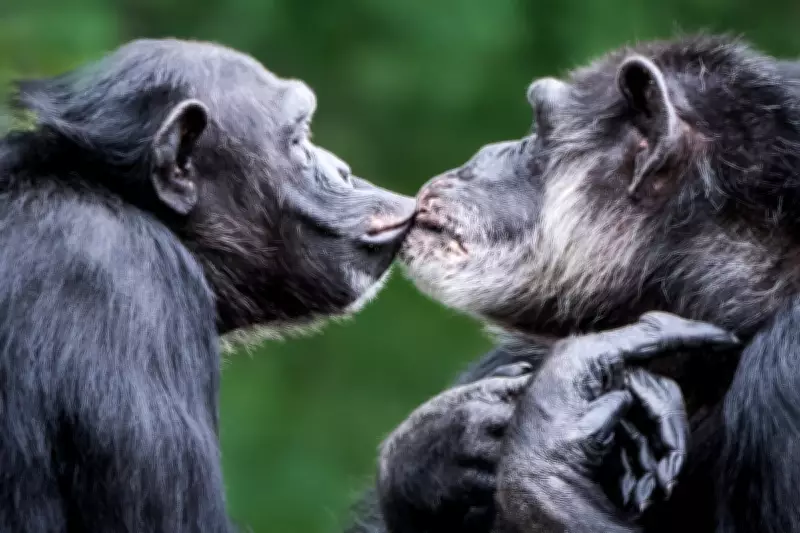
A groundbreaking study has discovered that chimpanzees would fail a standard breathalyser test due to their consumption of alcoholic fruits in the wild. Researchers have confirmed that these primates actively seek out and ingest fermenting fruits, leading to significant ethanol levels in their systems.
Alcohol Consumption in the Wild
The research, conducted in Uganda's Kibale National Park, reveals that chimpanzees consume fruits containing sufficient alcohol to provide approximately 14 grams per day. This amount is equivalent to around two standard alcoholic drinks for humans, indicating a substantial daily intake.
Innovative Sampling Techniques
UC Berkeley PhD student Aleksey Maro, working with adviser Professor Robert Dudley, employed novel urine sampling methods during their field work at Ngogo. They collaborated with Sharifah Namaganda, a Ugandan graduate student at the University of Michigan, to collect samples effectively.

The team created makeshift collection bowls using forked branches covered with plastic bags to capture chimpanzee urine. Maro positioned himself beneath trees where chimps were feeding, waiting for the telltale signs of movement that typically precede urination before the apes leave a feeding area.
Compelling Scientific Evidence
The findings, published in the journal Biology Letters, demonstrate that urine samples from most chimpanzees contained ethyl glucuronide, a metabolic byproduct of alcohol. This provides definitive physiological evidence of ethanol consumption through their natural diet.
"We find widespread physiological evidence of the consumption of alcohol by chimpanzees," Maro stated. "If there's any doubt about the drunken monkey hypothesis—that there's enough alcohol in the environment for animals to experience alcohol in a way analogous to humans—it's been cleared up."
Quantifying the Intake
Out of 20 urine samples collected from 19 chimpanzees, 17 contained 300 nanograms per milliliter (ng/ml) or more of ethanol, while 10 samples registered 500ng/ml or higher. For context, a level of approximately 500ng/ml in humans typically corresponds to light drinking, such as one to two drinks consumed within the previous 24 hours.
"The levels are high, and this is a conservative estimate given the time course of exposure throughout the day," Professor Dudley explained. "In nanograms per milliliter, these are coming in way above some of the clinically relevant and forensically relevant human thresholds."
Evolutionary Implications
These findings suggest important evolutionary connections. As descendants of fruit-eating apes, humans may have inherited the same tendency to seek out alcohol in their diet. The research corroborates Maro's previous work, where he collected fruit samples chimpanzees consume and measured ethanol concentrations to estimate alcohol intake.
"The result corroborates the inferred ingestion rates that Aleksey derived previously," Dudley noted, highlighting the consistency of their findings across different research approaches.
Future Research Directions
The next phase for the research team involves definitively proving what they term "the universal hypothesis of attraction to alcohol." This will further explore whether the consumption of alcoholic fruits represents an adaptive behavior with evolutionary advantages for primates, including humans.
This study not only illuminates chimpanzee behavior but also provides fascinating insights into human evolutionary history and our relationship with alcohol throughout our development as a species.