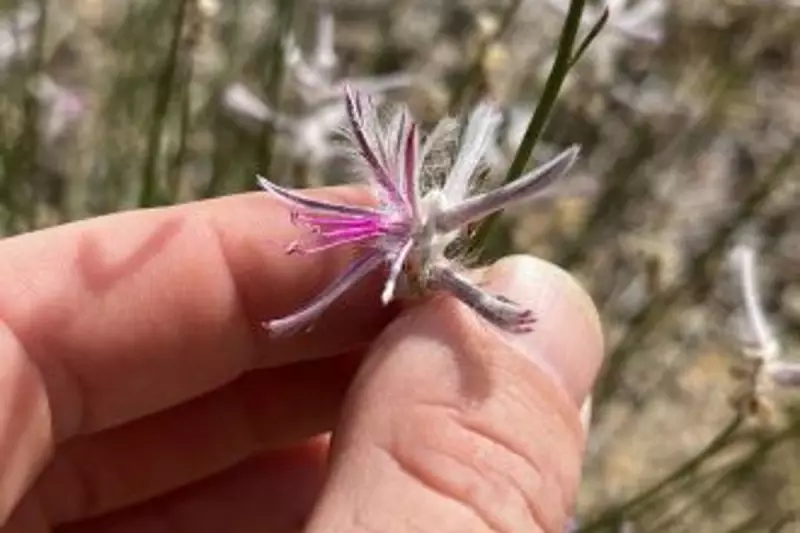
In a remarkable twist of fate, a delicate Australian shrub presumed lost to science has been found thriving after 58 years, with a popular smartphone app playing the starring role in its rediscovery.
The Digital Discovery
The story began in June 2025, when horticulturist Aaron Bean was working on a private property in the Gilbert River region of northern Queensland. He came across an unusual plant and, curious about its identity, uploaded photographs to the community-driven species identification platform, iNaturalist.
Amateur and expert scientists on the platform swiftly confirmed the exciting truth: the plant was Ptilotus senarius, a small, slender shrub with delicate pink and purple flowers. It belongs to the Amaranthaceae family and is endemic to dry regions. The last verified sighting had been recorded back in 1967.

Due to the absence of any contemporary specimens and over a century of continuous cattle grazing in its known habitat, the species had been proposed for the grim category of “Presumed Extinct.” Its rediscovery, detailed in the Australian Journal of Botany, overturns that assumption.
The Power of Citizen Science
The find underscores the transformative power of digital citizen science tools for modern conservation. Researchers highlighted iNaturalist's unique ability to capture observations from remote or private land, publish them instantly, and connect them with a global network of expert identifiers.
“With more than 104 million verifiable photographic vouchers of plants from around the globe having been uploaded to the platform as of July 2025, spanning over 175,000 species, iNaturalist is one of the largest and most significant sources of contemporary plant occurrence records,” the study noted.
The process is astonishingly swift. A plant can be photographed and, with an internet connection, the record can be made available to millions of naturalists and researchers worldwide within 15 to 20 seconds.
Implications for Future Conservation
This event is not just a happy accident but a blueprint for future biodiversity work. Thomas Mesaglio from the University of New South Wales, lead author of the study, explained that such rediscoveries create crucial opportunities.
They allow scientists to conduct follow-up surveys and establish long-term monitoring, finally building an accurate picture of how these elusive species are distributed across the landscape. The researchers have chosen not to disclose the plant's exact location, as it resides on private property, a setting where iNaturalist proves particularly invaluable for recording biodiversity that professional researchers might struggle to access.
The rediscovery of Ptilotus senarius serves as a potent reminder of the mysteries still hidden in the natural world and how technology, in the hands of curious citizens, can help to solve them.