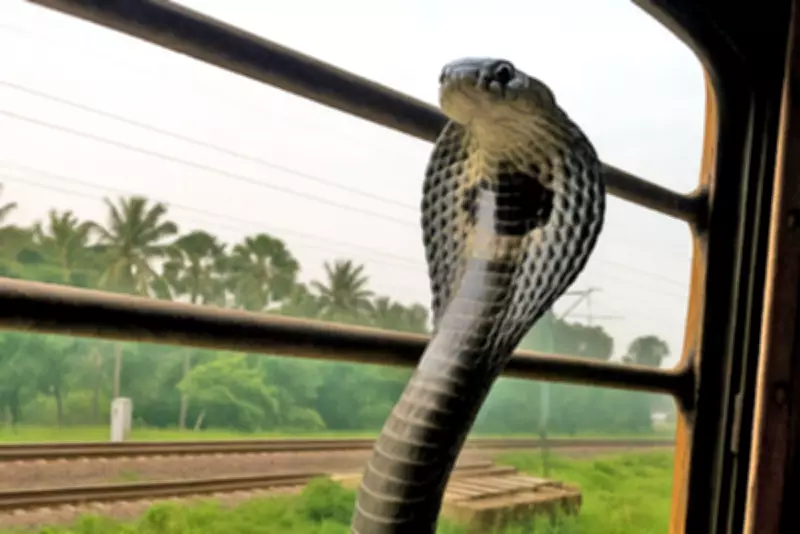
King Cobras Spreading Across India via Railway Network
A groundbreaking new study has uncovered that king cobras, the world's longest venomous snakes, are spreading to different parts of India beyond their natural distribution by hitching rides on the country's extensive and busy railway networks. Researchers have documented the Western Ghats king cobra (Ophiophagus kaalinga), a vulnerable species in India, appearing in unexpected locations, with railway transport identified as a likely mechanism for this unusual migration.
Railway Corridors as Unexpected Pathways
Normally, the king cobra species is most likely to be found in the interior forested areas of Goa, near rivers and streams, away from the state's famous coastal zones. However, new research assessing decades of records has revealed railway sites in some of the unlikeliest areas where these cobras have been documented. These locations were far less suitable for the species than their natural habitat, according to scientists.
The findings strongly suggest that India's railway networks, which are the busiest in the world by passenger volume, are contributing to king cobra migration and placing the snakes into unsuitable habitats. Analysing snake rescue data and verified local reports documented from 2002 to 2024, researchers identified 47 localities for O. kaalinga in Goa, with 18 in the northern part of the state and 29 in the south.

Documented Incidents and Social Media Reports
Five of these king cobra records were located near busy railway corridors, with scientists noting that these particular records had the lowest predicted probability according to their habitat model. With the increased global availability of low-cost smartphones and social media in recent years, the number of reports of snakes on and around trains in India has increased significantly.
Three of these incidents were recorded in a single 30-day period, with many more emerging on social media platforms. Researchers have documented instances including a cobra on a windowsill in the moving Lokshakti Express train near Valsad, Gujarat State, providing visual evidence of this unusual phenomenon.
Passive Transport Mechanism Hypothesis
Combined with recent reports of snakes on trains in India and of O. kaalinga in rail yards - entirely unsuitable reptile habitats - researchers propose the hypothesis that snakes, king cobras included, may inadvertently expand their ranges by accidental transport on trains. They suspect the availability of prey in the form of rodents and other snakes aboard India's goods carrier trains, as well as shelter and serendipity, could be driving this unexpected migration.
The study, published in the journal Biotropica, suggests a different, more passive mechanism than traditional wildlife corridors. Railways may act not just as corridors for active movement, but as high-speed conduits for accidental transportation. The potential for railways to inadvertently connect populations across otherwise unsuitable habitats represents a novel and under-appreciated aspect of human-wildlife interaction that warrants further investigation.
This discovery highlights how human infrastructure can unexpectedly influence wildlife distribution patterns, with implications for conservation efforts and human safety considerations in regions where venomous snakes might appear in unexpected locations due to railway transport.