The Heartbreaking Tale of Punch: A Zoo Monkey's Struggle for Survival
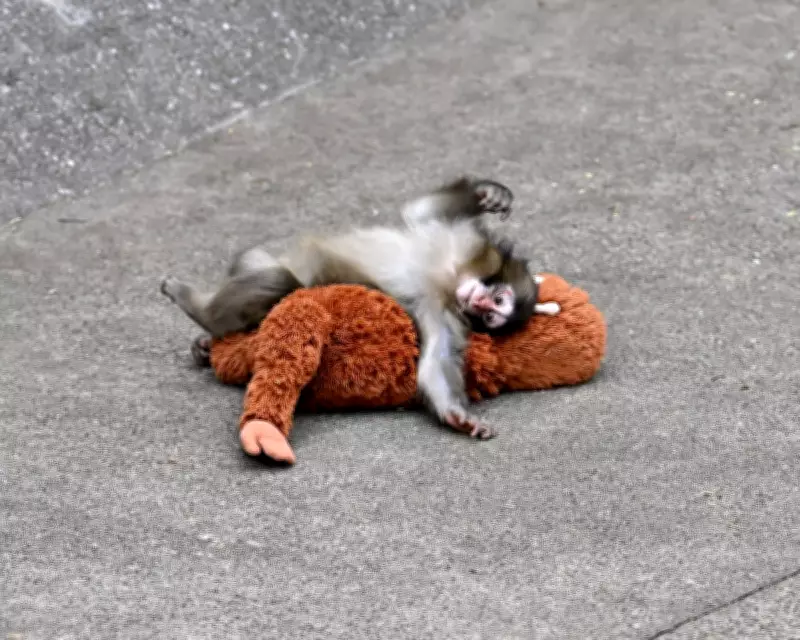
In a poignant story that has captivated global audiences, Punch, a seven-month-old Japanese macaque at Ichikawa Zoo in Japan, has become an internet sensation. Born last July, Punch was abandoned by his mother shortly after birth, leading zookeepers to provide him with a stuffed orangutan toy for comfort. This act has sparked widespread sympathy and raised critical questions about maternal abandonment in the animal kingdom.
Why Do Mother Animals Abandon Their Offspring?
Footage of Punch being bullied by other monkeys and clinging to his toy has gone viral, prompting experts to delve into the reasons behind such rejections. Alison Behie, a primatology expert at Australian National University, notes that while abandonment is unusual, it can occur due to factors like age, health, and inexperience. In Punch's case, his mother was a first-time parent, lacking the necessary skills to care for him.
Behie explains, "Zookeepers suggest Punch was born during a heatwave, creating a high-stress environment. When survival is threatened, mothers may prioritise their own health and future reproduction over an infant compromised by harsh conditions." This insight sheds light on the complex decisions animals face in captivity and the wild.

The Role of the Stuffed Toy and Social Dynamics
Without maternal guidance, Punch has turned to the stuffed orangutan as an attachment figure. Zookeeper Kosuke Shikano reveals that after trying alternatives like rolled towels, they introduced the toy to help him build muscle strength and feel secure, mimicking the natural clinging behaviour of baby macaques. Shikano adds, "We thought that looking like a monkey might help Punch integrate back into the troop later on."
However, Punch's integration has been fraught with challenges. Videos show him being dragged and chased by older monkeys, which Behie clarifies is not bullying but regular social interaction within the strict matrilineal hierarchies of Japanese macaques. She warns, "Without his mother, Punch may not develop appropriate subordinate responses, affecting his ability to integrate as an adult."
Broader Implications and Public Response
The viral attention has led to a surge in visitors at Ichikawa Zoo, prompting officials to enforce stricter barriers and urge quiet behaviour to minimise stress on Punch. Conservation psychologist Carla Litchfield from Adelaide University highlights the broader issues this story raises, including habitat loss, climate change, and zoo animal welfare.
Litchfield cautions, "While social media connects people to animals, we must avoid exacerbating illegal trade in infant monkeys for the exotic pet trade. Monkeys grow up quickly and belong with their own species to thrive mentally and physically." She points out that Japanese macaques are often used in biomedical experiments and culled for crop raiding, underscoring the ethical dilemmas surrounding their conservation.
Punch's story echoes other global animal sensations, like Moo Deng the pygmy hippo in Thailand, reminding us of the powerful bond between humans and wildlife. As Punch continues his journey, his plight serves as a stark reminder of the impacts of environmental stress and the importance of ethical animal care.