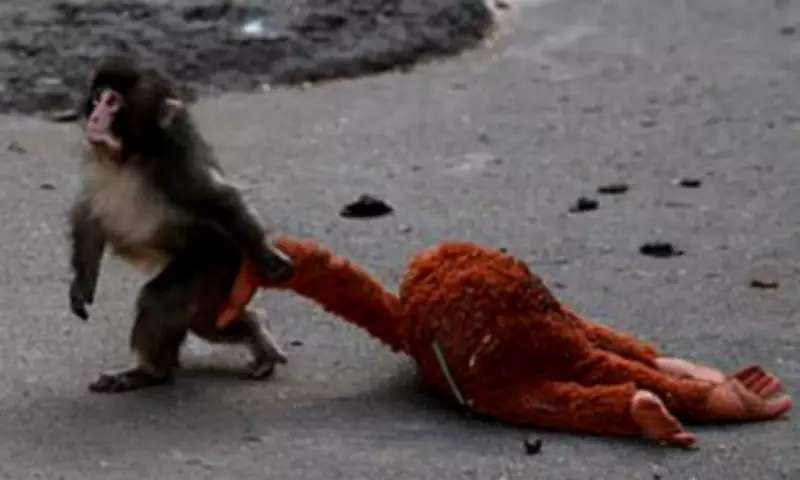
The Heartbreaking Reality Behind Punch the Viral Macaque's Plight
Scientists have unveiled the tragic circumstances surrounding Punch, the seven-month-old Japanese macaque who captured global attention through viral social media footage. Born at Ichikawa Zoo last year, Punch faced immediate maternal rejection, leading zookeepers to provide a stuffed orangutan toy as a surrogate companion. Videos of the infant clinging to the plushie resonated with millions, but experts now reveal the deeper, distressing reasons behind his ongoing social isolation.
Unusual Maternal Abandonment and Its Consequences
According to Professor Jo Setchell, a primatologist at Durham University, maternal abandonment is exceptionally rare in macaque species. "A baby monkey would typically rely on his mother for protection and social education," Professor Setchell explained to the Daily Mail. "Without that guidance, Punch likely never learned appropriate behavioural cues, making him vulnerable to further rejection."
The abandonment may stem from multiple factors:

- Inexperienced Motherhood: Punch was his mother's first offspring, and young, novice mothers often struggle with the demands of infant care.
- Environmental Stress: Exceptionally hot conditions during Punch's birth could have compromised maternal health, prompting survival prioritisation.
- Upbringing History: Dr Emily Bethell of Liverpool John Moores University noted that if Punch's mother had abnormal early life experiences in captivity, this might predispose her to abandonment behaviours.
Social Hierarchy and Secondary Rejection
After initial abandonment, brief footage showed another macaque grooming Punch, offering hope to observers. However, this was short-lived, as Punch faced a second, more aggressive rejection days later. Professor Setchell attributes this to the rigid dominance hierarchies inherent in Japanese macaque troops. "The other macaques are asserting their dominance rank," she stated, explaining that Punch's lack of maternal protection left him exposed to social aggression.
Dr Bethell added that while macaques often show interest in infants, conflict over handling an abandoned youngster can lead to rough treatment. "An abandoned infant becomes a focal point for troop members, potentially resulting in harmful interactions," she said.
Broader Implications Beyond Viral Fame
Despite Punch's internet stardom, Professor Setchell emphasised that monkeys are not pets. "Social media attention to cute baby monkeys can fuel demand for illegal pet trade, causing severe animal suffering," she warned. "Punch's story underscores how critically a monkey needs his mother and his own species for healthy development."
The case highlights the complex interplay of maternal experience, environmental factors, and social structures in primate welfare. As Punch grows, his need for appropriate conspecific companionship will only intensify, reminding the public of the ethical responsibilities surrounding viral animal content.