Scientists Uncover the Whistling Secret Behind the Horse's Whinny
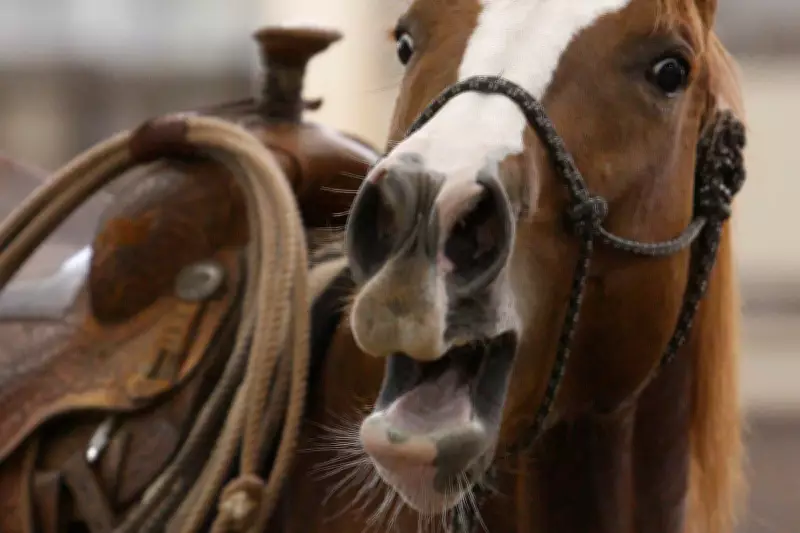
A horse whinnies in a barn at the Oklahoma State Fairgrounds in Oklahoma City. Photograph: Sue Ogrocki/AP
Scientists have discovered the source of the horse's whinny, revealing its unique combination of high- and low-pitched sounds. Horses use whinnies to find new friends, greet old ones, and celebrate happy moments like feeding time. How exactly horses produce that distinctive sound – also called a neigh – had long eluded researchers.
The Mystery of the Two-Toned Sound
The whinny is an unusual blend of both high- and low-pitched sounds, resembling a cross between a grunt and a squeal that emerge simultaneously. The low-pitched part was not much of a mystery; it originates from air passing over bands of tissue in the voice box that vibrate to create noise, similar to how humans speak and sing.

However, the high-pitched component was more puzzling. Typically, larger animals have larger vocal systems and produce lower sounds, with few exceptions. So, how do horses achieve this high pitch?
Breakthrough Research Methods
According to a new study, horses whistle. Researchers employed innovative techniques to investigate this phenomenon. They slid a small camera through horses' noses to film internal activity during whinnies and another common horse sound, the softer nicker. Additionally, they conducted detailed scans and blew air through the isolated voice boxes of deceased horses.
The findings, published in the journal Current Biology, show that the whinny's mysterious high-pitched tones are a form of whistling that initiates in the horse's voice box. Air vibrates the tissues while an area just above contracts, creating a small opening for the whistle to escape. This differs from human whistling, which is done with the mouth.
Expert Insights and Implications
Jenifer Nadeau, a horse researcher at the University of Connecticut, expressed surprise, stating, "I'd never imagined that there was a whistling component. It's really interesting, and I can hear that now." While a few small rodents like rats and mice whistle similarly, horses are the first known large mammal with this ability and the only animals known to whistle through their voice boxes while vocalizing.
Alisa Herbst from Rutgers University's Equine Science Center highlighted the excitement of the discovery, noting in an email, "Knowing that a 'whinny' is not just a 'whinny' but that it is actually composed of two different fundamental frequencies that are created by two different mechanisms is exciting."
Evolutionary and Social Context
A significant lingering question is how horses' two-toned calls evolved. Wild Przewalski's horses and elks can produce similar sounds, but more distant relatives like donkeys and zebras cannot make the high-pitched components. Study author Elodie Mandel-Briefer from the University of Copenhagen suggested that these dual-pitched whinnies may help horses convey multiple messages simultaneously, expressing a more complex range of emotions during social interactions.
"They can express emotions in these two dimensions," Mandel-Briefer explained, indicating that this vocalization could enhance communication among horses in various social settings.