Remarkable Discovery of a Diminutive Dinosaur in Patagonia
In a groundbreaking paleontological find, researchers have uncovered an exquisitely preserved, nearly complete skeleton of one of the smallest dinosaurs ever documented, named Alnashetri cerropoliciensis. This discovery, made in Argentina's famed Patagonia region, challenges the common perception of this ancient landscape as solely dominated by colossal creatures.
While Patagonia is renowned for its gigantic inhabitants like the eight-ton meat-eating Giganotosaurus and the immense 70-tonne plant-eater Argentinosaurus, this new fossil reveals a far more diminutive resident. The specimen, affectionately nicknamed "Alna," was unearthed in sandstone at La Buitrera, a site in northern Patagonia's Rio Negro Province known for yielding numerous small- and medium-sized animal fossils from the Cretaceous Period.
A Creature Smaller Than a Crow
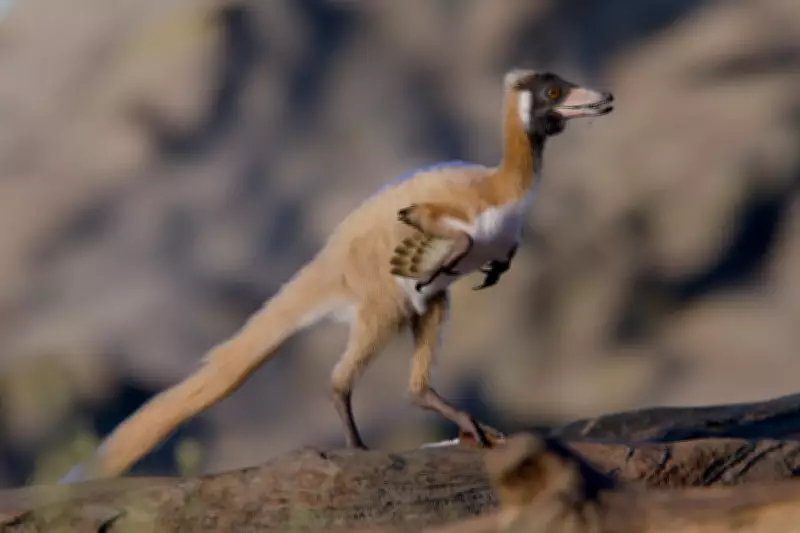
Alnashetri is truly tiny, weighing approximately 0.7 kg (1.5 pounds) and measuring smaller than a chicken, according to University of Minnesota paleontologist Peter Makovicky, lead author of the research published in the journal Nature. "It wouldn't even reach knee height on an average adult person," Makovicky stated, highlighting its minuscule stature.

The fossil, with its bones positioned as they would have been in life, offers crucial insights into alvarezsaurs, an unusual family of dinosaurs within the theropod group, which encompasses all meat-eating dinosaurs. Alna was a small female that lived in a desert environment and died at the age of four, almost fully grown. Its exceptional preservation is attributed to its body being swiftly covered by a sand dune after death.
Anatomy and Lifestyle of Alnashetri
Alvarezsaurs were typically small, characterised by stubby yet powerful forelimbs, long and slender hindlimbs, and lightly built skulls. Based on other Alvarezsaur fossils, researchers suspect Alnashetri was feathered. Despite possessing some bird-like characteristics, alvarezsaurs were only distantly related to birds.
Paleontologist Sebastián Apesteguía of the Felix de Azara Foundation and Argentina's National Scientific and Technical Research Council (CONICET), a co-author of the study, explained, "Although many of the inhabitants of the Kokorkom Desert were burrowers, Alnashetri was a lightweight animal that moved across the dunes on its slender legs. Its body resembled that of a rooster, but with a long tail."
Apesteguía estimated Alnashetri's total length at about 70 cm (28 inches), with most of that being tail. "Its arms were well-developed, though not long enough to allow it to fly, and its tail, although not fully preserved, appears to have been as long (relative to body size) as that of any other typical carnivorous dinosaur," he added.
Scientific Significance and Preservation
Alna's delicate and fragile skeleton was so impeccably preserved that researchers were able to conduct histological examinations, studying its microscopic bone structures. "The level of histological detail is exquisite," Apesteguía remarked. Its numerous, strong, and pointy teeth were reminiscent of a small Velociraptor, suggesting it likely preyed on small animals such as lizards, snakes, mammals, and invertebrates.
This discovery demonstrates the existence of very small alvarezsaurs without an insect-eating specialisation, indicating that size reduction evolved multiple times within this lineage. Later alvarezsaurs from Argentina and elsewhere developed tiny teeth and reduced arms equipped with a large claw, presumably for digging into termite mounds as part of an insectivorous diet.
Patagonia: A Hotspot for Dinosaur Fossils
Patagonia remains a global hotspot for dinosaur fossils, both large and small. La Buitrera, in particular, has proven a goldmine for small vertebrates, including the limbed early snake Najash, the saber-toothed mammal Cronopio, and the small herbivorous reptile Priosphenodon, alongside other small dinosaurs like Jakapil and Buitreraptor.
The first remains of Alnashetri, two incomplete legs, were discovered in 2004 at La Buitrera. The current, more complete specimen was found in 2014 and underwent 12 years of meticulous preparation and study, underscoring the painstaking efforts behind such discoveries.

Redefining Prehistoric Biodiversity
Apesteguía noted, "When we think of landscapes with dinosaurs, or through the lens of film fiction, we picture vast expanses with enormous beasts roaming in the distance. But these landscapes are almost always devoid of a crucial component of the ecosystem: medium and small animals."
He concluded, "The era in which Alnashetri, one of the smallest dinosaurs, lived coincided with what we often call the 'age of the southern giants.' Alnashetri shows us that it wasn't a time of giants, but rather a time of immense biodiversity." Beyond birds, which evolved from small feathered dinosaurs, Alnashetri stands as the most diminutive dinosaur known from South America and rivals the smallest discoveries globally, offering a fresh perspective on prehistoric life.