New Triassic Crocodile Species Named After Welsh Physics Teacher
Triassic Crocodile Species Named After Welsh Teacher

Newly Discovered Prehistoric Crocodile Species Named in Tribute to Welsh Teacher

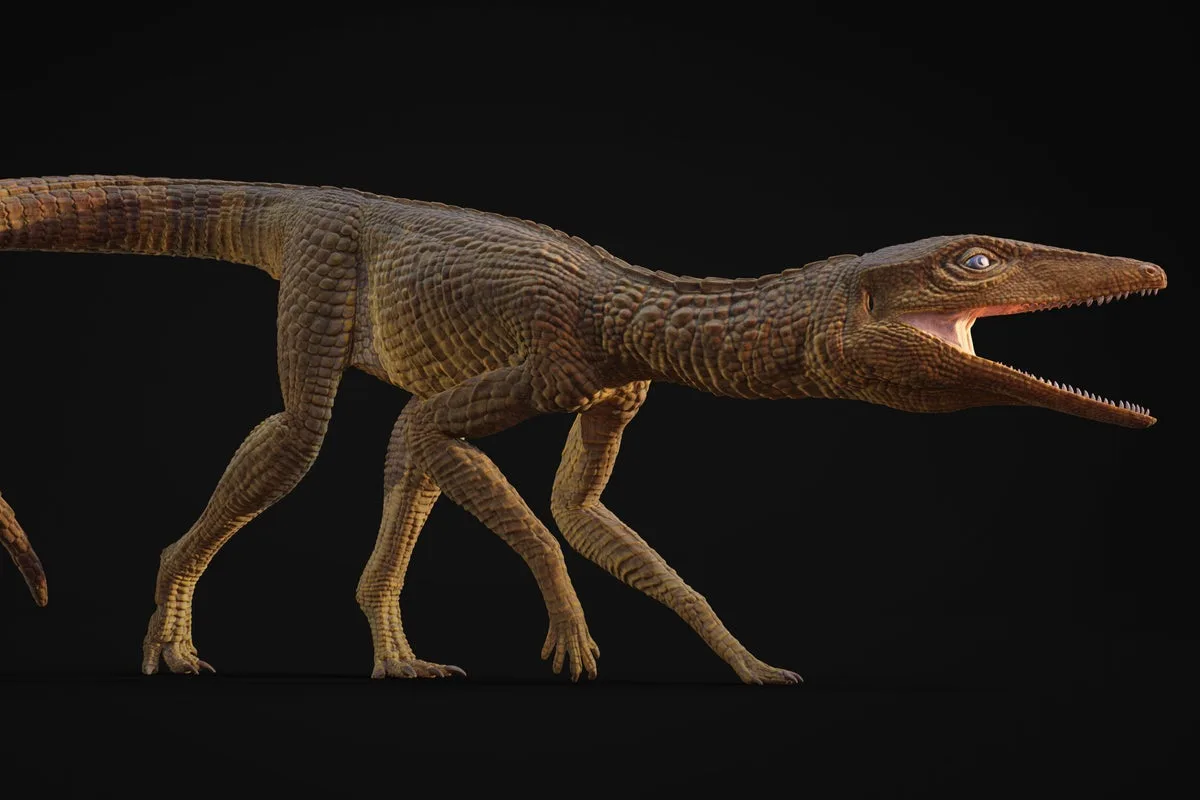
A remarkable new species of prehistoric crocodile, dating back approximately 200 million years to the Triassic period, has been officially identified and named in honour of a Welsh physics teacher. The fossil remains, unearthed near Gloucester in England, represent a significant paleontological discovery that sheds light on ancient ecosystems.

The Reptilian Greyhound of the Triassic

Researchers have described the newly identified crocodylomorph as resembling a reptilian greyhound, featuring long, slender limbs and an upright posture that made it a fast-moving, land-dwelling predator. Unlike modern crocodiles that primarily inhabit aquatic environments, this ancient creature is believed to have stalked through dense undergrowth in what is now Britain, hunting small reptiles, amphibians, and early mammals during a time when the region consisted of upland areas surrounded by hot, arid plains.

The scientific name Galahadosuchus jonesi combines two distinct tributes. The first part, Galahadosuchus, draws inspiration from Sir Galahad, the knight of Arthurian legend celebrated for his moral uprightness, reflecting the animal's distinctive posture. The second part, jonesi, pays homage to David Rhys Jones, a physics teacher at Ysgol Uwchradd Aberteifi in Cardigan, Wales, who taught and inspired the study's lead author during his formative years.

A Teacher's Lasting Impact

Ewan Bodenham, a PhD student at the Natural History Museum London and University College London who led the research, explained the personal significance behind the naming choice. "Mr Jones was not only an exceptional teacher who could explain complex scientific concepts clearly, but he demonstrated genuine passion for the sciences that was truly inspiring," Bodenham stated.

"He consistently challenged his students rather than allowing them to settle for mediocrity, helping each individual reach their full potential. Beyond his teaching abilities, he remains a genuinely funny, kind, and authentic person who made a lasting impression on my educational journey," Bodenham added, emphasizing how educators can profoundly influence future scientific discovery.

Fossil Discovery and Analysis

The ancient crocodile remains were recovered from fissure deposits found on both sides of the Bristol Channel, spanning locations in southern Wales and southwestern England. Scientists believe animals that died on the surface were washed into caves before being buried by sediment over millions of years, creating exceptional preservation conditions.

Among the recovered fossils was an animal initially identified as Terrestrisuchus, an early member of the broader crocodylomorph group that includes modern crocodiles. However, detailed anatomical analysis revealed crucial differences. "My PhD project focuses on the evolutionary relationships of these early crocodiles," Bodenham explained. "We conducted comprehensive anatomical descriptions of this specimen, comparing it extensively to other early crocodiles to determine whether it represented another specimen of Terrestrisuchus or constituted something entirely new."

Distinctive Anatomical Features

The research team identified thirteen key anatomical differences that proved significant enough to classify the fossil as a completely new species. These distinguishing characteristics provide valuable insights into the evolutionary diversity of early crocodile relatives, which possessed long legs and lived exclusively on land, unlike their modern aquatic descendants.

Broader Scientific Significance

This discovery contributes to growing evidence of rich animal diversity in the region during the Late Triassic period, shortly before the Triassic-Jurassic mass extinction event. This catastrophic period, marked by increased volcanic activity that dramatically altered global climate, wiped out numerous species while paving the way for new evolutionary developments.

By studying which animals existed immediately before this major upheaval and examining how they responded to environmental changes, scientists hope to gain crucial insights into how species cope with large-scale ecological disruption. Such research has contemporary relevance for understanding biodiversity resilience in the face of modern environmental challenges.

The formal description of Galahadosuchus jonesi appears in the paper "A second species of non-crocodyliform crocodylomorph from the Late Triassic fissure deposits of southwestern UK: implications for locomotory ecological diversity in Saltoposuchidae," published in the prestigious journal The Anatomical Record. This publication marks both a significant contribution to paleontological science and a heartfelt tribute to an educator whose influence extended far beyond his classroom.