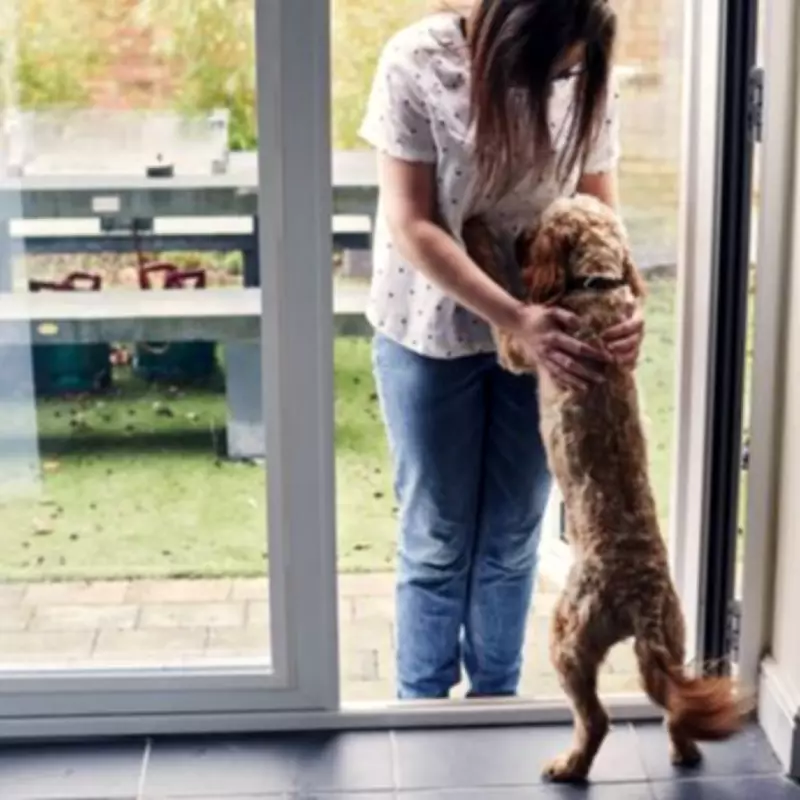
For countless dog owners across Britain, the daily homecoming follows a familiar pattern: pulling into the street, unlocking the front door, and being greeted by an eagerly waiting canine companion. While many attribute this behaviour to unwavering loyalty or exceptional hearing, animal behaviour specialists confirm the explanation is far more intricate and scientifically grounded than most realise.
The Mastery of Pattern Recognition
According to extensive research into canine cognition, dogs are not simply relying on auditory signals to detect their owner's approach. These intelligent animals develop sophisticated expectations based on multiple environmental factors, including time-based routines, neighbourhood sound patterns, lighting variations, and movement within the property.
Chris Maxted, director of British dog safety gate firm Dog-G8, explains that this behaviour fundamentally stems from pattern recognition. "Dogs are masters at noticing tiny changes in their environment," he observes. "They track patterns meticulously, and your return home represents one of the most predictable events in their daily routine."

Maxted elaborates that owners frequently assume their dog hears the car engine from streets away, but in numerous cases, dogs begin anticipating arrival before the vehicle even turns into the road. "If you typically return at 6pm, your dog gradually associates specific environmental signals with that event. Over time, the anticipation build-up becomes an integral part of their daily ritual."
The Role of Scent and Environmental Cues
One compelling theory explored by canine cognition scientists suggests dogs might also detect subtle changes in scent levels throughout the home. As an owner's scent gradually fades during their absence, it potentially functions as a sensory marker. When this scent reaches a particular threshold, combined with established routine cues, dogs may anticipate the imminent return.
"While emotional attachment undoubtedly plays a significant role," Maxted reveals, "this doorway behaviour is substantially more methodical than most people recognise. Owners have essentially, albeit unknowingly, trained their dogs to predict their entrance through consistent patterns and learned associations."
Why the Front Door Becomes an Anticipation Hotspot
There exists a specific reason why dogs consistently gravitate towards the front entrance area. "The front door represents a high-energy location in most households," Maxted notes. "It's where walks commence, deliveries arrive, and owners both depart and return. Dogs rapidly learn that significant events consistently occur there."
Gradually, this area transforms into what animal behaviourists commonly term an "anticipation hotspot." Maxted explains: "This explains why some dogs display visible excitement or restlessness as your expected arrival time approaches. Their entire behavioural system becomes primed for the anticipated event."
The Impact of Disrupted Routines
The importance of consistent patterns becomes particularly evident when routines suddenly change. Maxted points out that rigidly consistent schedules heighten canine anticipation, which accounts for why numerous dogs appeared confused or unsettled during lockdown periods when household patterns shifted dramatically.
"When established patterns become disrupted, dogs can demonstrate noticeable confusion because their carefully learned expectations are no longer being met," he clarifies. This disruption highlights how fundamentally dogs rely on environmental predictability.
Managing Overly Enthusiastic Greetings
While waiting patiently by the door is generally harmless, in certain households this anticipation can escalate into problematic behaviours including:
- Excessive jumping up
- Persistent barking
- Spinning or whirling movements
- Attempts to bolt outside given opportunity
If left unaddressed, this eager anticipation can spiral out of control, particularly with adolescent puppies or high-energy breeds. Maxted offers practical advice for managing these situations effectively.

"Strive to maintain calm greetings rather than transforming them into major events," he recommends. "Enter quietly, place bags down calmly, and only acknowledge your dog once you've composed yourself. This establishes a more controlled environment."
He emphasises the importance of positive reinforcement: "Consistently reward the behaviour you wish to see. If your dog sits or waits quietly, provide immediate attention and praise. Over time, they will learn that calm behaviour receives a response while jumping and barking does not."
This scientific perspective reveals that our canine companions are not merely reacting to sounds but are actively interpreting complex environmental patterns. Their doorway anticipation represents a sophisticated cognitive process combining sensory perception, memory, and learned association—a testament to their remarkable adaptability within human environments.