Historic Ocean Recording Reveals Oldest Known Humpback Whale Song
A haunting and mysterious ocean sound, captured off the coast of Bermuda in March 1949 and preserved on decades-old audio equipment, has finally been identified by researchers. Scientists from the Woods Hole Oceanographic Institution in Falmouth, Massachusetts, have confirmed that the recording represents the oldest known example of humpback whale song ever discovered. This remarkable find, unearthed last year during a digitization project, could unlock profound new insights into how these colossal marine mammals communicate and how human activity has altered the ocean's acoustic environment.
A Quieter Ocean of the Past
Peter Tyack, a marine bioacoustician and emeritus research scholar at Woods Hole, emphasized the significance of the ambient ocean sounds captured alongside the whale song. "The late 1940s ocean was considerably quieter than today's, offering a distinct acoustic environment for whale song that scientists rarely encounter," Tyack explained. "These recovered recordings not only allow us to follow whale sounds, but they also tell us what the ocean soundscape was like in the late 1940s. That's very difficult to reconstruct otherwise." This pristine acoustic snapshot provides a crucial baseline for understanding how modern noise pollution from shipping and other human activities impacts marine life.
The Accidental Discovery and Preservation
The recording predates scientist Roger Payne's famous discovery of whale song by nearly two decades. According to Ashley Jester, director of research data and library services at Woods Hole, scientists aboard a research vessel were testing sonar systems and performing acoustic experiments with the U.S. Office of Naval Research when they inadvertently captured the sound. "They didn't know what they were hearing, but they decided to record and save the sounds anyway," Jester stated. "They were curious. And so they kept this recorder running, and they even made time to make recordings where they weren't making any noise from their ships on purpose just to hear as much as they could. And they kept these recordings."

The song was preserved on a well-maintained disc created by a Gray Audograph, a dictation machine used in the 1940s. Jester noted that while the early underwater recording equipment would be considered crude by today's standards, it was cutting-edge at the time. The use of a plastic disc was particularly significant, as most recordings from that era were on magnetic tape, which has largely deteriorated over time.
Implications for Whale Communication Research
This discovery offers a unique opportunity to study how whale communication has evolved in response to changing ocean conditions. Research published by the National Oceanic and Atmospheric Administration indicates that whales can vary their calling behavior based on environmental noises. The 1949 recording, originating from a quieter ocean, allows scientists to better understand how contemporary human-made sounds, such as increased shipping traffic, affect whale communication patterns.
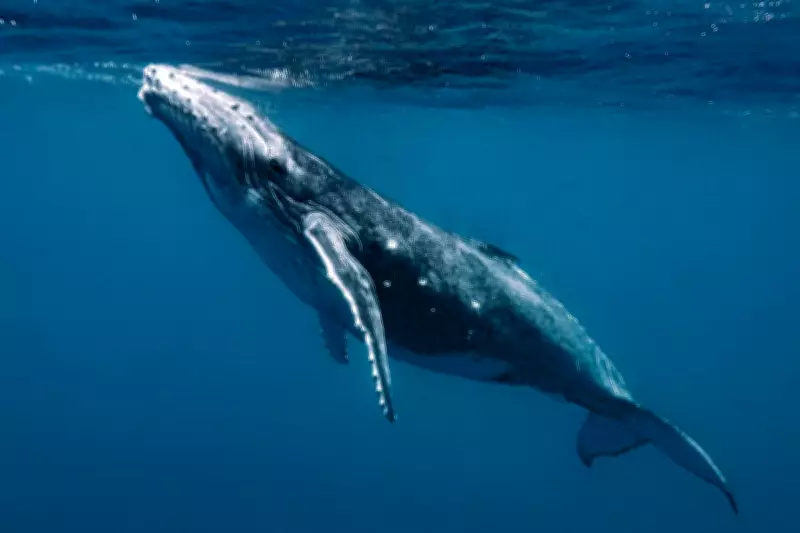
Whales rely heavily on sound for survival, using clicks, whistles, and calls to socialize, communicate, find food, navigate, and understand their surroundings in the vast ocean. Humpback whales, which can weigh over 55,000 pounds, are renowned for their complex vocalizations that can sound ethereal or mournful. Hansen Johnson, a research scientist at the Anderson Cabot Center for Ocean Life at the New England Aquarium, highlighted the broader significance of the find. "The discovery of long-lost whale song from a quieter ocean could be a jumping-off point to better understanding the sounds the animals make today," Johnson said. "And, you know, it's just beautiful to listen to and has really inspired a lot of people to be curious about the ocean, and care about ocean life in general. It's pretty special."
This historic recording not only solves a decades-old mystery but also serves as a powerful reminder of the ocean's acoustic heritage and the ongoing need to protect marine soundscapes for future generations.