Sharks Thrive in Las Vegas Desert with Gourmet Diets
In an unexpected twist, sharks are flourishing in the heart of the Las Vegas desert, consuming hundreds of pounds of fish each week at a major casino aquarium. Becky O’Brien, the lead aquarist at the Shark Reef Aquarium in Mandalay Bay Resort, always dreamed of working with ocean life but never imagined she would become a shark dietitian far from the coast.
Aquarium's Massive Operation and Shark Feeding Routines
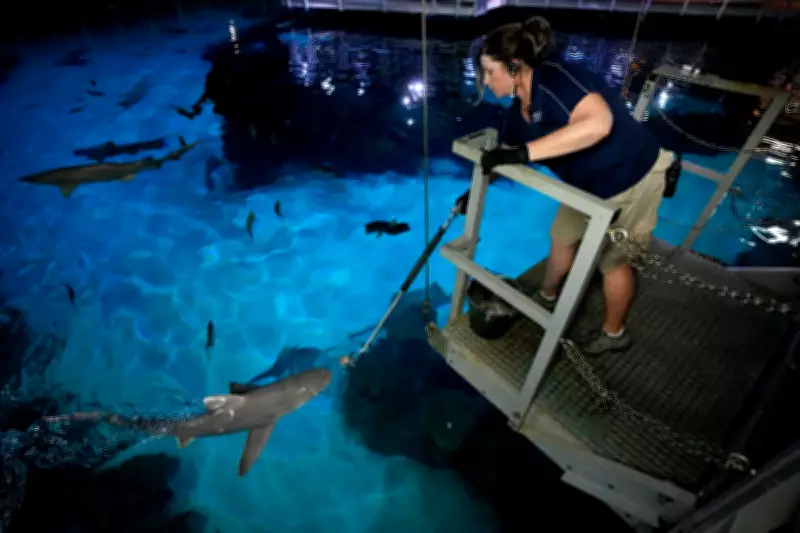
The aquarium, which holds a staggering 1.3 million gallons of water, is home to over 3,400 animals, including 15 species of sharks. O’Brien and her team feed these predators three times weekly, using tongs to dangle herring and other fish into the tank. Zebra sharks, among others, swiftly snatch the offerings, showcasing their voracious appetites.
O’Brien humorously noted, "They eat better than the tourists on the Strip," referencing the high-end seafood served at Las Vegas' gourmet restaurants. Since its opening in 2000, the attraction has drawn over 21 million visitors, making it a key tourism draw in the city.

Nutritional Science Behind the Sharks' Diets
According to Samantha Leigh, a professor specializing in marine animal nutritional physiology at California State University, Dominguez Hills, sharks require proteins and lipids to maintain fatty livers that aid buoyancy. In the wild, their diets range from zooplankton to seals, but in captivity, they enjoy restaurant-quality seafood.
The Mandalay Bay sharks are fed a varied mix of mackerel, herring, blue runner, and sardines, sourced from wild-caught and sustainable fisheries. Weekly, the aquarium uses over 300 pounds (136 kilograms) of fish, which are stuffed with vitamins to ensure proper nutrition—akin to hiding medicine in a dog's treat.
Training and Behavioral Insights from Feedings
Similar to training dogs, the sharks are conditioned to perform specific behaviors for food rewards. For instance, zebra sharks touch a target to receive meals, and all animals learn to go to designated tank areas during feedings. These sessions allow staff to monitor health; if a shark refuses food, it might indicate illness or mating interest.
O’Brien explained that sharks become ravenous before breeding season (March to June), but males often eat less during this period. "Once you work with them daily, you learn each species feeds differently," she said, highlighting the nuances of shark care.
Conservation Efforts and Aging Shark Care
The aquarium participates in global conservation, particularly for endangered zebra sharks, whose populations have declined due to fishing and coral reef loss. Eggs are transported to Indonesia for rewilding projects to restore wild numbers. O’Brien hopes public feedings inspire future generations to protect oceans.
Many sharks at the aquarium live longer than in the wild, thanks to dedicated care. Jack Jewell, the general curator, cited a sand tiger shark estimated at 33-36 years old, surpassing its typical wild lifespan by a decade. As sharks age and struggle to catch prey, staff act like food delivery drivers, ensuring they receive meals directly.
Visitor Experiences and Staff Reflections
On a recent day, visitors observed sharks, sea turtles, and lookdown fish navigating a decorative shipwreck in the massive tank. A bow mouth guitarfish, known for its crustacean-crushing mouth, swam to the surface to take fish from aquarist Lukas Seoane's tongs. A dominant female guitarfish consumed over 4 pounds (1.8 kilograms) in one feeding, while a younger male waited patiently.
Seoane joked, "Every time I’m done feeding these guys, I want sushi. If it’s good enough for them, it’s good enough for me." This unique desert oasis continues to blend entertainment, education, and marine stewardship in Las Vegas.