A 33-year-old man has tragically died after being rescued from a closed volcanic area within Hawaiʻi Volcanoes National Park, according to official statements from the National Park Service. The incident occurred on the east side of the park's iconic Kīlauea caldera, a region known for its extreme geological hazards.
Overnight Search in Hazardous Terrain
Search and rescue teams responded to the emergency on February 26th, conducting operations throughout the night in what officials described as "steep and hazardous terrain." The intensive search continued until February 27th, when responders finally located the individual and airlifted him from the remote volcanic landscape.
The rescued man was immediately transported to Hilo Benioff Medical Center, where he was pronounced deceased, according to the National Park Service statement. Officials have withheld the name of the Hawaiʻi resident for privacy reasons and have notified his family of the tragic outcome.

Volcanic Dangers and Ongoing Eruptions
Park authorities emphasized the inherent dangers of the Kīlauea caldera area, warning visitors about unstable cliff edges and unpredictable volcanic features. "Kīlauea caldera contains hazardous terrain, including unstable cliff edges and volcanic features," park officials stated. "Visitors are reminded to remain in designated open areas and comply with all closures."
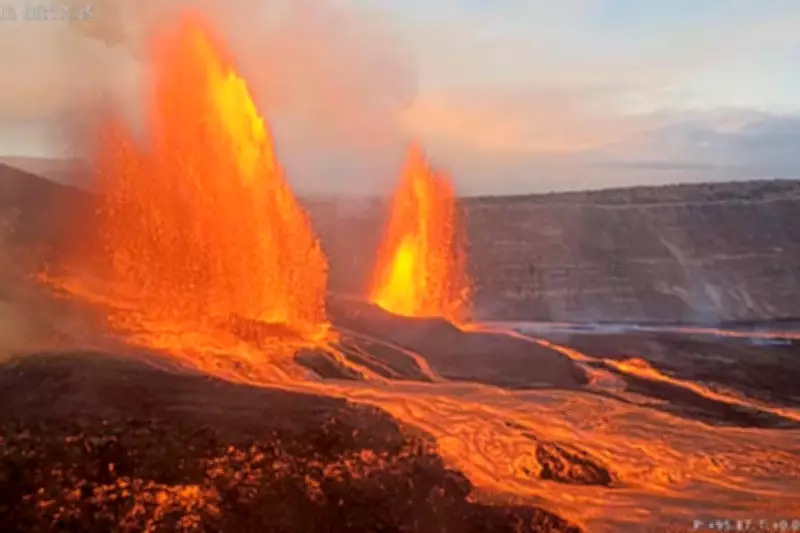
The tragedy comes amid ongoing volcanic activity at Kīlauea, which has been erupting intermittently since December 2024 across more than forty separate episodes. The 42nd eruption event, characterized by dramatic lava fountains reaching heights of up to 1,300 feet, concluded in mid-February just before this incident.
According to the U.S. Geological Survey, further fountaining activity is expected between March 10th and March 15th, highlighting the continuous volcanic unrest in the region. Kīlauea remains the youngest and most active volcano on the island of Hawaiʻi, ranking among the world's busiest volcanic systems.
Geological Significance and Cultural Heritage
The shield volcano, which approaches the size of the nearby island of Oʻahu, holds deep cultural significance for Native Hawaiians. The name Kīlauea may translate to "spewing" or "much spreading," reflecting its dynamic nature. According to National Park Service documentation, Native Hawaiians traditionally viewed the volcano as the home of Pelehonuamea, the volcanic deity believed to reside in the Halemaʻumaʻu crater at the summit caldera.
Broader Context for National Parks
This tragic incident occurs against a backdrop of challenges facing the National Park Service. During the Trump administration, the agency experienced significant staffing reductions, losing 2,750 employees in the first eleven months alone—a fifteen percent decrease according to analysis of federal data by Inside Climate News.
National parks have also faced pressure from the White House to review or remove materials deemed overly critical of certain aspects of U.S. history, particularly those addressing issues of racism. These broader institutional challenges highlight the complex environment in which park officials operate while managing dangerous natural landscapes like Hawaiʻi Volcanoes National Park.
The death serves as a sobering reminder of the very real dangers present in active volcanic regions, even within protected national park boundaries. Park officials continue to emphasize the importance of visitor safety and adherence to all posted warnings and area closures in these dynamic geological environments.