Dirty Business Creator Warns Raw Sewage Scandal Could Spark Public Revolt
The creator of Channel 4's campaigning drama Dirty Business has revealed he has been inundated with "furious" messages from Britons who feel powerless amid the ongoing raw sewage scandal and are demanding urgent change. Joseph Bullman, the writer and director behind the series, warns that the current situation represents "the worst possible situation that we, the British people, will accept without there being some kind of revolution."
Channel 4 Drama Exposes Decade-Long Environmental Battle
Dirty Business, which has drawn comparisons to Mr Bates vs the Post Office for its campaigning impact, dramatises the extraordinary ten-year investigation by two Oxfordshire residents into systematic raw sewage contamination by UK water companies. The three-part series, airing its finale this week, has been hailed as a five-star hit for its unflinching portrayal of how faeces, condoms, and dirty nappies have polluted England's rivers and coastal waters.
"People feel impotent," Bullman tells The Independent. "They feel like whatever we say to our political class, we get the same policies, election after election, government after government. Everyone wants our system to be different, no one knows how to elect a government that's going to change it and that's what I think most people feel."

Based on Real Campaigners' Decade of Research
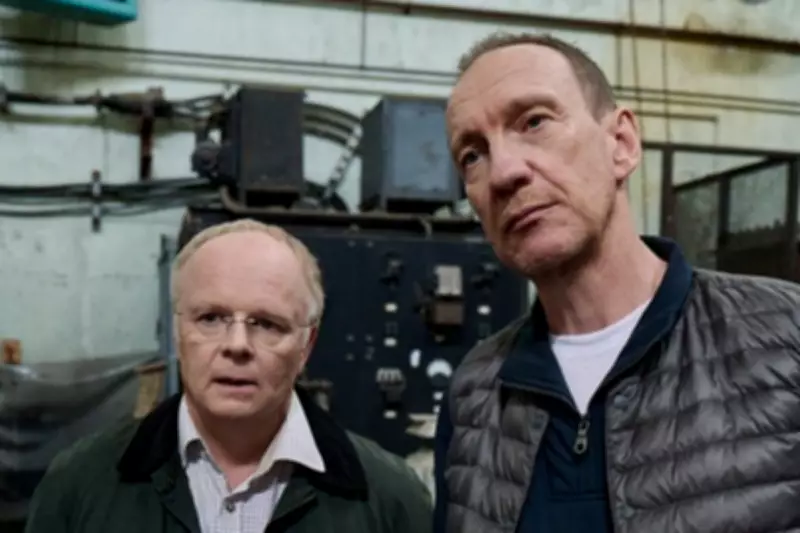
The series follows two middle-aged Cotswolds neighbours—biologist Peter Hammond, played by Jason Watkins, and former police officer Ash Smith, portrayed by David Thewlis—as they investigate why local wildlife has abandoned their increasingly polluted River Windrush. Despite being fobbed off with countless dismissive emails from Environment Agency representatives tasked with regulating water companies, they discover through whistleblowers that water companies have been illegally pumping vast quantities of raw sewage into waterways.
Bullman, who previously created Channel 4's Partygate satire about the Boris Johnson scandal, developed the project after stumbling upon an article about the privatisation of British water suppliers. "I thought to myself, surely there's some kind of story there, and I very quickly realised that all our water companies are owned by overseas investment banks or private asset management firms," he explains.
The drama is based on the decade-long research of real campaigners Smith and Hammond, whom Bullman describes as "national heroes" who "should become knights of the realm" for their efforts to bring the scandal to public attention.
Tragic Stories and Systemic Failures
One particularly harrowing scene in Dirty Business depicts the parents of eight-year-old Heather Preen clinging to her lifeless body after she contracts e-coli two weeks after falling into allegedly contaminated water on a Devon beach. A 1999 inquest returned a verdict of misadventure, with South West Water and the Environment Agency denying responsibility.
Bullman deliberately incorporated humour and levity alongside these tragic stories, particularly highlighting the farcical nature of some Environment Agency policies. "Episode three gets inside the Environment Agency and the policies that they've implemented are so farcical," he says. "At one stage, they took cars off of the employees inside the agency who investigate the sewage works because they said they were trying to turn the needle on climate change, so they had no way to drive to the rivers and coasts to look into it."
Regulatory Failures and Calls for Enforcement
Last year saw several water companies handed substantial fines for wastewater treatment failures, with South West Water agreeing to pay £24 million and Thames Water hit with a record £104 million penalty by Ofwat for environmental breaches involving sewage spills. However, Bullman argues that water regulation needs to go much further.
"The Environment Agency for many years has been operating a policy called operator self-monitoring, which means they invite the water companies to regulate themselves," he explains. "The agency has been defanged and gone on to do the bidding of the water companies—that has to end. We need a real regulator."

He adds pointedly: "No water company executive has ever been prosecuted, no water company owner, board member or investor has ever gone to prison. What we need in the first instance is for our laws to be enforced. Boris Johnson's government and this government said they were going to introduce tough legal sanctions but they've existed for decades now and they've never been enforced. We need the regulation to be taken seriously."
Environment Agency Response
A spokesperson for the Environment Agency told The Independent that their "sympathies are with the family of Heather Preen" and acknowledged that the show raises "important issues about water quality, the actions of water companies and regulation of the sector over recent decades."
"Our priority is always to protect the environment for people and wildlife, and the organisation has undergone significant changes in recent years to better tackle water pollution," they stated. "More people, better data and increased powers mean we will always act on intelligence of potential offences. This year we are on track to do 10,000 inspections of water company assets, rooting out wrongdoing and driving better performance. Since 2015 we have concluded 69 prosecutions against water and sewerage companies securing fines of over £153 million."
Despite these assurances, Bullman believes factual dramas like Dirty Business remain vital for raising awareness of such scandals. "When you do something that strikes a chord with people's lived experiences, you get a response that resonates in a way that you don't get with a lot of conventional dramas," he reflects. "I feel a swelling up of anger on this and people connect to it because it's about something they can see in their own lives."