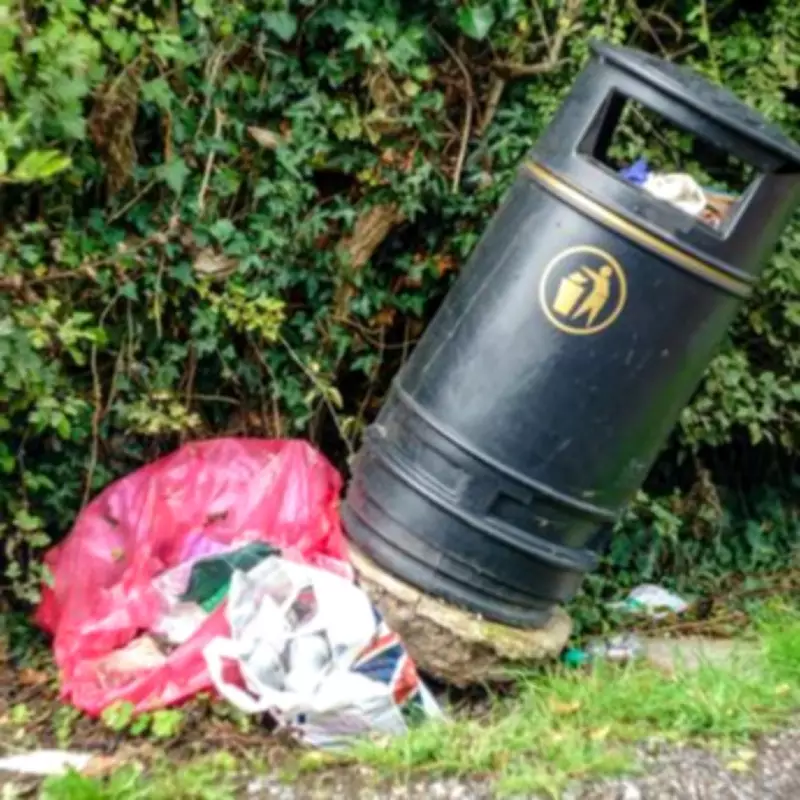
BBC Expert Warns of New Bin Fines Even for Overflowing Rubbish
New rubbish laws have been implemented across England and Wales, introducing significantly higher fines for littering offenses. BBC Morning Live viewers were informed that even well-intentioned actions, such as attempting to dispose of waste in overflowing bins or leaving donations outside charity shops, could now result in penalties.
Legal Expert Details the Crackdown
Appearing on the programme, lawyer Gary Rycroft explained to presenters Gethin Jones and Jeanette Kwakye that councils throughout England and Wales have received new government guidance on enforcing existing powers under the Environmental Protection Act 1990. This legislation has long classified dropping litter as a criminal offense, but the updated approach aims for greater consistency and transparency in its application.
"Councils throughout the UK can issue fixed penalty notices, similar to parking tickets, for dropping litter," Mr Rycroft stated. "However, enforcement has been inconsistent, with different councils applying varying fine levels. The government now demands uniformity and has addressed criticism that some authorities used fines primarily as revenue rather than behavioural deterrents."

Substantial Increase in Penalties
Under the new regulations, fixed penalty notices for littering will range from £65 to £500, a substantial increase from the previous average of £100. In cases that proceed to court, the maximum fine can reach £2,500. Mr Rycroft emphasised that the primary goal is behavioural change, not revenue generation.
"We want people to stop dropping litter," he said. "The average fine is currently about £100, but under these new powers, it will range from £65 to £500. If you end up in court, which applies throughout the UK, the maximum fine can be £2,500. Ultimately, we aim to change behaviours and avoid people paying these fines."
Surprising Offenses That Could Incur Fines
Mr Rycroft clarified that littering encompasses leaving waste in inappropriate locations, including small items like cigarette ends, which frequently lead to fixed penalty notices. However, he highlighted less obvious scenarios where individuals might inadvertently breach the rules.
"Littering fundamentally means leaving waste where it shouldn't be," he explained. "Consider a case where a woman attempted to donate items to a charity bin. The bin was full, so she left her donation beside it and received a £1,000 fixed penalty notice. Although the fine was later waived after BBC intervention, this illustrates that even leaving items next to a full bin can result in penalties."
How to Avoid Fines
To prevent fines, Mr Rycroft advised taking unwanted items home if disposal points are full, returning later when bins are empty, or delivering donations directly to charity shops during operating hours. He specifically warned against leaving items outside charity shops overnight, as this constitutes fly-tipping.
When asked about overflowing public bins in streets and parks, Mr Rycroft confirmed that the rules apply to all public spaces, including beaches, parks, and car parks. "If the bin is full, you should not leave items there," he stressed. "Many people think, 'I'm just leaving it next to the bin, it'll be fine,' but in theory, you can be fined for doing that."
Extended Crackdown on Fly-Tipping
The discussion also covered stricter measures against fly-tipping, where individuals illegally dump large items like mattresses, building materials, or furniture in rural areas. The government proposes adding penalty points to driving licences for offenders, with the possibility of licence loss upon accumulating 12 points within three years. Additionally, offenders might face 20 hours of community service.
"This is a real crackdown on fly-tipping, that horrendous offense where waste is left all over the countryside," Mr Rycroft concluded, underscoring the broader effort to combat environmental negligence through enhanced legal enforcement.