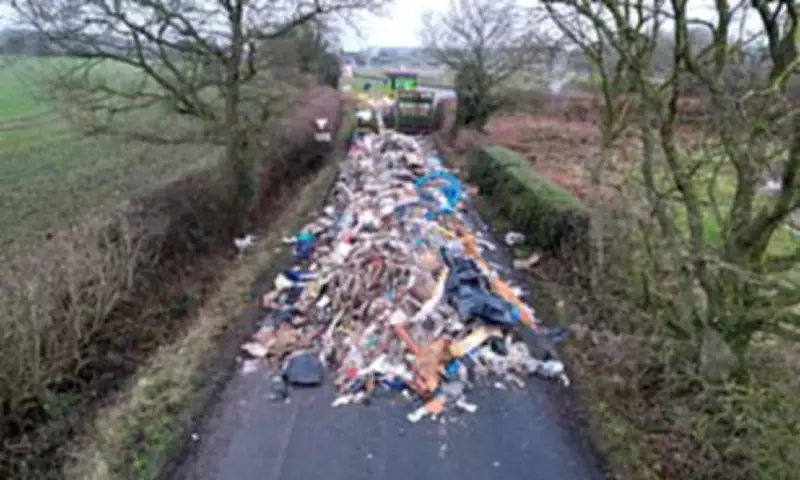
Government Launches High-Tech Offensive Against Fly-Tipping With £45 Million Investment
Environment Secretary Emma Reynolds has unveiled a comprehensive strategy to combat the scourge of fly-tipping across Britain, backed by a substantial £45 million investment in enforcement technology and expanded powers.
High-Tech Arsenal to Target Illegal Dumping
The new initiative will deploy drones, enhanced CCTV surveillance, and innovative "waste barcodes" to trace the origin of illegally dumped rubbish. These technological measures are designed to identify both the local authorities that collected the waste and the middlemen involved in its disposal.
Ms Reynolds issued a stark warning to the criminal gangs responsible: "We are coming after you – nothing is off the table." She detailed severe consequences for offenders, including substantial fines, mandatory clean-up orders for streets and parks, penalty points on driving licences, and even the potential crushing of vehicles used in these illegal activities.

Organised Crime Links and Economic Impact
Illegal dumping currently accounts for approximately 20 per cent of all waste in Britain, imposing an estimated £1 billion annual cost on the economy. More alarmingly, the vast profits generated by fly-tipping operations are frequently used to bankroll other serious criminal enterprises, including human trafficking, drug smuggling, and gun-running networks.
The Environment Secretary has granted the Environment Agency new police-style enforcement powers and is seeking collaboration with the National Crime Agency to tackle what she describes as a "menace" to communities. Evidence gathered through drone surveillance and CCTV footage will be crucial in these investigations.
Systemic Vulnerabilities and New Safeguards
A significant vulnerability in the current system involves local authorities paying contractors to dispose of rubbish in legitimate landfill sites. Some corrupt firms divert a portion of these payments to criminal elements who instead dump the waste across the countryside.
To address this, Ms Reynolds announced the introduction of traceable "waste barcodes" that will create an auditable trail from collection to final disposal. She also revealed plans to work closely with Home Secretary Shabana Mahmood to strengthen the legislative framework further.
Human and Environmental Consequences
The Environment Secretary emphasised the "huge human impact" of fly-tipping, describing rat infestations, foul odours, and dangerous air pollution affecting communities. "I met someone with a young child who has had to move because of it," she shared, highlighting the severe disruption caused to residents.
Farmers, whose land is frequently targeted by aggressive fly-tipping gangs, will receive additional support and protection measures. The government aims to empower landowners to defend their properties against these criminal operations while holding perpetrators accountable through the enhanced enforcement regime.
This comprehensive approach represents the most significant investment in fly-tipping enforcement in recent years, combining technological innovation with strengthened legal powers to address both the environmental damage and the organised crime networks profiting from illegal waste disposal.