The Trump administration has declared its intention to rejoin two key offshore drilling agencies that were separated in the aftermath of the catastrophic 2010 Gulf of Mexico oil spill. This move, announced on Friday, forms part of a broader overhaul designed to enhance operational efficiency and accelerate the permitting process for offshore oil and gas exploration.
New Agency to Combine Functions
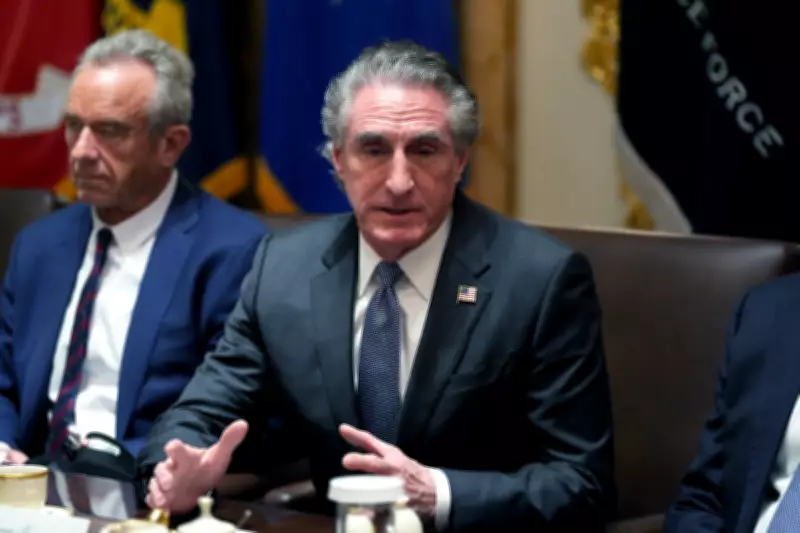
Interior Secretary Doug Burgum revealed that the newly established Marine Minerals Administration will consolidate the responsibilities currently held by the Bureau of Ocean Energy Management (BOEM) and the Bureau of Safety and Environmental Enforcement (BSEE). Burgum emphasised that this consolidation will facilitate a "streamlined approach" while preserving existing regulatory safeguards and rigorous safety standards.
"The combined agency will deliver clearer coordination, better service to the public and stronger, more integrated oversight of offshore energy development," Burgum stated in an official release. The agency's name evokes memories of the former Minerals Management Service (MMS), which for decades served as the federal body overseeing offshore drilling activities.

Historical Context of the 2010 Disaster
In April 2010, a devastating explosion destroyed BP's Deepwater Horizon drilling rig in the Gulf of Mexico, resulting in the deaths of eleven workers and the release of nearly five million barrels of crude oil into the ocean over three months. This incident stands as the largest offshore oil spill in United States history.
Following the disaster, lawmakers from both major political parties and external critics accused the MMS of inadequate oversight and excessively close relationships with the energy industry. A 2008 report by the Interior Department's inspector general detailed instances where agency employees accepted gifts, directed contracts to favoured clients, and engaged in drug use and sexual relations with personnel from the firms they regulated.
The head of the agency resigned in May 2010, less than a year into her tenure, amid mounting public pressure as the Obama administration sought to impose stricter controls on drilling operations. In 2011, the disbanded MMS was replaced by BOEM and BSEE, with its revenue management function also being separated into a new office. The Obama administration justified this reorganisation as necessary to eliminate the complex and sometimes conflicting missions of the previous agency.
Divergent Roles and Environmental Concerns
BOEM is tasked with overseeing the development of oil, gas, renewable energy, and mining projects on the U.S. Outer Continental Shelf, while BSEE enforces safety and environmental regulations. Environmental advocacy groups have strongly criticised the Trump administration's decision to reunite these agencies, viewing it as a regression to the problematic past of the MMS.
"The MMS was intentionally split up after the Gulf spill because regulators were too cozy with industry and we couldn't trust the integrity of their work," explained Miyoko Sakashita, oceans director at the Center for Biological Diversity. She added, "This new set-up sounds like yet another handout to the oil industry that will fast-track risky projects. It sure won't make the people or wildlife on our coasts any safer."
Industry Support for the Reorganisation
Conversely, the National Ocean Industries Association, which represents offshore energy developers, has expressed support for the merger. The association argued that having two separate yet overlapping government agencies responsible for administering the Outer Continental Shelf Lands Act has understandably led to inconsistencies and delays.
"Bringing them back together should result in closer coordination and a more efficiently functioning government, for the benefit of American citizens who rely upon the energy produced from the U.S. Outer Continental Shelf to fuel our economy and lift society," stated Association President Erik Milito in a supportive declaration.
The Associated Press' climate and environmental coverage receives financial support from multiple private foundations, though AP maintains sole responsibility for all published content.