More than 4.5 trillion cigarette butts are discarded globally each year, making them the most prevalent form of plastic waste. In the Netherlands, the figure reaches hundreds of millions annually. To combat this, a food truck called the WasteBar is offering free poffertjes—small Dutch pancakes typically served with butter and sugar—in exchange for cigarette butts at festivals and events.
How the WasteBar Works
At the Het Vrije Westen liberation festival in Amsterdam’s Westerpark, the WasteBar’s yellow truck displayed slogans like “don’t waste waste!” and a sign reading “Betaal hier met zwerfafval” (pay here with litter). Prices are set: 20 cigarette butts for a plate of poffertjes, 10 for drinks, and 15 for fruits or candies. Plastic items are also accepted, with 15 pieces earning a poffertje.
Cigarette butts contain plastic, heavy metals, and other toxic substances, making them difficult to remove from the environment. Dutch municipalities spend approximately €36 million (£31 million) annually on cleanup efforts.

Origins and Impact
The concept originated in Goa, India, in 2019 as part of a campaign by Dutch entrepreneur Noreen van Holstein. After returning to the Netherlands in 2020, she adapted the idea and launched the WasteBar food truck in 2022 with fellow entrepreneur Lalita van Lamsweerde. The initiative is funded through grants and municipality funds.
To date, the WasteBar has serviced over 50 events, collecting more than 500,000 cigarette butts. Some butts were used in an art exhibit last year, while others await proper disposal. Van Holstein currently stores about 100,000 butts in a drum in her garden and hopes to find a recycling partner this year.
Behavioural Science Behind the Initiative
Reint Jan Renes, a behavioural scientist at the Amsterdam University of Applied Sciences, notes that the WasteBar leverages effective mechanisms to reduce littering. “It turns something abstract like littering into a visible, collective social activity,” he says. “People see others participating, talking about waste, picking up cigarette butts together and contributing to something tangible.”
Van Holstein emphasises the concept of omdenken, a Dutch term meaning “rethinking.” “People are always used to paying with money, but the moment they pay with something else, that triggers something in someone’s brain,” she explains. “By giving something useless like litter value, that makes people look at things differently.”
Cultural Shift and Future Goals
The WasteBar aims to prompt a “mentality change” around litter, particularly among children. “We want to get people in action mode, and [hope] that by picking up litter, they would not litter any more, because we believe that once seen, it cannot be unseen,” says Van Holstein.
She acknowledges that one truck cannot solve the problem alone but remains optimistic, citing successful anti-littering campaigns in Singapore and Nordic countries. She also points to the Netherlands’ progress in reducing dog poo as an example of achievable change.
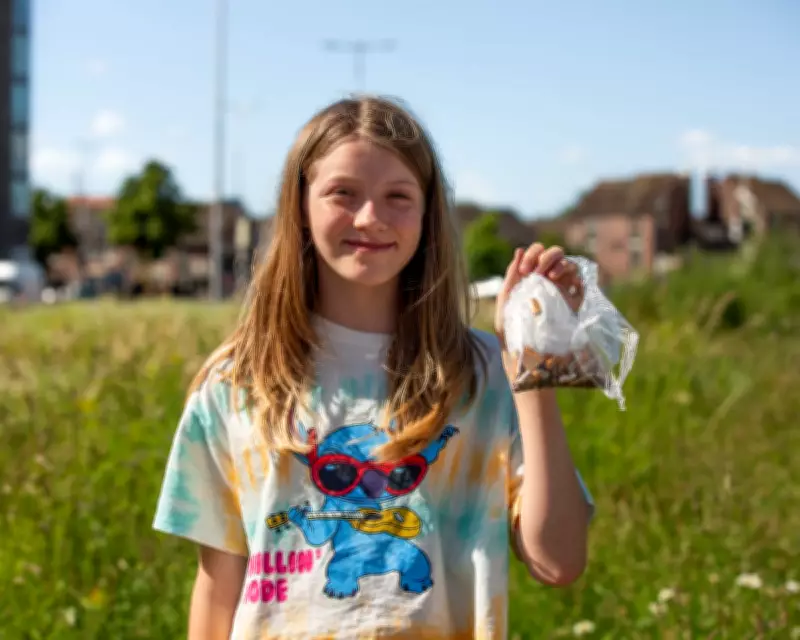
At the Westerpark festival, children eagerly collected cigarette butts, and by day’s end, they had gathered 6,000 butts—equivalent to several hundred portions of pancakes. The initiative continues to grow, with the WasteBar appearing at festivals, children’s events, and business gatherings throughout the year.