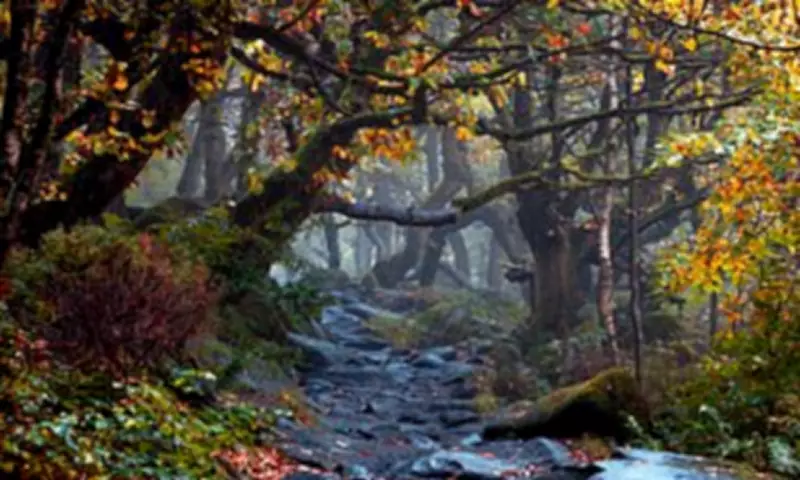
After all the trouble one has taken to be a modern man, one has come back under the spell of a primitive awe, wordless and humble.' This profound observation by American poet and environmentalist Wendell Berry perfectly captures the experience of entering the cool, green sanctuary of ancient woods. It serves as an ideal epigraph for understanding these remarkable landscapes that continue to inspire wonder across generations.
The Unique Power of Ancient Woodlands
While various landscapes possess their own attractions, ancient woodlands hold a particularly potent magic, according to National Trust forestry expert Luke Barley. Having worked extensively across Britain's most cherished natural areas including the North Downs, the Peak District, and the Lake District, Barley communicates his deep affection and extensive knowledge of woodlands with genuine eloquence and authority.
Defining Ancient Woodlands
Ancient woodland is technically defined as any wooded area that appears on maps dating from 1600 or earlier. This classification exists because, prior to that period, people rarely planted new woodlands intentionally. These venerable ecosystems aren't merely medieval or even Roman in origin; many trace their beginnings to the start of our current interglacial era approximately 10,000 to 12,000 years ago. This extraordinary longevity explains their remarkable complexity and astonishing biodiversity.

Another reliable method for identifying ancient woodlands involves observing specific indicator species. Delicate flowers like herb Paris and the elegant white wood anemone thrive exclusively in these mature environments, serving as living markers of woodland antiquity.
Restoring Natural Processes
Barley explains how active woodland management creates deeper connections between people and these ecosystems, even during necessary thinning operations. Opening dense canopies to welcome sunlight represents one of the most beneficial interventions humans can undertake today. This function was historically performed by now-extinct megafauna that once roamed British landscapes.
Thirty-five thousand years ago, massive creatures including aurochs, bison, and straight-tusked elephants acted as natural landscape engineers, crashing through woodlands like living bulldozers to create clearings and diversify habitats. With these species long vanished, humans must now assume their ecological role by thoughtfully thinning woods to create sunny glades that support diverse plant and animal communities.
The Complex Ecology of Healthy Woodlands
A truly healthy woodland presents a complex mosaic of habitats featuring flourishing trees alongside fallen and decaying specimens. Rotting wood supports diverse fungi communities, while ferns and epiphytes add vertical complexity. Dark forest ponds complete this ecological kaleidoscope, each element contributing to the woodland's overall vitality and resilience.
Historical Wisdom in Woodland Management
Traditional woodland management demonstrated remarkable sophistication. Coppicing represented a particularly intelligent approach, where hazel trees were cut to stumps every decade to produce abundant long poles and rods for fencing, construction, and firewood. This sustainable system allowed perpetual harvesting from the same trees indefinitely.
By 1650, according to expert estimates, England and Wales consumed approximately 1.2 million tonnes of firewood annually. Through careful woodland management practices, this substantial demand was met using just 1.6 percent of the landscape. Even waste materials found purposeful applications, with offcuts and sticks bound into 'fascines' to repair potholes—a testament to historical resourcefulness that invites reflection on modern practices.
The Decline of Traditional Management
Tragically, barely ten percent of Britain's previously coppiced woodlands continue to receive traditional management today. This decline has contributed directly to the collapse of numerous butterfly and bird species. More than half of Britain's 57 resident butterfly species depend on woodland habitats rather than grasslands or hedgerows, making their survival intimately connected to proper woodland stewardship.

Modern Threats to Ancient Treasures
Given their immense ecological and cultural value, one might assume Britain's ancient woodlands—covering merely two percent of the country—would receive absolute protection. Shockingly, this isn't the case. More than fifty ancient woodlands suffered partial destruction during the first phase of HS2 railway development alone, highlighting the ongoing vulnerability of these irreplaceable ecosystems.
Despite these challenges, Barley maintains an optimistic perspective. With sufficient determination and proper restoration techniques, damaged woodlands can recover their ecological functions and biological richness. This hopeful outlook emphasizes that while ancient woodlands face serious contemporary threats, committed conservation efforts can still secure their future for generations to come.