Biruté Galdikas, Pioneering Orangutan Researcher, Dies at 79
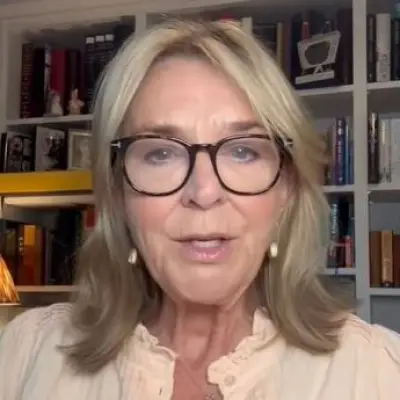
The world of primatology has lost one of its most dedicated pioneers with the death of Biruté Galdikas at age 79. For over five decades, Galdikas immersed herself in the challenging Bornean forests to study orangutans, fundamentally reshaping scientific understanding of these critically endangered great apes.
A Life Dedicated to Forest People
In 1971, the young primatologist made the extraordinary decision to follow orangutans through dense, treacherous terrain where few humans dared venture. Tracking these arboreal creatures required pushing through thick brush, wading through swamps, and facing dangerous encounters with insects, snakes, and crocodiles. Yet this became Galdikas's chosen life, one that would add crucial dimensions to the previously limited scientific knowledge about orangutans.
Her patient observations revealed that orangutans—whose name translates from Malay as "people of the forest"—have the longest birth interval of any land mammal. Females produce an infant only every seven or eight years, investing intensively in their offspring's rearing. Galdikas documented that while orangutans are omnivores, fruit constitutes the major part of their diet.

Transforming Scientific Understanding
Galdikas's work showed that orangutans serve as essential "gardeners of the forest," being the only animals large enough to distribute seeds of larger plants through digestion. By occasionally breaking branches in the canopy, they allow light to penetrate, encouraging forest regeneration. She also challenged the long-held belief that orangutans were strictly solitary, revealing that females live in loose matrilineal groups—a pattern found across great apes.
Following her pioneering example, subsequent fieldworkers observed orangutans using tools, something previously considered exclusively human. These observations revealed that tool choice and usage varied across populations, providing evidence of cultural transmission. The picture Galdikas helped build—of a species whose survival depends on information transmission across groups and generations—explains why orangutans are particularly vulnerable to environmental threats and why their population declines can become catastrophic.
Conservation and Controversy
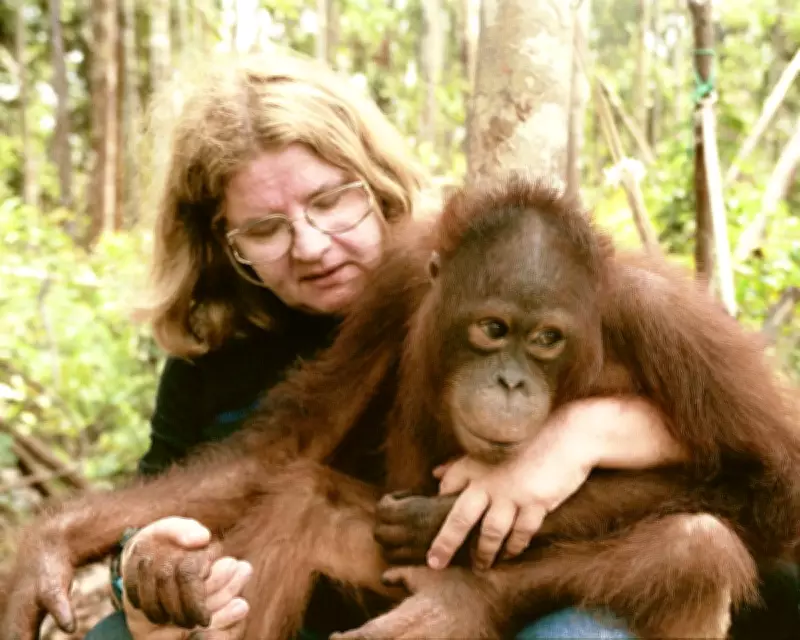
Naturally, Galdikas became deeply involved in conservation early in her career, joining her friends Jane Goodall (who died last year) and Dian Fossey (murdered in 1985) as part of the celebrated "trimates." Photographs of these three women cuddling orphaned apes graced magazine covers worldwide, though they eventually faced criticism for their methods.
Galdikas faced particular scrutiny for serving as a surrogate mother to hundreds of orphaned orangutans. Critics argued that her close relationships with the animals compromised scientific objectivity and increased disease transmission risks. However, Gillian Forrester, who researches ape cognition at the University of Sussex, defended the trimates' work, noting that disease risks were less understood in their era and that human surrogate mothers often remain the only option for orphans who would normally spend seven inseparable years with their biological mothers.
"Those women worked in an age of discovery," Forrester said. "Now we're moving into an age of responsibility." She maintained that the trimates' remarkable achievement—adding female perspectives to our understanding of our closest relatives—should not be diminished by later criticisms.
From Germany to the Bornean Forests
Born in Wiesbaden, Germany, to Lithuanian immigrant parents Antanas Gildakas and Filomena Slapsis, Galdikas moved with her family to Toronto, Canada, where she developed a fascination with human evolution. This interest crystallized around orangutans—the only great ape found in Asia—partly because they were thought to have evolved little from their ancestral state, and partly because of their human-like eyes with visible whites around the iris.
As a student at the University of California, Los Angeles, she met palaeoanthropologist Louis Leakey, who encouraged her and her fellow trimates to undertake fieldwork, earning them the alternative nickname "Leakey's angels."

Life at Camp Leakey
In 1971, Galdikas established her first camp in central Borneo with her then-husband, photographer Rod Brindamour. They named it Camp Leakey in honor of her mentor. The conditions were grueling: waist-deep swamps, pervasive leeches, and constant challenges. Yet this became her home as she embedded herself in forest life, following orangutans from their pre-dawn nest departures to their dusk nest-building.
This physically demanding, often lonely work required years of constant presence so animals would accept her and behavioral patterns could emerge. The commitment was so total that when she and Brindamour divorced in 1979, they agreed he should have custody of their young son, Binti.
Conservation Through Community
Galdikas understood that conservation required both outreach and local involvement. In 1986, she founded Orangutan Foundation International, which will continue under Indonesian leadership headed by Frederick, her son with second husband Pak Bohap, a native Bornean. The foundation has contributed to releasing over 1,000 rehabilitated captive orangutans into the wild and rescuing another 200 wild orangutans.
She didn't shy from discussing the dangers she faced, including death threats from loggers and palm oil plantation owners whose activities threatened orangutan habitats. "I was struggling against an industry that was making billions of dollars," she said in a recent interview. "It did sometimes come to physical violence." She was once kidnapped and nearly died of malaria.
Ultimately, it may have been the forest itself that claimed her. Galdikas was diagnosed with lung cancer and pulmonary fibrosis, conditions those close to her believe were exacerbated by her efforts to contain wildfires in Borneo.
Bohap died in 2022. Galdikas is survived by her children Binti (from her first marriage), Frederick and Jane (from her second), seven grandchildren, and her sister Aldona.