Historic Marine Protection Agreement in Chile
Sixty years after the rediscovery of a colony of Juan Fernández fur seals, previously believed to be extinct, a landmark agreement has been signed to extend a 'no take' zone around the wildlife-rich archipelago. This move marks a significant step in global ocean conservation efforts.
Rediscovery and Recovery of a Lost Species
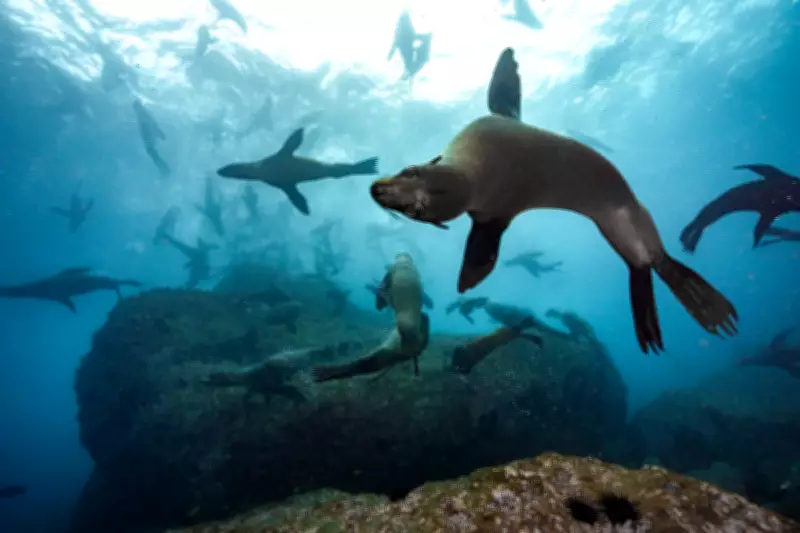
In a bittersweet discovery, pioneering oceanographer and conservationist Sylvia Earle found the remains of a baby fur seal while diving off Chile's oceanic islands six decades ago. The species, Arctocephalus philippii, endemic to the Juan Fernández archipelago, was once prized for its fur and meat and thought to have been hunted to extinction in the 19th century. Earle's find led to the confirmation of a small colony of 20 endemic fur seals on Robinson Crusoe Island a year later.
This discovery served as a message of hope and the beginning of efforts to protect the archipelago from human-made threats such as industrial fishing and the climate crisis. Today, after decades of conservation work, the seal population has made a remarkable recovery, with an estimated 200,000 fur seals now living around the islands.

Expanding Marine Protections
Earlier this month, in one of his final acts as president of Chile, Gabriel Boric signed a historic agreement to extend protection of 337,000 square kilometers of waters around Juan Fernández and the nearby Nazca-Desventuradas marine park. Once implemented, the 'no take' zone will cover almost 1 million square kilometers, making it the third-largest such marine protected area in the world.
This expansion will prohibit all fishing except within 12 kilometers of the coast, allowing local community fishers to continue their livelihoods. Chile's commitment means it will protect more than 50% of its waters, placing it alongside countries like Panama and French Polynesia in leading ocean conservation.
Community and Conservationist Efforts
The proposed expansion was driven by the actions of Juan Fernández islanders and conservation NGOs. The fishers, who have about 50 small boats, have long practised stewardship of their fishery. They witnessed the damage caused by industrial fishing in the 1990s and early 2000s, particularly the 'gold rush' for orange roughy, which harmed corals and the unique ecosystem.
Supported by organizations such as the Blue Marine Foundation, Pew Bertarelli Ocean Legacy, Island Conservation, and Fundación Patagonia Azul, the community campaigned for extended protections. A survey showed 98% of residents in favour, leading fishers to present a proposal to the president.
Future Challenges and Commitments
Despite this progress, conservationists face one more hurdle: awaiting the new Chilean government's decision on whether to uphold the marine park extension. The Chilean ministry of the environment has indicated its intention not to eliminate protections, stating that as long as there are no legal or technical issues, the expansion will proceed as planned.
This agreement aligns with global goals, including the 30x30 target to protect 30% of the world's waters and land by 2030, and the recent high seas treaty. It represents a critical victory for biodiversity and community-led conservation in one of the planet's most unique marine environments.